
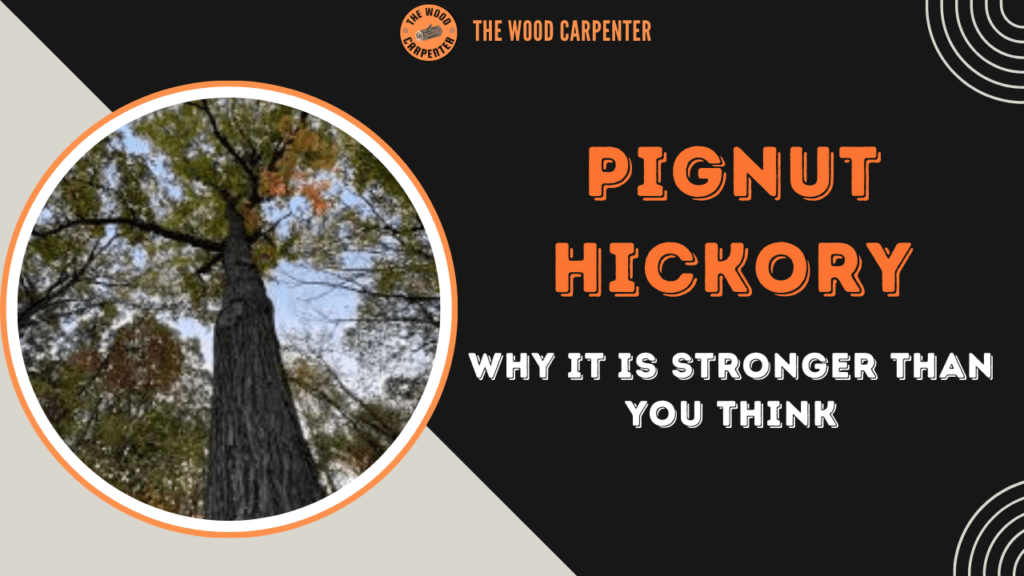
A pignut hickory is something you walk by and never notice. Unlike Shagbark Hickory, it does not have rough, peeling bark. It does not appear very spectacular or anything. It just sits there silently, year after year, growing.
Yet, this modest-looking tree one of the strongest, most useful trees in all of eastern North America.
If you have walked on a dry hill in the woods, seen squirrels scouring for tiny nuts, or swung a heavy hammer or axe with a solid wooden handle at or near some point, then maybe pignut hickory was a part of that story.
What Is Pignut Hickory?
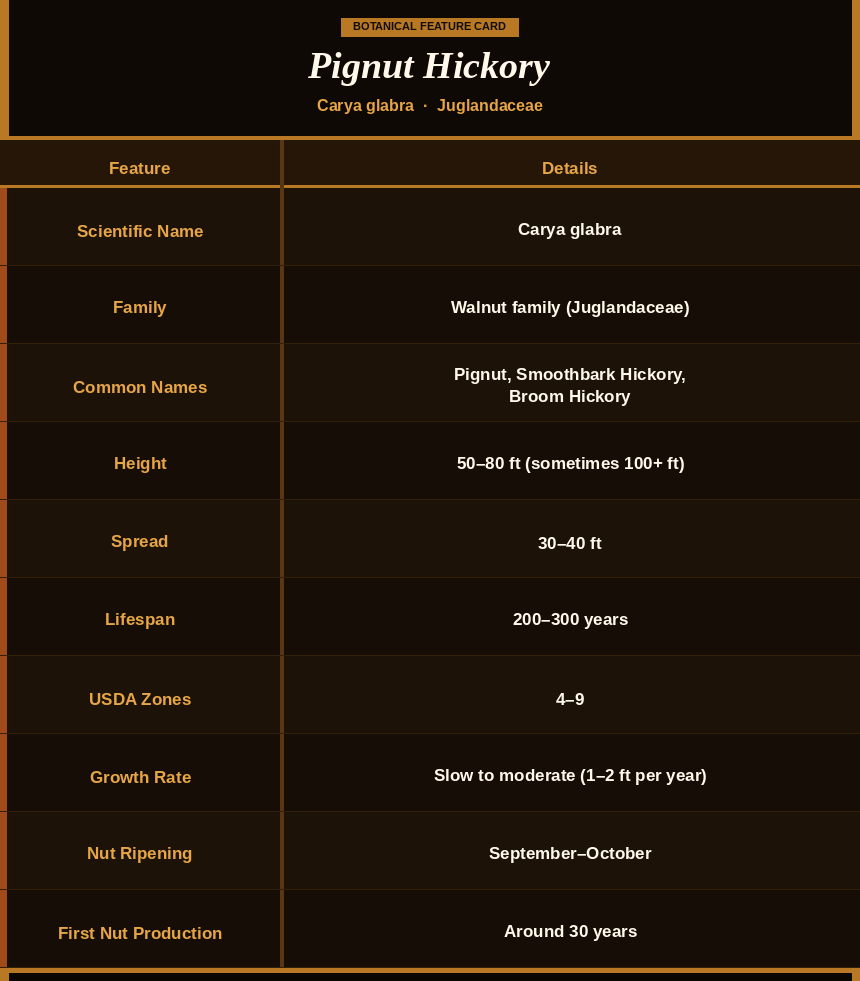
Pignut Hickory is a large tree that loses its leaves in the fall. It belongs to the walnut family. It is part of the walnut family. Most trees could be tallest from 50 to 80 ft but a few exceed 100 ft.
The trunk is usually straight. The top of the tree is rounded and not too wide. It is a long living tree, 200 years or more.
The name pignut originates from the early American farms. As previously mentioned, pigs used to roam freely, and they enjoyed eating the nuts that this tree produces. To humans, many of these nuts taste bitter, but animals are unconcerned. These nuts still today serve as food for animals.
Pignut hickory is commonly found in oak-hickory forests. It is a fundamental part of those forests. It feeds animals, keeps the soil stable with its roots, and creates very hard and strong lumber for tools and lots of other products that people use.
Quick Facts at a Glance
How to Identify Pignut Hickory
Pignut hickory doesn’t stand out at first glance. Identification comes from noticing a few small details.
Bark
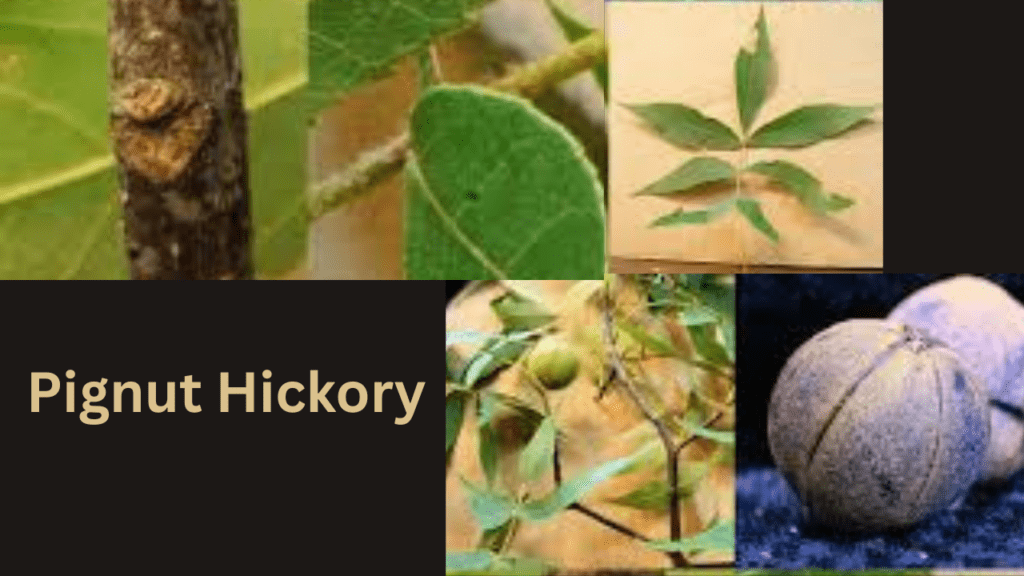
Young trees have smooth gray bark. As the tree ages, the bark develops shallow ridges that form a tight diamond or plate pattern. Unlike shagbark hickory, the bark does not peel in long strips.
Leaves
The leaves are compound and typically consist of five leaflets (some trees may be seven). The upper surface is dark green and glossy. The underside is also smooth or only slightly hairy. The leaves turn to a deep yellow-gold in fall.
Twigs and Buds
Twigs are slender and smooth. The terminal buds are small, dark brown, and pointed. This is one of the easiest ways to identify the tree in winter.
Nuts
The seeds are shaped like pears and are approximately 1 to 1.5 inches in length. When ripe, the husk splits open only halfway, its thin green skin. There is a tiny kernel inside which is usually bitter, though some of the trees make milder nuts.
A simple field rule:
If the bark stays tight, the leaves are smooth underneath, and the nuts are pear-shaped and bitter, you’re likely looking at pignut hickory.
Where Pignut Hickory Grows
This tree is widely distributed across the eastern United States and parts of southern Canada. It grows from New England down to Florida and west to the Midwest.
It prefers:
- Dry or well-drained soils
- Rocky ridges and upland slopes
- Full sun to light shade
Unlike some hickories, pignut handles dry, poor soils very well. You’ll often see it growing where other large trees struggle. Once established, it is drought-tolerant and very resilient.
If you’ve ever noticed a tough tree growing on a dry hillside with oaks and pines, there’s a good chance it was pignut hickory.
Why Wildlife Depends on It
Even though the nuts may taste bitter to people, they are valuable food for wildlife.
Animals that rely on pignut hickory include:
- Squirrels and chipmunks
- Deer and black bears
- Wild turkeys and quail
- Rabbits and foxes
- Many songbirds
In mast years, when the tree produces heavy nut crops, forests become busy feeding grounds. Squirrels often bury extra nuts and forget them, helping new trees grow.
The tree also supports many insects and moth species. Larger trees develop cavities used by woodpeckers, owls, and small mammals. In simple terms, a mature pignut hickory becomes a small ecosystem on its own.
The Wood: One of the Toughest in North America
Pignut hickory wood is famous for its strength, flexibility, and shock resistance. Pound for pound, it has one of the highest strength-to-weight ratios among hardwoods.
Common uses include:
- Tool handles (axes, hammers, picks)
- Wagon parts and wheel spokes (historically)
- Flooring and cabinetry
- Dowels, pallets, and industrial products
- Firewood and charcoal
- Wood chips for smoking meat
If you’ve ever used a sturdy hammer handle that didn’t crack after years of use, there’s a good chance it was made from hickory.
The wood burns hot and long, which is why many people still prefer it for fireplaces and barbecue.
Are the Nuts Edible?
Technically, yes. Yet most people, don’t like them.
The kernels are tiny, and although taste differs from tree to tree, generally bitter. A lot of foragers would rather go for other species of hickory because the food value is pretty low – relative to the amount of work to get the nut.
Historically it was used by Native Americans who learned to crush the nuts and boil them to extract an oil that would be used as food and other purposes. Consequently, the early farmers had used trees, nuts as feeds of pigs, this is how the tree received its name.
Growing Pignut Hickory at Home
This tree is a great choice for large properties, parks, or natural areas, but it requires patience.
Important things to know:
- Needs full sun
- Prefers well-drained soil
- Space at least 30–40 feet
- Growth is slow at first
- Deep taproot makes transplanting older trees difficult
It’s best planted from seed or as a very young tree. Once established, it requires little care and handles drought and storms well.
One real-life tip: avoid planting near driveways or patios. Falling nuts can dent cars or create slipping hazards.
Common Pests and Problems
Pignut hickory is generally hardy, but stressed trees may face:
- Hickory bark beetles
- Nut weevils
- Leaf-feeding insects
- Fungal leaf spots
Healthy trees in good locations rarely suffer serious damage.
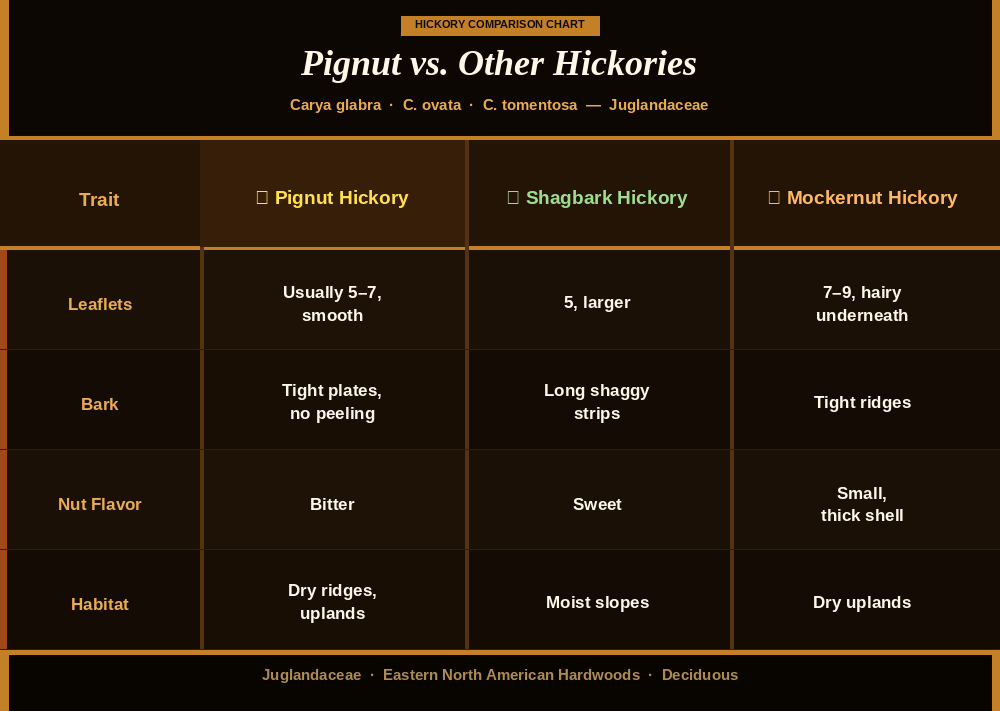
Pignut vs. Other Hickories
Frequently Asked Questions
Why is it called pignut hickory?
Early farmers noticed pigs eagerly eating the fallen nuts, even though they were too bitter for most people.
How fast does it grow?
Slowly. Expect about 1–2 feet per year under good conditions.
Is it good for wildlife?
Yes. It provides food, shelter, and habitat for many animals and insects.
Can I plant it in a yard?
Yes, but only if you have plenty of space and don’t mind the falling nuts and leaf litter.
Shellbark Hickory: Know all about the Mighty Kingnut Secret
Why This Tree Deserves More Attention
Pignut hickory may not look special, but it is one of the hardest-working trees in the forest. It can survive dry weather. It also has extensive roots that hold soil on steep hills. Its nuts feed many animals. Its timber is also strong, and tools made from it can remain as good as new for decades.
Not all the important trees are the showy trees. They are the quiet supporters of everyone and everything within their reach. And that is what pignut hickory has been doing for hundreds of years.