When I first heard the name monkeypod wood, I honestly smiled. The name sounds fun, but the wood is seriously beautiful and useful. Monkey pod wood is a type of tropical hard wood commonly used for furniture, ornaments and carving. If you love natural wood or just kind of interested in it, this explanation should help everything make sense.
What Is Monkeypod Wood?
Monkeypod wood, derived from the Albizia saman tree, is also called rain tree or saman tree. Before they were widely planted, they grew in Central and South America, but now you can find them all around the tropics — Hawaii, Thailand, the Philippines and other Pacific islands.
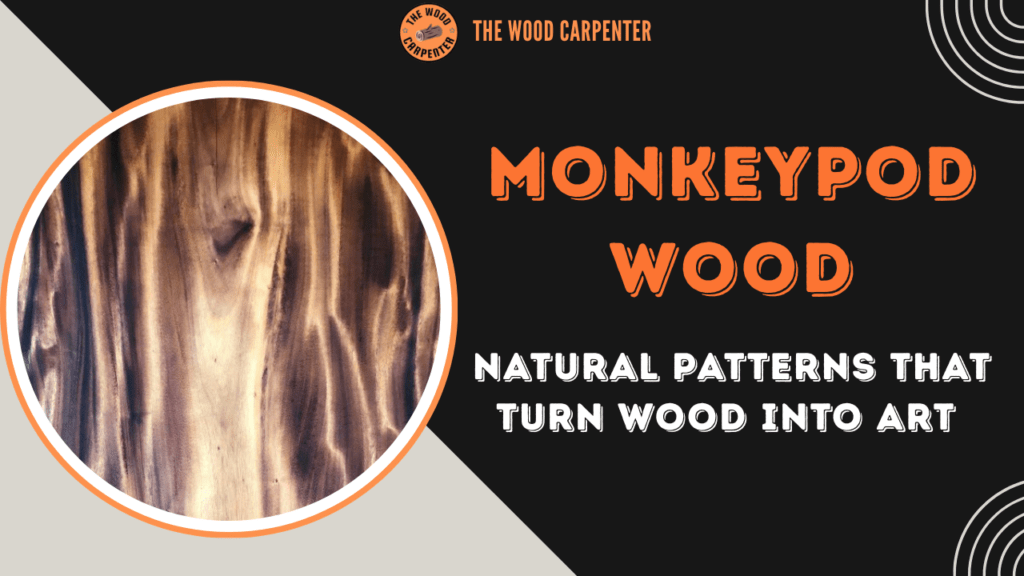
The wood has a warm and rich look. Its color ranges from golden brown to reddish brown, sometimes with dark lines running through it. Many pieces also show beautiful natural patterns, which make every slab or board look different. The lighter outer wood (sapwood) creates a nice contrast with the darker center wood.
Why Is It Called Monkeypod?
There are two common stories behind the name. One story says monkeys liked to sit under the tree and eat the sweet seed pods. Another explanation comes from the tree’s old scientific name, which means “monkey earring” because of the shape of the seed pods.
In different countries, the tree has different names. Many people call it the rain tree because its leaves fold up at night and during rain. In the Philippines, it’s called mimosa, and in Thailand and Indonesia, it’s known as trembesi.
How Monkeypod Wood Looks
Monkeypod wood is known for its natural beauty. The grain can be straight, wavy, or even wild. Some boards have curly patterns that woodworkers really love. The surface has a natural shine that looks even better after finishing.
The wood feels slightly coarse but smooths nicely when sanded. Its open grain gives it a strong and natural character instead of a perfect factory look.
Strength and Quality
Monkeypod wood is strong enough for furniture but not too hard to work with.
It is:
- Medium in weight
- Similar in hardness to cherry wood
- Stable and resistant to warping
- Naturally resistant to decay
Because of this balance, it’s great for tables, desks, cabinets, and carving projects.
The Monkeypod Tree
Monkeypod trees are massive and impressive. They can reach more than 100 feet tall, but their wide canopy is what makes them striking. Some trees stretch as wide as a football field, producing deep shade.
These trees do grow relatively quickly, making them a nice sustainable wood option. They bear pink, fluffy flowers and long seed pods that have sweet pulp. The trees usually live 80 to 100 years.
Working With Monkeypod Wood
Monkeypod wood is mostly easy to work with. It cuts well using hand tools and machines. However, the grain can sometimes be tricky, especially when planing, so sanding often gives better results.
The good thing is that monkeypod:
- Glues easily
- Accepts finishes well
- Does not contain heavy oils
This makes it beginner-friendly compared to many other tropical woods.
Turning and Carving
Monkeypod is excellent for wood turning. That’s why it’s famous for hand-carved bowls, especially in Hawaii. It also works well for decorative carving using power tools. The grain gives finished pieces a natural and artistic look.
Common Uses of Monkeypod Wood
Monkeypod wood is very versatile.
It is commonly used for:
- Dining tables and coffee tables
- Live-edge furniture
- Cabinets and desks
- Wooden bowls and serving platters
- Musical instruments like guitars and ukuleles
- Interior trim and veneers
Live-edge monkeypod slabs are especially popular because they show the tree’s natural shape.
Is Monkeypod Wood Sustainable?
Yes, monkeypod wood is an eco-friendly choice. The trees grow quickly and are not threatened. None are listed as threatened by international conservation groups.
Before being used for wood, these trees often help the environment by:
- Providing shade for crops
- Improving soil quality
- Preventing erosion
- Beautifying parks and roads
This makes monkeypod wood a responsible choice.
Price and Availability
Monkeypod wood ranges in price based on size, quality and point of origin. Wide slabs and figured wood are more expensive. Smaller boards and turning blanks are less expensive.
In nations where the tree grows natively, monkeypod can be perceived as a commodity wood and it may cost less.
Finishing Monkeypod Wood
Finishing monkeypod wood really brings out its beauty.
Good finish options include:
- Natural oils like tung oil
- Polyurethane for protection
- Lacquer for a smooth look
- Wax for a soft, hand-rubbed feel
Simple sanding and a clear finish are often enough.
Care and Maintenance
Nothing to worry about maintaining with monkeypod furniture. Simply wipe it with a soft cloth. For oil or wax finishes, reapply as needed once a year. Use coasters and don’t put very hot items directly on the surface.
Natural Variations
Every piece of monkeypod wood looks different. You may see:
- Color changes
- Natural knots
- Light sapwood areas
- Dark streaks or marks
These are not flaws. They are what make real wood special.
Cultural Importance
In many places monkeypod wood has cultural significance. Carved monkeypod bowls were particularly popular in Hawaii following World War II. One well-known monkeypod tree, Hitachi Tree, is a tourist drawing card.
In Venezuela, there is a legendary monkeypod tree under which a historic army once camped.
Safety Tips
Monkeypod wood is generally safe, but its dust can irritate some people.
Always:
- Wear a dust mask
- Use eye protection
- Work in a well-ventilated area
Common Questions
Is monkeypod similar to mahogany?
Yes, it looks similar but is usually lighter and easier to work with.
Can monkeypod be used outdoors?
It’s most appropriate for indoor use or covered outdoor spaces unless it has been very well sealed.
Can it be stained?
Yes, but most people choose clear finishes in order to achieve a natural color.
How long does monkeypod wood last?
When well taken care of, it can be passed down for generations.
Final Thoughts
If you’re in the market for a beautiful, durable and natural table then monkeypod wood is your best option. With its rich color, distinctive grain, and environmentally friendly characteristics, it is ideal for furniture, décor and artistic projects.
If you’re interested in working with real wood that has character and a story, monkeypod is not one to dismiss out of hand. The name’s playful, but the quality is serious.