
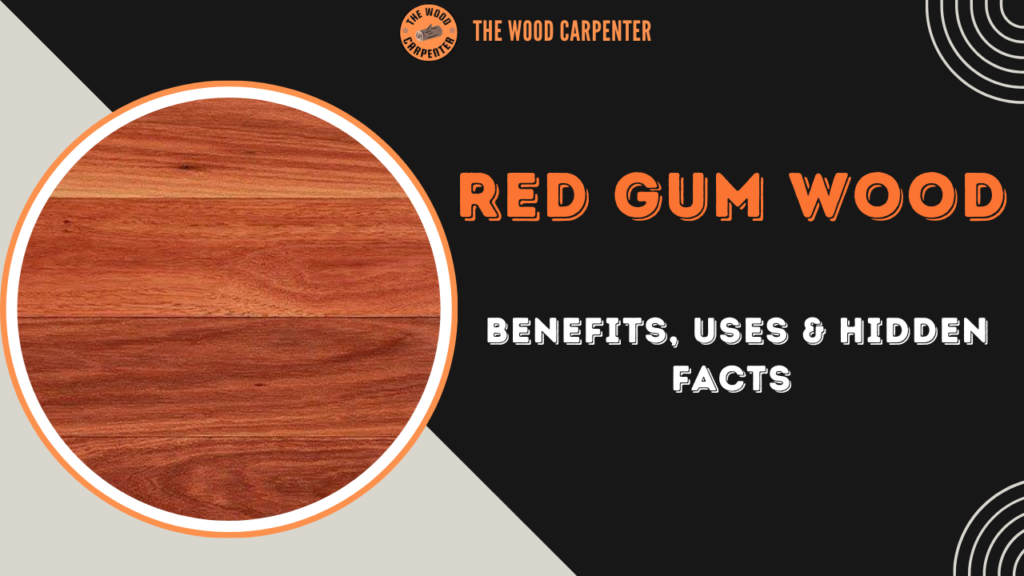
Many woodworkers remember the first time they cut into red gum wood. From the outside, the wood may look plain. But once the saw cuts through it, beautiful deep red colors appear. You may also see soft grain patterns and sometimes dark streaks running through the wood like small rivers.
Unlike exotic woods like Zebrawood, red gum is not a show-off wood. Instead, the more you look at it the more beautiful it becomes.
One important thing to know is that “red gum” is not just one type of tree. The name is used for two different trees in different parts of the world.
Red gum in the United States is the heartwood from the sweetgum, Liquidambar styraciflua.
In Australia, red gum usually means Eucalyptus camaldulensis, a type of eucalyptus tree.
While both woods are a similar shade of reddish red and share the name “red gum,” they’re from entirely separate species of trees. For this reason they will act very differently when you cut work, or shape, them.
In this guide, you will learn about the two types of red gum in simple terms so that you are aware and know what kind of red gum you are buying and how to deal with it in order to prepare it for your use in the process of working with your wood.
Understanding the Two Types of Red Gum
American Red Gum (Sweetgum Heartwood)
In North America, lumber labeled “red gum” almost always comes from sweetgum. Widely distributed in low moist places throughout the eastern and southeastern United States.
Only the heartwood is red gum The paler outerwood goes into a separate sale as sapgum.
Heartwood is variable and ranges from light reddish-brown to dark red-brown, and may be gray or purple. The grain is often interlocked which gives it beautiful ribbon patterns when quartersawn.
Sweetgum trees are a fast-growing tree and can be 60 to 100 feet in height. That wide availability keeps the wood from being much more expensive than many premium hardwoods.
Australian Red Gum (River Red Gum)
In Australia, red gum means something much heavier and harder.
River red gum is found on rivers and floodplains throughout much of the continent It has particular relevance in the context of inland waterways and is rich with both ecological and cultural significance.
The heartwood is bold — rich red, deep brown, sometimes nearly black in older timber. Large slabs often show dramatic gum veins, which are dark streaks formed when the tree healed natural cracks during its life.
Australian Red Gumis much denser and harder, and ranks it among the toughest commercial hardwoods on the market.
Key Physical Differences
The easiest way to understand the contrast is side by side:
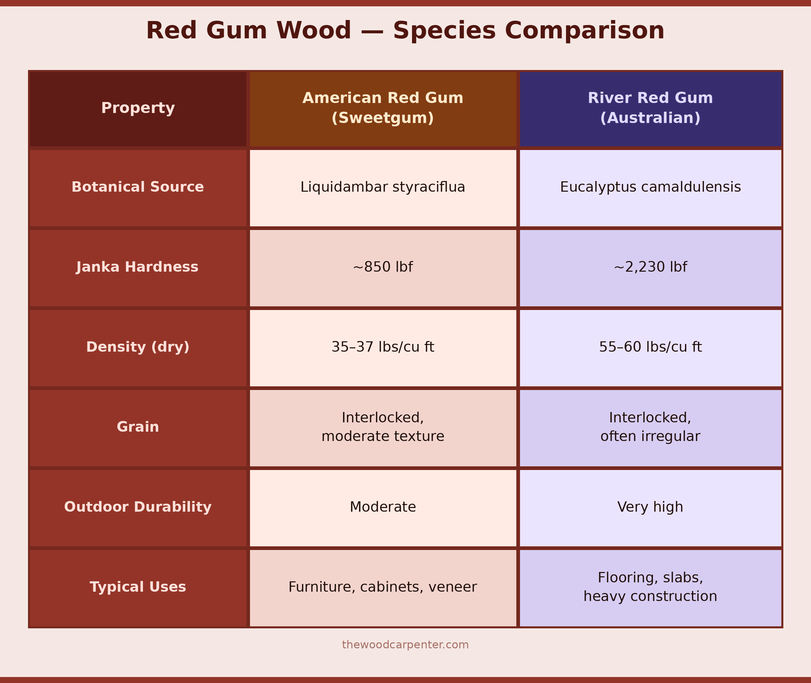
The hardness difference alone changes everything in how the wood behaves under tools.
Working With American Red Gum
American red gum is considered moderately hard. It’s similar in hardness to black walnut, which makes it comfortable for most furniture projects.
The main challenge is its interlocked grain. If you run it aggressively through a planer, you’ll likely see tearout. Sharp blades and light passes solve most of that problem. Many woodworkers prefer using a card scraper or fine hand plane for the final surface.
Drying is where patience matters most. Sweetgum has a reputation for warping if dried too quickly. Boards can cup or twist if not properly stickered and weighted. Buying kiln-dried lumber from a good supplier helps avoid headaches.
It glues well and takes finish nicely. However, staining can sometimes appear blotchy on flat-sawn boards. A pre-stain conditioner or light washcoat evens out absorption.
In real-life use, American red gum was once extremely popular for furniture. Early 1900s “imitation mahogany” furniture was often red gum stained darker. Today it’s still used for cabinets, interior trim, plywood cores, and even turning projects.
For indoor furniture at a reasonable price, it’s a solid choice.
Working With River Red Gum
River red gum is a different experience entirely.
The first thing you notice is the weight. A large slab feels serious. The second thing you notice is how quickly it dulls tools. Carbide blades are strongly recommended. Drilling requires slow speeds and sharp bits.
Because it’s so dense, pre-drilling for screws is essential to prevent splitting. The wood can also contain silica, which increases tool wear.
Drying must be done slowly. Large slabs may develop surface checking if rushed. Once properly seasoned, however, it becomes stable and extremely durable.
Where river red gum truly shines is finishing. Oil finishes like tung oil or Danish oil bring out the deep red tones beautifully. Clear finishes highlight gum veins and natural figuring without hiding the character.
In Australia, this wood is widely used for:
- Flooring in high-traffic homes
- Outdoor furniture
- Railway sleepers
- Bridge decking
- Live-edge slab tables
In fact, reclaimed river red gum from old buildings and bridges is highly valued and often more expensive than newly milled timber.
Appearance: Color and Grain
Both types share a reddish tone, but the intensity differs.
American red gum is usually softer in color — pinkish-brown to red-brown. Over time, exposure to light deepens the tone slightly.
River red gum starts stronger and deeper. With age, it develops a richer, almost wine-like color. Gum veins create dramatic dark streaks, which some woodworkers see as defects and others see as art.
Texture in both is fairly uniform, with a natural sheen when polished.
If you’re aiming for bold statement furniture, river red gum has more visual drama. If you want subtle warmth, American red gum works beautifully.
Outdoor Performance
This is one of the biggest differences.
River red gum has natural durability and can last decades outdoors when properly dried. It is resistant to termites and decay compared to many other hardwoods.
American red gum is less durable outdoors. It performs best indoors or in covered exterior settings. For ground contact or heavy exposure, it’s not ideal unless treated.
If you’re building a backyard bench in a dry climate, river red gum is excellent. If you’re making indoor cabinets, American red gum is more practical and budget-friendly.
Sustainability and Sourcing
Sweetgum is native throughout much of the southeastern U.S. and is a prolific regenerating species. The species is not listed as threatened and is widely available from domestic hardwood suppliers.
Australia has stricter harvesting protocols than in other countries particularly in sensitive river systems for river red gum. In fact, much of the commercial supply today is sourced from managed forests, private land, or reclaimed timber.
Try and scout for certified or responsibly sourced stock when possible.
Common Issues and Simple Fixes
| Problem | Likely Cause | Practical Solution |
| Tearout during planing | Interlocked grain | Use sharp blades, light passes, scraper |
| Warping after purchase | Improper drying | Acclimate wood before milling |
| Blotchy stain | Uneven absorption | Apply pre-stain conditioner |
| Checking in slabs | Fast drying | Seal ends, dry slowly |
| Tool dulling (river red gum) | High density/silica | Use carbide tooling |
Most problems are manageable once you understand the wood’s nature.
Frequently Asked Questions
Is red gum a hardwood?
Yes. Both sweetgum and river red gum are hardwoods from broadleaf trees.
Is red gum good for flooring?
River red gum is excellent for flooring due to its hardness. American red gum can work in low-traffic areas but is softer.
Does red gum warp?
American red gum can warp if dried too fast. River red gum is more stable once fully seasoned.
Can red gum be used for cutting boards?
River red gum can be used, but its hardness may be tough on knives. American red gum works better for decorative boards than heavy chopping use.
Is red gum expensive?
American red gum is generally affordable. River red gum is more expensive, especially figured or reclaimed slabs.
Final Thoughts
Red gum is not a beginner’s wood. It demands some attention while drying. It asks for sharp tools. It asks for patience.
But it gives back in color, character, and strength.
American red gum is an underrated reliable workhorse of a furniture wood. River red gum is bold, dense, and dramatic an architectural timber made to last.
If you understand which one you’re working with, you won’t be surprised. And when you step back from a finished piece — whether it’s a simple cabinet or a massive live-edge table — you’ll see why red gum has earned respect on two different continents.