
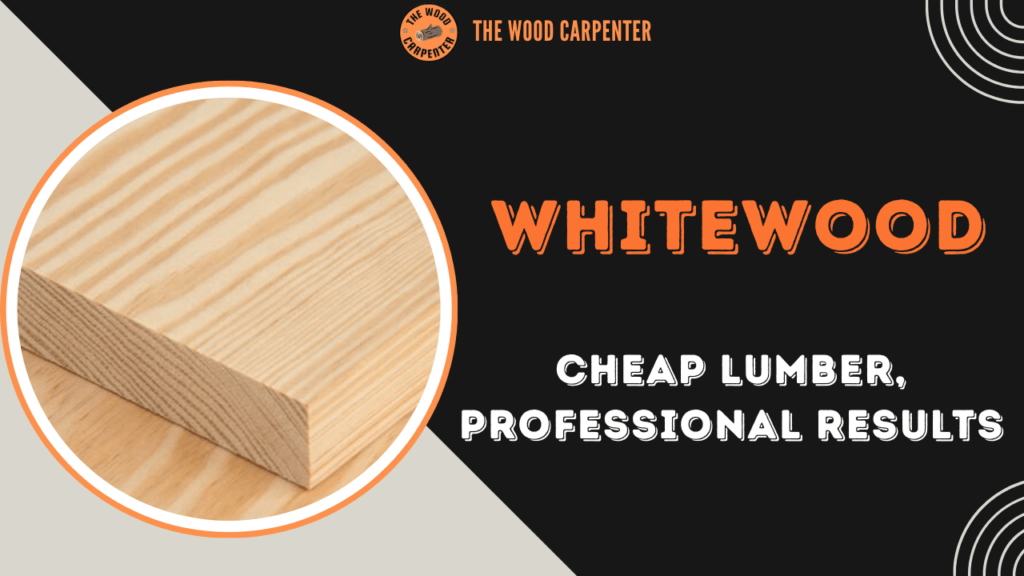
Whitewood is the It’s a pale, cheap lumber that you see in stacks at big hardware stores. It’s easy to work with, affordable, and perfect for framing, shelves, and DIY projects.
Whitewood is usually a mix of fast-growing spruce, pine, and fir (called SPF). Its straight grain and light weight make it popular with beginners and professionals who want quick, simple builds.
What Exactly Is Whitewood ?
Whitewood is not a single tree species. It’s a general name for light-colored softwoods such as Norway spruce, Engelmann spruce, and lodgepole pine. These trees are grown in North America and Europe using sustainable methods.
These boards are usually creamy white to pale yellow with straight, subtle grain and a smooth feel. They are light, weighing about 25–35 pounds per cubic foot, so one person can carry them easily.
Most wood is kiln-dried to about 12–15% moisture, which helps prevent shrinking after installation. Its hardness ranges from 300–500 on the Janka scale. This is much softer than oak but strong enough for many uses. Pine-based whitewood often has more knots, while spruce is cleaner and smoother.
What Is Whitewood Made Of?
It comes from softwood trees, mainly spruce (Picea), pine (Pinus), and fir (Abies or Douglas fir). These trees grow quickly and are harvested from managed forests. The wood is kiln-dried for stability. In Europe, spruce is most common. In North America, whitewood is usually an SPF mix.
Whitewood vs. Other Woods: Key Differences
Compared to hardwoods like oak or maple, whitewood is much cheaper—often half the price—but it dents more easily. Pine-based whitewood has more knots and a rustic look, while spruce is smoother and better for painting.
Fir is the strongest of the group and works well for framing and long spans. Spruce glues very well, making it great for boxes and panels. All whitewood paints nicely, but staining usually needs a wood conditioner to avoid uneven color.
| Property | Whitewood (SPF) | Oak (Hardwood) |
| Color | Pale cream/yellow | Golden brown |
| Hardness (Janka) | 400–700 lbf | 1,200+ lbf |
| Cost per BF | $2–4 | $6–10 |
| Best Finish | Paint/sealer | Stain/poly |
Whitewood vs. Pine
Whitewood often includes pine, but pure pine tends to turn yellow over time and has more visible knots and resin. This makes pine good for rustic shelves. Whitewood with more spruce or fir stays lighter in color, straighter, and slightly lighter in weight. Pine is usually cheaper, while whitewood is more versatile overall.
Types of Whitewood: Spruce, Pine, Fir Breakdown
Spruce is considered “true” whitewood. It is light, straight-grained, and smooth, making it great for paint, crafts, and even musical instruments. Norway spruce dries evenly and resists warping.
Pine whitewood has more knots and resin and a yellow tone. It’s very affordable and common for shelves and DIY projects. Douglas fir is the strongest option, with higher hardness and better strength for framing, though resin pockets can affect finishing.
European whitewood often blends these types and is valued for joinery, especially in humid climates.
- Spruce: Clean, light, easy to paint
- Pine: Knotty, cheap, rustic look
- Fir: Strongest, best for structure
Why Whitewood Wins for Strength and Workability
Whitewood is easy to cut, plane, and sand. Saws cut cleanly, and planers leave smooth surfaces. Nails and screws go in easily, especially if you pre-drill near edges. It splits less than many hardwoods.
It is fairly stable, especially when quartersawn, and holds its shape well in normal indoor humidity. It glues well, bends with steam, and grows fast, making it an eco-friendly choice.
Finishing Whitewood: Paint, Stain, and Seal Like a Pro
Priming first is important. It blocks resin stains in pine and helps paint stick evenly. Latex and milk paints work very well on whitewood.
For staining, gel stains give more even color. Oil-based stains can be thinned for the first coat. Polyurethane seals the surface well—three coats are common. Satin finishes hide fingerprints better. Wax can be used for a warm, soft feel indoors.
Pro tip: Sand to 150–220 grit, remove dust, and seal all sides for outdoor use.
Common Applications and Projects
Whitewood is used for framing, shelving, trim, crates, boxes, toys, and crafts. Common sizes like 2x4s are used for walls, while 1x boards are used for shelves and cabinets. It paints well for indoor projects and can be treated for outdoor use.
Role in Construction and Framing
In construction, whitewood studs (SPF 2×4 or 2×6) are widely used to frame houses. They are spaced 16–24 inches apart and meet building codes when kiln-dried. Whitewood holds nails well and works perfectly with drywall and sheathing.
Furniture Applications and Benefits
Whitewood furniture usually means affordable furniture like shelves, bookcases, and dressers. Spruce tables and pine benches are common. These pieces are lightweight and easy to assemble. While not as durable as oak, they are great for apartments and budget homes.
What Is Whitewood Woodworking?
Whitewood is popular for woodworking projects like boxes, toys, frames, and trim. Spruce planes very smoothly, and pine routes easily. It sands quickly and is forgiving, making it ideal for beginners and efficient for professionals.
Is Whitewood a Hardwood?
No. Whitewood is a softwood. It comes from evergreen trees and is lighter and softer than hardwoods like oak or maple.
Is this wood Good for Outdoor Use?
Only when treated. Pressure-treated whitewood resists rot and can last 20 years or more outdoors. Untreated whitewood will rot and warp quickly if exposed to moisture.
Top Uses: From Framing to Furniture
Most whitewood is used for studs and joists. Shelves can hold about 50 pounds per foot. Crates protect fragile goods during shipping. Crafts like birdhouses and picture frames paint well. For outdoor use, pressure-treated whitewood is required.
| Project | Best Whitewood Type | Tips |
| Framing | Fir / SPF studs | Choose straight, kiln-dried |
| Shelves | Pine boards | Sand knots smooth |
| Crafts/Toys | Spruce | Use non-toxic finishes |
Indoor Projects: Shelves, Trim, and Cabinets
It works well for floating shelves, baseboards, and cabinet boxes. Pine shelves are easy to cut and strong enough for books. Spruce trim paints cleanly. Cabinet frames made from spruce are light but strong.
Outdoor and Structural Applications
Pressure-treated whitewood is common for decks and fences. Fir resists wind well for fencing. Spruce is good for lightweight outdoor items like bird feeders. Historically, spruce was even used in aircraft frames.
Maintenance
Dust regularly with a soft cloth. Refresh protective finishes yearly if needed. Seal knots with shellac before painting. Let boards adjust indoors before installation to reduce warping. Small dents can be raised using steam.
Drawbacks and How to Beat Them
Whitewood dents easily—protect edges. Resin can bleed—use kiln-dried lumber and primer. Moisture causes warping—seal all sides. Knots can weaken boards—choose clear grades for visible work. It is not naturally rot-resistant.
Buying Guide: Grades, Sizes, and Smart Picks
#2 grade is fine for framing. Select grades are better for painting and furniture. Common sizes include 1×4 to 1×12 boards and 2×4 studs. Always check for straight boards and look for FSC certification for sustainability.
FAQ: Whitewood Questions Answered
Is whitewood a hardwood or softwood?
Softwood made from spruce, pine, and fir.
Best whitewood for painting?
Spruce, because it has tight grain and fewer blotches.
Does whitewood warp easily?
It can—kiln-drying and sealing help prevent it.
Whitewood vs. pine—which is stronger?
Fir-based whitewood is stronger; pine offers rustic looks.
Can you stain whitewood?
Yes, but use conditioner first.
Is whitewood good for outdoor use?
Only if pressure-treated.
Cheapest whitewood type?
SPF studs—they are widely available and low cost.