
Last Updated on July 9, 2026 by Sam Wood Worker
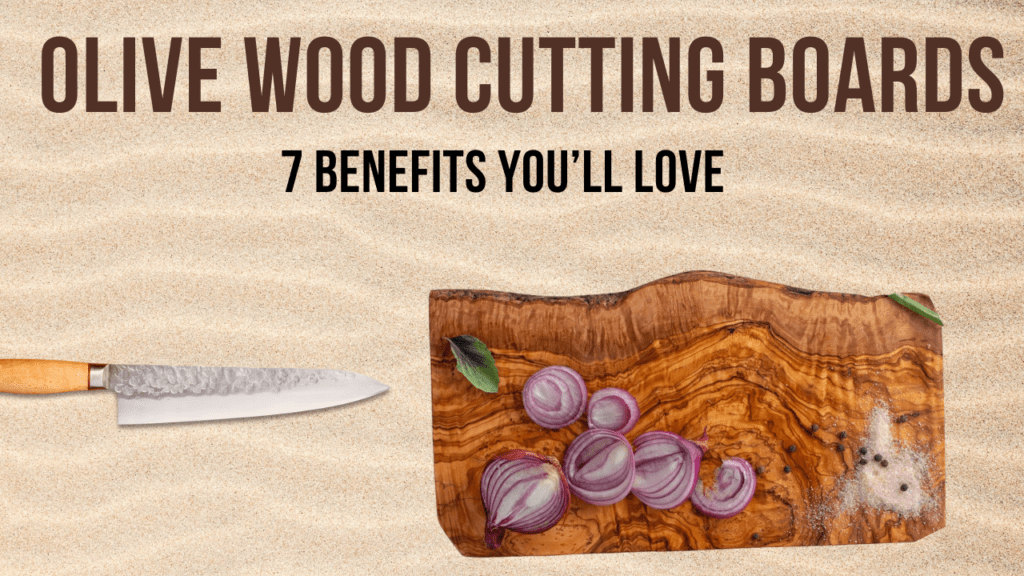
Olive Wood Cutting Board
Quick answer: Olive wood cutting boards are tough, good-looking, and naturally resist bacteria because of their tight grain. But they are heavy, cost more than most kitchen woods, and they need regular oiling or they will crack. If you want a board that lasts 20+ years and don’t mind a little upkeep, olive wood is a smart buy. If you want zero-maintenance, look at bamboo or plastic instead.
I almost made a $90 mistake on my first olive wood board. I saw it online, loved the swirly grain pattern, and clicked buy without reading a single review. Three weeks later it had a hairline crack right down the middle because I left it soaking in the sink overnight. That mistake taught me more about this wood than any article ever did, and that’s exactly why I’m writing this one for you.
So before you spend your money, let me walk you through what I wish someone had told me first.
What Makes Olive Wood Different From Other Cutting Boards
Olive wood comes from olive trees, mostly grown in the Mediterranean, places like Italy, Spain, and Tunisia. These trees grow slow and crooked, and that slow growth packs the wood fibers tight together. That tight grain is the whole reason people love this wood for kitchen use.
I’ve worked with maple, walnut, and beech boards before I tried olive wood, and the first thing I noticed was the weight. Pick up an olive wood board and it feels solid in your hand, almost like holding a small rock with a handle. That density is not just for show. It is what makes the board resist scratches and knife marks better than most.
If you want a deeper look at the upside of this wood, I covered the main benefits in my olive wood cutting board guide, but here I want to focus on the things you need to know before your money leaves your wallet.
The Real Pros (From Someone Who Owns One)
It fights bacteria on its own. Olive wood has natural oils inside the grain that make it harder for bacteria to survive on the surface. This is not a marketing claim, it is just how dense, oily wood behaves. I still wash my board with soap and water after cutting raw chicken, but I feel better knowing the wood itself is working with me, not against me.
It looks like nothing else in your kitchen. Every olive wood board has a different swirl pattern, dark veins running through lighter wood. No two boards look the same. Mine sits on my counter even when I’m not using it because honestly, it looks better than half my decor.
It lasts for decades if you treat it right. My grandmother had an olive wood serving board from Italy that was older than me. It still works fine today. That kind of lifespan is rare for kitchen tools.
The Real Cons Nobody Tells You About
This is the part most sellers skip, so let’s talk straight.
It cracks if you ignore it. Olive wood is dense, but that density also means it does not handle sudden moisture changes well. Soak it, run it through the dishwasher, or leave it in direct sun and you are asking for trouble. My cracked board was a direct result of overnight soaking. Lesson learned the hard way.
It costs more. A decent olive wood board runs anywhere from $40 to over $100, depending on size and where it is made. Compare that to a $15 bamboo board, and you can see why some buyers hesitate. If budget matters more than looks, my bamboo cutting board breakdown might be a better starting point for you.
It is heavy. Great for stability while chopping, not so great if you want something light to wash and store. If you have wrist or grip issues, this is worth thinking about before you buy.
It needs regular oiling. This is not optional maintenance, it is required. Skip it and the wood dries out, then cracks. I’ll cover exactly how to do this below.
How Olive Wood Stacks Up Against Other Cutting Board Woods
I get asked a lot whether olive wood beats maple, walnut, or beech. Honestly, it depends on what you value most.
| What You Want | Best Pick |
|---|---|
| Maximum durability and bacteria resistance | Olive wood |
| Budget-friendly and easy care | Bamboo |
| Classic American kitchen look | Maple |
| Rich dark color without the olive wood price tag | Walnut |
| A lighter weight hardwood option | Beech |
| A budget hardwood alternative | Sheesham |
If you want to understand why some woods hold up better than others under a knife, it comes down to hardness. I broke down exactly how that scale works in my Janka hardness guide, and olive wood sits comfortably in the dense, durable range right alongside the hardwoods chefs trust most.
A Real Scenario: Buying Online vs. Buying In Person
Here’s something practical. A friend of mine ordered an olive wood board online last year and it arrived with a small warp in the middle. Wood ships from humid storage to dry storage to your kitchen, and that journey can stress the grain, especially with imported pieces.
If you can, buy from a seller who shows you the actual board in photos, not a stock image. Check the listing for the wood’s origin and ask if it has been properly dried before being cut. A well-dried board sits flat on a table without rocking. If it wobbles even slightly, that is a warning sign.
If you are buying in person, do the smell test. Quality olive wood has a faint, slightly earthy smell. If it smells heavily of chemicals or finish, that is a sign of low-grade processing or a board not meant for food contact.
How to Care for an Olive Wood Cutting Board the Right Way
This is the section that will save you from my mistake.
- Hand wash only, every time. Warm water, mild soap, quick scrub, dry it right away with a towel. Never let it sit wet.
- Never use the dishwasher. The heat and prolonged moisture will warp or crack it within a few cycles.
- Oil it once a week for the first month, then once a month after that. I personally use mineral oil made for cutting boards because it is food safe and keeps the wood from drying out. If you want options beyond mineral oil, I compared several choices in my best food-safe oils for cutting boards guide.
- Add a beeswax finish if you want extra protection. A light coat of beeswax wood finish on top of the oil seals the surface even more and gives it a nice soft sheen.
- Keep it away from direct sun and heat sources. Don’t store it near a stove or windowsill.
- Sand out deep knife marks once a year. Light sanding with fine grit paper, then re-oil right after.
If you stick to this, your board genuinely can outlast every plastic cutting board you’ll ever own.
Should You Worry About Water Resistance?
A common question I get is whether olive wood is naturally waterproof. It is not, not on its own. No untreated wood truly is. What protects it is the oil treatment you apply, which fills the wood’s pores and blocks water from soaking in. If you want to understand this idea more broadly, I explained the full process in my guide on waterproofing wood. The short version: oil regularly, and water resistance follows.
How to Spot a Good Quality Board Before You Buy
Wood quality varies a lot, even within the same species. Lower grade cuts can have more knots, inconsistent grain, or hidden cracks filled in with filler. I always recommend learning the basics of wood grading before spending real money, and I laid it all out simply in my wood grades guide. A higher grade board costs a bit more upfront but saves you from replacing it in a year.
Frequently Asked Questions
Is olive wood good for cutting boards?
Yes. It is dense, naturally resistant to bacteria, and holds up well to daily knife use when cared for properly.
Is olive wood better than bamboo for cutting boards?
Olive wood is more durable and longer lasting, but bamboo is cheaper, lighter, and needs less maintenance. Choose based on your budget and how much upkeep you’re willing to do.
Why did my olive wood cutting board crack?
Cracking usually happens from sudden moisture exposure, like soaking, dishwashing, or sitting wet for too long, combined with not oiling the board regularly.
How often should I oil an olive wood cutting board?
Weekly for the first month, then monthly after that. If the wood looks dry or pale, oil it sooner.
Is olive wood food safe?
Yes, as long as it is untreated with chemical finishes and properly oiled with food-grade oil like mineral oil.
My Final Take
I won’t pretend olive wood is perfect for everyone. If you travel a lot, live alone, or just want a low-effort kitchen, this board will frustrate you. But if you cook often, care about how your kitchen tools look and feel, and you’re willing to give it five minutes of attention each week, an olive wood cutting board is one of those purchases you’ll still be using a decade from now. Mine sure is, cracked corner and all. I just sanded it down, learned my lesson, and it’s been solid ever since.