
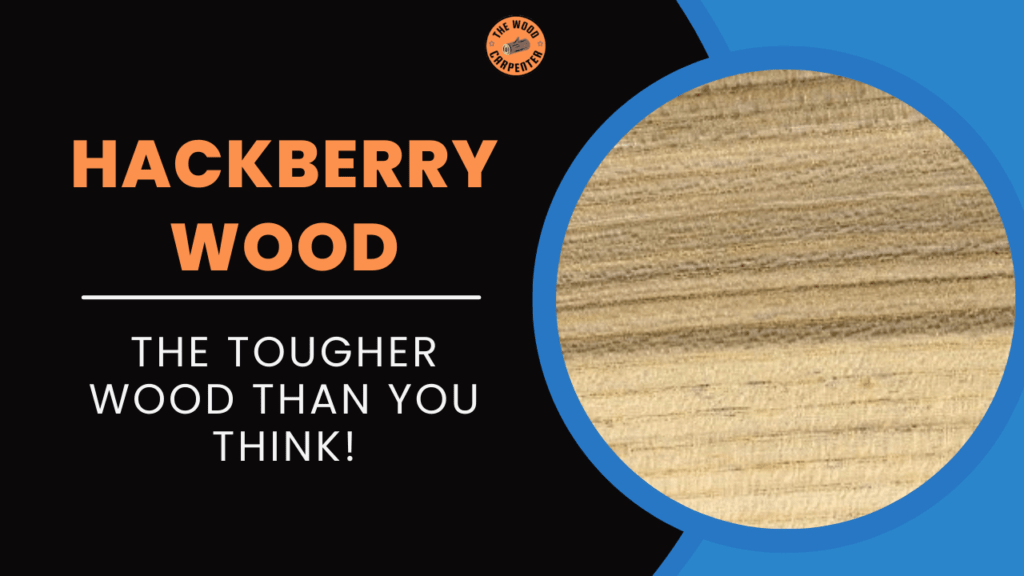
When I first saw hackberry wood on a stack at a sawmill, I let it be. I was searching for ash, and hackberry just seemed unimportant. The seller pulled me up short: “You see that wood you just walked by? It’s pretty much like ash — but at a fraction of the price.” He was not wrong, and that moment transformed the way I look at hackberry wood.
Hackberry is an underestimated American hardwood. It has some nice properties, even though a lot of people have never used it. It’s cheap, workable and best known for one thing — it bends extremely well with steam.
If you’re a woodworker who prizes value and performance over big brand names, hackberry is worth your time.
What Is Hackberry Wood ?
Hackberry wood comes from two closely related trees: hackberry and sugarberry. In the lumber world, both are sold simply as hackberry because the wood looks and behaves almost the same.
These trees are found primarily in the central and southern United States, where they can grow very large. That allows them to make wide boards and long lumber, always a plus for woodworking projects.
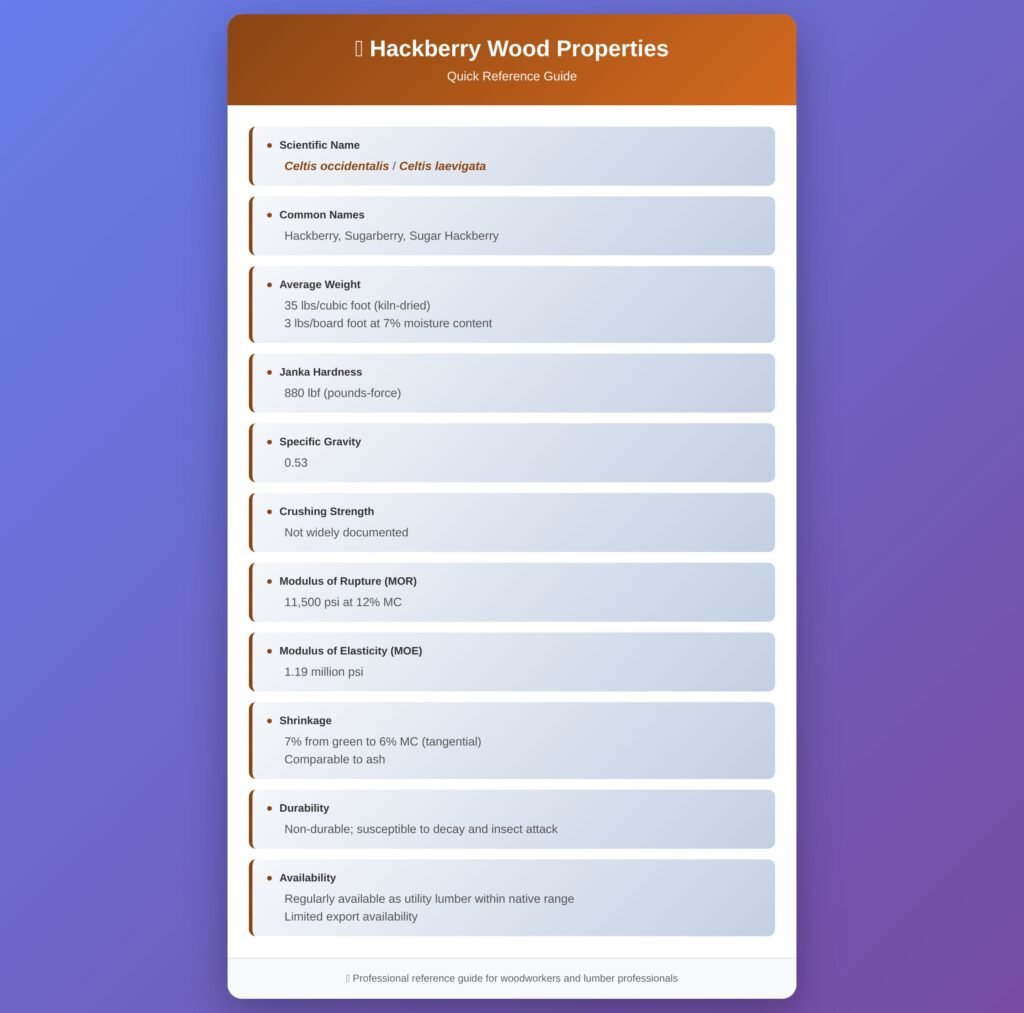
Hackberry is a medium-weight hardwood. It’s not as hard as oak, but it’s stronger than soft woods such as pine.
What Does Hackberry Wood Look Like ?
Hackberry wood is usually light in color, ranging from creamy white to pale yellow. Most boards are made up of sapwood, which gives the wood a clean, bright look.
The grain is large and bold, like ash or elm. Due to that, hackberry can be quite a pretty wood when completed particularly in furniture and turned pieces.
One thing to be aware of is that hackberry stains very easily if it’s not completely dry. Boards that are not carefully cared for will grow gray or even black streaks. Some people do not like this, but others specifically choose stained or spalted hackberry because they prefer its distinctive look.
How Hard Is Hackberry Wood?
Hackberry sits right in the middle when it comes to hardness. It’s harder than pine and poplar, but softer than oak and maple.
This makes it:
- Easy to cut and shape
- Comfortable to work with hand tools
- Strong enough for furniture and cabinets
However, it’s not a great choice for flooring, since it can dent in high-traffic areas.
One Big Weakness You Should Know
Hackberry has no natural resistance to rot. This is very important.
Hackberry should never be used outdoors. It will rot quickly if exposed to moisture. It’s also not a good choice for damp areas like bathrooms or basements.
Think of hackberry as an indoor-only wood.
Why Woodworkers Like Hackberry
It Steam Bends Extremely Well
This is where hackberry really shines. Hackberry is one of the best woods in North America for steam bending. It bends smoothly without cracking, even into tight curves.
Because of this, it’s excellent for:
- Chair backs and rockers
- Curved furniture parts
- Bent wood projects
- Artistic and sculptural pieces
Many woodworkers actually prefer hackberry over oak for bending.
It’s Easy to Work With
Hackberry cuts, planes, sands, and turns nicely as long as your tools are sharp. It glues well and accepts screws and nails without much trouble.
Woodturners especially like hackberry because it turns smoothly and finishes beautifully.
It Takes Finish Very Well
Hackberry looks great with clear finishes. Oils, varnish, and polyurethane all work well. The light color brightens up furniture and cabinets.
It also stains evenly if you want it to resemble oak or ash.
Common Uses for Hackberry Wood
Hackberry works best for indoor projects, especially where strength and bending matter more than hardness.
Common uses include:
- Furniture frames
- Chairs and tables
- Cabinets and drawers
- Interior trim and moldings
- Turned bowls and decorative pieces
- Bent wood components
Lower-grade hackberry is often used for crates, pallets, and utility projects.
Hackberry Wood for Firewood
Hackberry also makes decent firewood, though it’s not top-tier like oak or hickory.
It burns:
- With moderate heat
- With low smoke
- With very little sparking
It’s easy to split and seasons fairly fast. However, it rots quickly, so it should be burned within a year or two.
Hackberry is great for:
- Campfires
- Fire pits
- Spring and fall heating
- Mixing with hotter woods
It also gives off a mild, pleasant smell when burned.
Is Hackberry Wood Expensive ?
No. That’s one of its biggest advantages.
In areas where hackberry grows naturally, it usually costs much less than oak or ash. You often get similar looks and performance at a lower price.
Because it’s not a “famous” wood, many people overlook it—which keeps prices reasonable.
Hackberry vs Other Woods (Simple Comparison)
Compared to ash, hackberry looks similar but is softer and bends better.
Compared to elm, hackberry is easier to work with and more available.
Compared to oak, hackberry is lighter, easier to shape, but far less durable.
Is Hackberry Wood Right for You?
Hackberry is a great choice if:
- You’re building indoor furniture
- You want a light-colored wood
- You plan to steam bend parts
- You want good value for the price
Hackberry is a bad choice if:
- The project will be outdoors
- The wood will get wet
- You need very hard, wear-resistant wood
Final Thoughts
The wood of the hackberry might not have the cache of oak or walnut — and it does not need to. What it does provide is value, workability, and performance — particularly for curved and interior projects.
If you evaluate wood based on how it works rather than its fame or lack thereof, hackberry is definitely a species that’s worth using. As I discovered that day in the sawmill, sometimes the best wood is the one everyone else walks past.