
Last Updated on June 20, 2026 by Sam Wood Worker
Ash Wood
Ash wood is a light-colored domestic hardwood from the Fraxinus genus — a family with over 18 North American species, led by white ash (Fraxinus americana) in commercial value and availability.
It sits in the upper-middle range of domestic hardness, delivers genuinely exceptional shock resistance, and is one of the most steam-bend-friendly hardwoods you’ll find at any North American lumberyard.
Woodworkers reach for it because it machines cleanly, stains better than almost anything else in the domestic category, and carries a strength-to-weight ratio that most hardwoods can’t touch.
The catch: it has almost no outdoor durability, and an invasive beetle has been quietly reshaping where and how you can source it. Both of those things matter before you commit to ash for any serious project.
Ash wood overview and identification
Species and names
Walk into most hardwood dealers in North America and ask for ash, and you’ll get white ash (Fraxinus americana) — the commercially dominant species and the benchmark for everything the wood does well.
You’ll also run into green ash (Fraxinus pennsylvanica) sold under the same broad label, sometimes interchangeably, which creates real board-to-board variation if you’re not asking the right questions at the counter.
Ash belongs to the olive family (Oleaceae), which surprises people who expect it to sit alongside oak and maple in the family tree. That botanical backstory matters less in the shop than understanding its ring-porous cellular structure — the same arrangement that makes ash so good at absorbing shock and so receptive to staining.
If you’re sourcing for structural parts, tool handles, or anything where consistent shock resistance is the actual goal, confirm you’re getting white ash rather than a blended mix. Species specificity matters more with ash than with most domestic hardwoods.
Heartwood vs. sapwood
Ash has a clear, readable color split. The sapwood runs creamy white to pale yellow, and the heartwood shifts into light-to-medium grayish-brown, sometimes with a subtle olive undertone.
The boundary between the two zones is visible but not jarring — closer in character to oak’s transition than to cherry’s sharp two-tone contrast.
What flips the usual convention here is that ash sapwood is actually the premium material for many applications. Baseball bat manufacturers specify it. Sports equipment makers want it.
Furniture builders chasing a clean, bright look prefer sapwood-dominant boards. If you open a bundle of select ash and find creamy white boards with minimal dark heart, that’s not a defect — that’s the grade you wanted.
Grain and figure
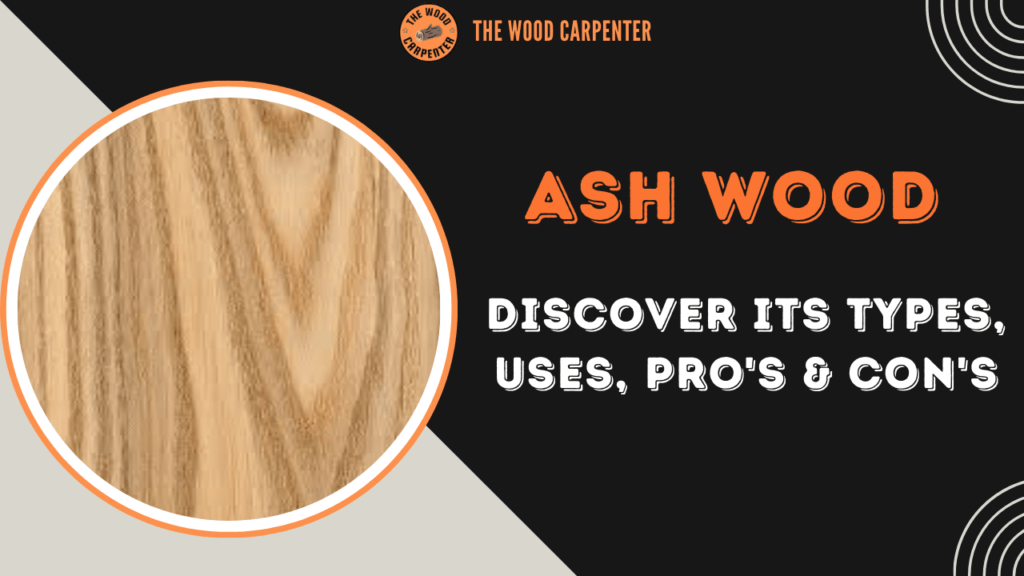
Ash has a straight, coarse-grained texture that reads visually similar to white oak. Open pores arrange themselves in distinct ring patterns, with alternating bands of large-pored earlywood (formed in spring) and dense, strong latewood (formed in summer).
That ring-porous structure is simultaneously what gives ash its exceptional staining behavior, its bold grain character, and the shock-absorbing fiber structure that makes it legendary for impact applications.
Most ash is calm in figure — straight, clear, predictable. Occasionally it produces wavy or curly grain that creates a subtle three-dimensional shimmer under light. That material is rare and commands a serious premium when it surfaces.
A quick wipe of mineral spirits across a board at the supplier is the fastest way to surface hidden figure before you commit to a buy.
Ash wood properties and specs
Ash sits in a genuinely useful sweet spot: hard enough for demanding applications, light enough to stay workable, and flexible enough to do things that denser, stiffer hardwoods simply cannot.
It’s not the heaviest domestic species by a stretch, but it converts that relative lightness into one of the best strength-to-weight ratios available in North American lumber.
| Property | Typical value for white ash |
|---|---|
| Janka hardness | ~1,320 lbf (5,870 N) |
| Specific gravity (12% MC) | ~0.60 |
| Average dried weight (12% MC) | ~670–700 kg/m³ |
| Volumetric shrinkage | ~12.5% |
| Modulus of rupture (MOR) | ~103 MPa |
| Modulus of elasticity (MOE) | ~12,000 MPa |
| Compressive strength (parallel) | ~51 MPa |
Those numbers put ash firmly in the serious domestic hardwood tier — harder than cherry and walnut, softer than hard maple, and genuinely competitive with red oak across nearly every structural metric. Use the table as a comparative baseline, not as a guarantee for any specific board.
Janka hardness
At 1,320 lbf, white ash is harder than most people expect when they first pick up a board. It clears cherry (950–995 lbf) and walnut (1,010 lbf) by a meaningful margin, and sits just below hard maple (1,450 lbf).
In daily use, that rating means ash holds up well under repeated impact and surface traffic that would mark up softer domestic species quickly.
What separates ash from its Janka neighbors isn’t the hardness number itself — it’s how that hardness combines with exceptional elasticity. Ash absorbs shock without fracturing, which is why a baseball bat can survive thousands of high-velocity impacts without splitting the way a stiffer, more brittle wood would at the same diameter.
That pairing of hardness and flexibility is rare in domestic lumber, and it’s why ash dominated the sports equipment market for the better part of a century.
Density and weight
Ash’s moderate density is one of its real working assets. It’s noticeably lighter than species with comparable hardness — white oak and hard maple both feel heavier in hand for equivalent board dimensions.
That makes ash genuinely pleasant to work through long sessions. You can mill, move, and assemble full-size furniture without the fatigue that accumulates with heavier exotics or dense domestic species like hickory.
For chair frames, tool handles, and sports equipment, the lighter weight relative to strength is the whole point. Finished pieces feel lively rather than sluggish, and structures can be built slimmer without sacrificing load capacity. Those are not trivial advantages in functional furniture.
Shrinkage and stability
Ash’s volumetric shrinkage sits on the higher end for domestic hardwoods at around 12–13%, which means it needs to be taken seriously during drying and acclimation. Boards that aren’t given time to equalize with shop humidity will move more than you expect, especially across wide panels.
The fix is the same as with any high-movement species: rough mill first, let boards sit in your shop environment for several days, then final mill before cutting joinery.
Ash that’s been properly kiln-dried and acclimated is reasonably stable in service. That stability is earned through patience upfront — don’t skip acclimation and then blame the wood for a cupped tabletop.
Strength and stiffness
Ash has exceptional bending strength and shock resistance, and those aren’t just catalog claims. The cellular structure is the explanation: as a ring-porous hardwood, each growth ring starts with large, open earlywood cells followed by dense, thick-walled latewood.
Those long, interlocked fibers flex and distribute impact energy across the piece rather than concentrating stress at a single point — exactly the behavior you need in a tool handle or a chair leg taking repeated loading over years.
In furniture, that strength means ash members can span distances and bear loads that softer species can’t match at the same dimensions. Thin stretchers and rungs in chair frames stay tight for decades. For shelves and horizontal spans, design still needs to respect load and span limits — ash is strong, not infinite.
Ash wood color and aging
Ash is a light-colored, clean-looking wood — not dramatic in its natural state, and that’s precisely what makes it so versatile.
It’s as close to a blank canvas as domestic hardwood gets, which is a real working advantage when you want to control final appearance through staining or finishing rather than working around the wood’s own strong personality.
Natural color range
Freshly surfaced white ash heartwood lands in a light-to-medium grayish-brown, sometimes with a subtle olive undertone. The sapwood, which appears frequently in ash boards, runs pale cream to near-white.
Together they create stock that looks bright and clean — less warm than cherry, less boldly grained than oak, and without the natural darkness of walnut.
That neutral palette is why ash is sometimes called the chameleon of domestic hardwoods. It doesn’t compete with the design — it accepts it.
Whether you’re going for a natural Scandinavian look, a dark ebonized finish, or trying to approximate a more expensive species without the price tag, ash’s base color doesn’t fight you the way a strongly colored wood would.
Yellowing and light exposure
Without a UV-protective finish, ash will gradually yellow and amber with light exposure over time — similar behavior to maple. That shift is usually mild and reasonably even, but it’s worth factoring into finish selection.
A simple oil finish alone won’t protect ash from this oxidation; you need a topcoat with UV inhibitors if maintaining consistent light color over years matters to the application.
Installing ash floors or building ash furniture for a sun-facing room without UV protection is a common mistake. The color shift won’t be as dramatic as cherry’s photodarkening, but over several years an unprotected ash surface will drift noticeably from its original tone.
Managing sapwood and heartwood contrast
One practical challenge with mixed ash boards is the contrast between light sapwood and darker heartwood in a glued-up panel. Without stain or color work, that contrast can read as inconsistency rather than intentional variation.
The solution is board layout in good light before glue-up. Decide whether to embrace the variation as a design feature, apply a light wash of dye to blend zones together, or sort for consistent sap or heart dominance.
Ash’s excellent stain response means evening out contrast is much easier than it would be with a blotch-prone species. A single pass of a mid-tone dye can unify a mixed panel without losing grain character — that’s a finishing move you can’t reliably pull off with cherry or pine.
Workability and finishing ash wood
Ash’s workability is one of its strongest selling points across the board. It machines cleanly, responds beautifully to steam bending, stains better than almost any other domestic hardwood, and handles both hand and power tool work without the fussiness of more difficult species.
The main finishing consideration is the open, coarse grain — which needs to be managed if you want a truly smooth, flat surface under film finishes.
Machining and sanding
With sharp cutters, ash cuts cleanly and leaves a good surface off the blade. The coarse grain means dull tools will catch and tear fibers along the earlywood pore bands — where you’ll see fuzzy or ragged surfaces if your edges aren’t fresh. It’s not a finicky wood; it’s just honest about your tooling.
One thing that consistently surprises people: ash gives off a distinct, moderately unpleasant odor when machined — a mild but real funk that some describe as slightly sour or musty.
Good dust collection and ventilation solve it, but it’s worth knowing before you run a long machining session in a closed shop. Ash dust is also a documented skin and respiratory irritant across the Fraxinus genus; a proper respirator is not optional here.
A reliable sanding sequence for ash is 80 grit to break down machining marks, then 120, then 150 or 180 depending on your finish plan.
Going finer than 180 before applying stain can close the pores slightly and reduce pigment uptake — useful to know if you’re trying to maximize grain contrast under a darker stain, and an accidental mistake if you’re not thinking about it.
Glue and fasteners
Ash bonds well with standard PVA and polyurethane glues, and holds screws reliably. Pre-drilling at edges and near end grain is still the right call — ash’s coarse grain can split more readily than a finer-textured wood if you drive fasteners without pilot holes. That’s less of an issue in thick stock but catches people on thin parts and face-frame work.
Glue joint prep is straightforward: freshly machined or hand-planed faces, normal clamping pressure, standard open time. Ash doesn’t have natural oils that would interfere with adhesion the way teak does, so there’s no special surface chemistry to manage beyond clean, freshly worked joint faces.
Steam bending
This is where ash genuinely separates itself from most domestic competition. It’s one of the best steam-bending hardwoods available in North America, and the historical record is the proof: Windsor chair bows, canoe paddles, wagon wheel spokes, snowshoe frames, yurt frames — ash was the standard material for all of them precisely because it bends to tight curves under steam and holds those curves after drying.
The key is straight grain with minimal runout. Figured ash or boards with diagonal grain will fail at the bend under tension — sometimes with a sharp crack, sometimes with a slow failure that shows up later under load.
Sort your bending stock carefully, use a backing strap to keep the outer face in compression rather than tension, and plan for predictable springback. For gentle curves, thin laminations glued over a form waste less material and carry less risk. For tight bends in chair work, steam is the right tool and ash is the right wood.
Staining ash wood
Ash is a genuinely exceptional wood to stain — arguably the most predictable and versatile staining wood in the domestic hardwood category. Its open, ring-porous structure takes pigment stain evenly, and the natural contrast between large earlywood pores and denser latewood creates depth and visual interest that closed-grain species simply can’t produce with stain alone.
The practical result: you can push ash toward almost any color target. A dark walnut stain on ash produces a convincing lookalike. A medium-brown stain reads as oak. An ebonizing treatment — iron acetate solution or dye over a tannin wash — can take ash to a dramatic near-black.
That versatility makes it a workhorse in production furniture shops where a single species needs to meet multiple finish specifications across a product line.
Clear finishes work equally well. Oil-based or waterborne polyurethane, hardwax oil, and Danish oil all perform well on ash.
A simple wipe-on oil/varnish blend brings out the grain without adding much color — the right call when you want the wood’s natural brightness and grain character to do the work without interference.
Preventing finish problems
Ash’s open pore structure is the main obstacle to a perfectly flat, glass-smooth surface. Applying film finish directly over unsanded ash and trying to sand it flat means chasing filled-and-refilled pores through multiple coats. The standard solution is paste grain filler before your topcoat.
Apply filler across the grain, work it into the pores, scrape off the excess, and let it cure before sanding smooth. After that, film finish builds flat in far fewer coats.
For a high-gloss surface on ash, skipping grain fill isn’t optional — the pores will telegraph through every coat regardless of how many you apply. For satin or matte finishes, the effect is less pronounced and some woodworkers skip fill intentionally, preferring the slight texture as part of the aesthetic.
Advantages and Disadvantages of Ash Wood
| Advantages | Disadvantages |
| High shock resistance — absorbs impact without fracturing, outperforming most domestic hardwoods | Poor outdoor durability — minimal natural decay resistance; strictly an indoor wood without aggressive finishing |
| Excellent steam bending — one of the best domestic species for tight curves; ideal for chair bows, paddles, and bent furniture parts | Emerald ash borer threat — invasive pest has killed hundreds of millions of trees; long-term supply is uncertain |
| Outstanding stain versatility — open ring-porous grain accepts pigment stain evenly; can be pushed from near-white to near-black reliably | Open grain requires filler — pores telegraph through film finishes; paste grain filler is non-negotiable for smooth, flat topcoats |
| Excellent strength-to-weight ratio — hard and strong, yet lighter than oak and maple at similar dimensions | Higher shrinkage — ~12.5% volumetric shrinkage demands careful drying and shop acclimation before final milling |
| Easy to machine — works cleanly with both hand and power tools; responds well with sharp cutters | Unpleasant machining odor — produces a distinct sour/musty smell when cut; requires good ventilation and dust collection |
| Good gluing and fastening — bonds reliably with standard PVA and polyurethane glues | Dust is a health irritant — documented skin and respiratory irritant across the Fraxinus genus; respirator required |
| Versatile aesthetic — neutral color palette acts as a blank canvas; suits both traditional and contemporary designs | Yellows without UV protection — gradually ambers over time under light exposure without a UV-inhibiting topcoat |
| Competitive pricing — historically one of the most affordable utility hardwoods, comparable to red oak | Sapwood/heartwood contrast — mixed boards can look inconsistent in panels without careful board selection or color work |
| Wide range of uses — furniture, flooring, cabinetry, tool handles, sports equipment, millwork, and instruments | Not suitable for ground contact — even covered outdoor structures require heavy finish maintenance cycles |
| Takes paint and stain equally well — works as a stained natural wood or a painted surface without special prep beyond grain filling | Grain runout is a structural risk — diagonal grain in handles and bent parts creates weak points that fail under repeated impact |
White ash vs. green ash vs. European ash
These species get sold under the same “ash” label at most retail suppliers, but they’re distinct enough that the differences matter for specific applications. Knowing which you’re working with sets more accurate performance expectations before you build.
White ash (Fraxinus americana)
White ash is the benchmark. It’s the most commercially significant North American species and the one that performance data typically describes.
It has the highest Janka rating in the domestic ash group, the cleanest and most consistent grain, and the longest track record in demanding applications — baseball bats, Windsor chairs, tool handles, bent furniture parts.
If you need ash for any structural or impact-resistance purpose, white ash is the species to ask for by name.
The heartwood color trends lighter and more neutral than green ash. It machines particularly cleanly. When anyone talks about ash being “the chameleon hardwood” or describes its staining versatility, they’re almost always describing white ash.
Green ash (Fraxinus pennsylvanica)
Green ash is widely distributed and often sold interchangeably with white ash at the retail level. It’s slightly softer and more variable in grain and color, with heartwood that can trend more olive or yellowish-brown than white ash’s cleaner gray-brown.
In most furniture and cabinetry applications, the practical difference is minor enough to not matter. For baseball bat blanks and premium tool handle stock, manufacturers specify white ash — that’s where the distinction genuinely affects performance.
Green ash’s wider natural range — it tolerates wetter, more marginal soils than white ash — means it’s often the species recovered through urban tree removal. If you’re sourcing salvage ash, green ash is what you’re most likely working with.
European ash (Fraxinus excelsior)
European ash is the Old World equivalent, similar in most practical respects to white ash in hardness and workability.
It carries its own long history in steam-bent chair work — traditional Windsor chair production in England was built on it — and in European furniture and sporting goods manufacturing.
The standout visual distinction is olive ash: European ash heartwood sometimes produces dramatic dark brown to near-black streaking through lighter wood that is highly prized for decorative tabletops and veneers.
That figure is unpredictable and can’t be consistently sourced, but when it appears, it produces work that looks genuinely striking under clear oil or waterborne finish. It’s not commonly stocked at North American hardwood dealers but appears occasionally through specialty importers.
Decay resistance across species
The honest answer across all ash species is the same: minimal natural durability outdoors. Heartwood resistance to decay, rot, and insect attack is poor by hardwood standards.
Ash is strictly an interior wood for most applications. Any exterior use — even a covered porch — requires thorough protective finishing and realistic maintenance expectations. This is not a species you specify for outdoor furniture or structural members that will see moisture, regardless of which species is in the bundle.
Common uses for ash wood
Ash earns its reputation across an unusually wide range of applications — from elite sports equipment to everyday furniture, flooring, cabinetry, and millwork. That breadth is a product of a specific combination of properties that very few other domestic species share at the same price point.
Baseball bats and sporting equipment
The Louisville Slugger is ash. For most of the 20th century, professional baseball was played exclusively with white ash bats, and that wasn’t tradition for tradition’s sake — it was performance.
Ash’s combination of hardness, shock absorption, and natural elasticity allows the bat to flex slightly on contact, transferring energy to the ball rather than shattering under the load. That flex gives ash bats a distinctive feel that many players still prefer over stiffer maple alternatives.
Beyond baseball, ash has been used for hockey sticks, polo mallets, oars and canoe paddles, tennis rackets before composites arrived, snowshoe frames, and pool cues.
The common thread is the need for a wood that combines meaningful stiffness with the ability to absorb and redirect impact energy without failing — and ash delivers that combination better than any other readily available domestic species.
Furniture

Ash wood furniture has earned a legitimate place in both traditional and contemporary design. In traditional work, its steam-bending ability made it the standard for Windsor chair bows, bentwood rocker arms, and curved furniture components that needed grain-following strength.
In contemporary work, ash’s clean, linear grain reads extremely well in Scandinavian and mid-century modern aesthetics — it carries the same open, honest grain character as oak but in a lighter, cooler palette that suits those styles better than warmer species do.
Dining tables, chairs, benches, dressers, and bed frames are all natural ash applications. For dining chairs specifically, ash’s combination of steam-bendability, shock resistance, and light weight makes it close to ideal — legs and rungs stay tight under hard use, curved parts follow ergonomic profiles cleanly, and the finished piece doesn’t feel unnecessarily heavy in use or during installation.
Flooring
Ash wood flooring is a legitimate choice for busy households — harder than cherry, harder than walnut, and genuinely competitive with oak for everyday durability underfoot. Its light color brightens rooms that darker species would close in, and its staining versatility means you’re not locked into a single finish direction.
The practical consideration for ash floors is the open grain: high-gloss finishes show surface marks more visibly than matte or satin options, because the pore texture catches light and makes scratches more visible.
A lower-sheen finish — satin or matte hardwax oil — gives you better looking longevity in a real home with real foot traffic. Felt pads, good doormats, and regular dust removal make a measurable difference in how ash floors hold up and age.
Cabinetry and millwork
Ash works extremely well for kitchen cabinetry, interior doors, and architectural millwork because it machines cleanly, holds detail at profiles and edges, takes paint and stain consistently, and offers enough hardness to resist the dents and dings that cabinet doors and drawer faces accumulate over years of daily use.
For painted cabinetry, the open pores require a grain filler or high-build primer before topcoating — skipping this step leaves a slightly stippled surface texture under paint that shows clearly under directional light.
For stained cabinetry, that same open grain is an asset: stain penetrates evenly, grain contrast reads boldly, and the finished look has depth that paint-grade woods simply can’t produce.
Tool handles
Ash’s history as a handle wood runs as deep as its history in sports equipment, and for exactly the same reasons. Garden tool handles — hoes, rakes, shovels — have been made from ash for generations because the wood absorbs the shock of impact and repeated loading without splitting, and it’s light enough to reduce user fatigue across a full working day. Hammer handles, axe handles, and chisel handles benefit from the same balance of hardness and elasticity.
When selecting ash for handle stock, grain orientation is the critical variable: grain should run as parallel to the handle axis as possible, with no short grain or diagonal sections at high-stress points.
A handle with straight grain can absorb shock almost indefinitely. One with diagonal grain will fail at that weak section under repeated impact — sometimes suddenly, and sometimes at the worst possible moment.
Musical instruments

Ash has a legitimate place in musical instrument making that often gets overlooked in woodworking guides. Fender used ash for the bodies of many classic Telecaster and Stratocaster electric guitars — particularly the natural and blond-finished instruments from the early years of production — because of its acoustic resonance, attractive grain under clear finish, and consistent machinability.
Drum shell manufacturers have used ash for its balanced tone and workability. Various folk and traditional instrument makers reach for it when acoustic properties and visual character both need to land in the same piece.
Ash wood comparisons and tradeoffs
Ash’s core tradeoff is clear: exceptional workability, genuine shock resistance, outstanding steam-bending ability, and the best staining versatility of any domestic hardwood — in exchange for poor outdoor durability, open grain that needs management under smooth finishes, and a sourcing situation that is getting more complicated with each passing year.
Practical notes from real-world use
Ash rewards sharp tools and proper finish prep more than it punishes mistakes — it’s genuinely forgiving in the shop compared to blotch-prone species. The areas where people get surprised: the machining odor (real, worth preparing for), the grain filler requirement for glass-smooth topcoats (non-negotiable for high-gloss work), and the gradual yellowing under inadequate UV protection over time.
Common issues and how to handle them:
- Open pores telegraphing through finish: Use paste grain filler before topcoating. Don’t skip this for high-gloss or smooth satin targets — no amount of additional finish coats solves it without filler.
- Boards moving after final milling: Allow proper shop acclimation. Rough mill, rest several days, then final mill. That sequence costs time and saves grief.
- Yellowing under clear finish over time: Choose a topcoat with UV inhibitors, especially for pieces near windows or in south-facing rooms.
- Machining odor during cutting: Run good dust collection, ensure ventilation, and wear a respirator. The smell dissipates quickly once machining stops.
- Uneven stain absorption in mixed-density boards: Apply a light pre-stain conditioner on very figured or sap/heart mixed stock. Less common in ash than in cherry or pine, but it can happen.
Ash vs. oak
Red oak and ash are the most frequently compared domestic hardwoods, and the comparison is genuinely close enough to matter. Red oak sits around 1,290 lbf Janka, white oak around 1,360 lbf — both competitive with ash at 1,320 lbf. White oak has meaningfully better natural decay resistance. Both species are ring-porous with open, bold grain.
The practical differences: ash is lighter, bends far better under steam, stains somewhat more consistently, and tends to cost less than comparable white oak. For flooring in high-traffic areas, white oak holds a slight durability edge and is the safer spec.
For furniture and cabinetry, either works well — the choice usually comes down to color preference and whether the design needs steam-bent components. For applications where shock resistance and bending are the primary performance criteria, ash wins the comparison clearly.
Ash vs. hard maple
Hard maple at 1,450 lbf is harder and denser than ash but also heavier and substantially more resistant to steam bending. Maple’s closed grain takes finish differently — it can be prone to blotching under pigment stains, while ash stains almost effortlessly.
Maple’s creamy color stays more consistent over time; ash has a tendency to yellow without UV protection. Maple can also burnish under sanding and finicky to finish evenly.
For workbenches and heavy-use surfaces where a closed grain and maximum hardness matter, hard maple is the better spec. For seating, handles, and any curved furniture component, ash’s bend-friendly character makes it the better working material.
Ash vs. hickory
Hickory at around 1,820 lbf is considerably harder and heavier than ash, and it’s sometimes positioned as a competing species for tool handles and sporting goods.
In practice, hickory’s extra hardness comes at real cost to workability — it’s harder to machine cleanly, more demanding on tooling, and considerably less cooperative for steam bending. Ash is the more versatile shop wood, and for most handle applications, its shock resistance is more than sufficient for the job.
For extreme impact applications — sledgehammer handles, maul handles — hickory’s additional density may be worth the tradeoff. For furniture, cabinetry, and most woodworking contexts, ash is the more practical and more rewarding choice to work with.
Ash vs. cherry
Cherry is softer, finer-grained, and dramatically warmer in color than ash. It’s the right choice for heirloom furniture where a naturally deepening red-brown patina over time is part of the design intent.
Ash is harder, more shock-resistant, more versatile under stain, and better suited for high-use applications. Cherry is prone to blotching under pigment stain without careful prep; ash almost never is. Ash bends well under steam; cherry can be steam bent but with higher failure rates and less predictable results.
They’re rarely competing for the same application. Cherry is for furniture where the wood’s own color and figure are doing most of the design work.
Ash is for furniture that needs to work hard, or pieces where the final appearance comes primarily from the finishing schedule rather than the wood’s natural character.
The emerald ash borer crisis
No honest discussion of ash wood skips this. The emerald ash borer (EAB) is an invasive beetle from Asia, first confirmed in Michigan in 2002, that has since spread to 37 or more US states and several Canadian provinces.
It has killed hundreds of millions of ash trees across North America — and all native North American ash species have essentially no natural resistance to it.
The larvae bore beneath the bark, disrupting the tree’s ability to transport nutrients and water, and killing the tree within a few years of infestation. The adult beetles spread through infested firewood, and the pest has moved far faster than quarantine efforts could contain it.
Also read:
Stop Emerald Ash Borer Before It Kills Your Ash Trees
What this means for buyers right now
The EAB situation has created a complicated supply picture. In some regions there is a temporary surplus of salvage ash from trees removed through urban forestry and managed stand operations — which is partly why ash remains relatively affordable at retail.
But that salvage window is finite. Long-term supply from healthy, managed forest stands is declining, and anyone designing a product line or a major built-in around ash should have an alternative species identified.
Properly kiln-dried, processed ash lumber is completely safe to buy, use, and transport. Heat treatment eliminates any remaining larvae or eggs in processed wood. The risk is not in buying ash — it’s in assuming the supply picture will stay stable indefinitely, because the evidence points in the other direction.
Sourcing responsibly
Urban salvage ash — milled from city street trees removed because of EAB or other causes — is one of the most practically sustainable sourcing channels for the species right now. Urban foresters and salvage lumber operations in many cities produce ash boards, slabs, and turning blanks from trees that would otherwise go to the chipper. Buying that material honors the tree and doesn’t contribute to forest depletion.
If you find a good source of properly kiln-dried ash, buy more than your current project requires. The long-term supply picture for premium ash is going to tighten, not improve.
Cost, sustainability, and buying tips
Ash has traditionally been one of the most affordable utility hardwoods in North America — priced comparably to red oak, and usually less than white oak or hard maple for equivalent grades.
The EAB situation hasn’t dramatically spiked retail prices yet, partly because salvage supply has absorbed some of the pressure, but that picture may shift as salvage operations wind down in heavily affected regions.
Price per board foot
Retail ash typically runs $3–$8 per board foot for standard grades and thicknesses, with figured or wide, long boards at a premium. Turning blanks are often priced individually and vary by size and figure quality. That pricing keeps ash genuinely competitive with oak for most applications and well below exotics with comparable performance characteristics.
Budget for 20–30% overage in your cut list. The color variation between sapwood and heartwood in mixed boards often means rejecting or repositioning pieces during layout, and the cost of extra material upfront is consistently less than the cost of a panel that doesn’t look right and has to be redone.
Selecting lumber
For structural applications — tool handles, chair parts, anything taking impact — grain orientation matters more with ash than with most other domestic species. Grain lines that run off the edge of the board before reaching the end indicate runout, which creates a weak point under stress that straight grain wouldn’t have. Reject those boards for handle and bending stock, regardless of how clean they look otherwise.
For furniture and cabinetry where structural loading is less critical, focus on color consistency between boards in your layout, and decide upfront whether you want sapwood-dominant (lighter, cleaner) or heartwood-dominant (warmer, sometimes more grain variation) material.
Avoid boards with visible ring shake — a separation along growth rings that can be difficult to spot in rough-sawn stock but will open up under seasonal moisture cycling in service.
Buying figured ash
Figured ash — wavy, curly, or olive-streaked boards — is rare enough that you buy it opportunistically, not on demand. If you encounter clearly figured ash at a supplier, decide quickly. Figured ash under clear oil or waterborne finish can be genuinely striking, and it moves faster than standard stock at most dealers who carry it.
Olive ash specifically — European ash with dark near-black heartwood streaking — is particularly prized for tabletops and veneers.
It’s not commonly stocked at North American hardwood dealers but appears occasionally through specialty importers. If you find it at a price that works, it’s worth buying before someone else does.
Acclimation and drying
Given ash’s higher volumetric shrinkage, proper drying and acclimation are not optional steps. Kiln-dried lumber from a reputable supplier is the right starting point.
In your shop, allow boards at least five to seven days of acclimation before rough milling, then a further rest period after rough milling before final dimensioning. Wide panels demand more patience than narrow parts — the movement across a 14-inch glued-up top is more significant than across a 3-inch leg blank.
If you’re working with salvage ash that may not be fully seasoned, check moisture content with a meter before milling. Ash above 8–10% moisture in a conditioned interior environment is going to move after you build with it — and by then, fixing it costs far more time than the acclimation would have.
FAQs
Is ash wood good for furniture?
Ash is an excellent furniture wood. It’s hard enough to resist everyday denting and wear, light enough to stay manageable in large pieces, and versatile enough under stain to work in nearly any design direction. Its steam-bending ability makes it particularly strong for curved furniture components that other domestic hardwoods can’t reliably produce. The one firm limitation is outdoor use — ash has minimal natural decay resistance and shouldn’t be used for exterior furniture without aggressive, consistently maintained protective finishing.
Why is ash used for baseball bats?
White ash was the standard for professional baseball bats through most of the 20th century because of a specific combination of properties: hard enough to resist surface damage from ball contact, but elastic enough to flex slightly on impact rather than shattering. That flex transfers energy to the ball and produces the lively feel that many hitters prefer over stiffer alternatives. The wood is also relatively light for its strength level, which matters directly for bat speed. Maple has taken market share since the late 1990s, but ash bats remain in active use at the professional level.
Does ash wood stain well?
Ash stains better than almost any other domestic hardwood. Its open, ring-porous structure accepts pigment stain evenly, and the natural contrast between large earlywood pores and denser latewood creates depth under stain that closed-grain species can’t replicate. Both oil-based and water-based stains work well. You can push ash reliably from near-white to near-black without the blotching problems that plague pine, cherry, or maple under similar stain schedules.
How does the emerald ash borer affect ash lumber?
The EAB has killed hundreds of millions of ash trees across North America and continues spreading. Short-term, salvage operations have kept ash available and prices relatively stable. Longer term, supply from healthy managed stands is declining, and buyers who depend on ash for product lines or major installations should have an alternative species identified. Properly kiln-dried ash lumber is completely safe to purchase and use — heat treatment eliminates any pest risk in processed material.
Can ash wood be used outdoors?
Ash has minimal natural decay resistance and is not suitable for outdoor use without thorough protective finishing — and even then, realistic maintenance expectations are necessary. It should not be used for ground contact, direct weather exposure, or high-moisture environments. For outdoor furniture or structures, species with genuine natural durability (white oak, teak, cedar, ipe) are the appropriate choice. Ash belongs indoors.
What is the difference between white ash and green ash?
White ash (Fraxinus americana) is the commercially dominant species with the highest Janka rating, cleanest grain, and strongest track record in demanding applications. Green ash (Fraxinus pennsylvanica) is slightly softer and more variable in color, with heartwood that can trend more olive or yellowish. Both get sold as “ash” at most retail outlets. For structural applications and sports equipment, white ash is the better-specified choice. For furniture and cabinetry, the practical difference is minor enough that most suppliers and builders don’t distinguish between them.
Is ash wood expensive?
Ash has historically been one of the most affordable domestic hardwoods — typically priced comparably to red oak. The EAB situation has complicated the long-term supply picture without dramatically spiking current retail prices. Wide, figured, or long clear boards command premiums over standard grades, as with any domestic hardwood. The current window of accessibility is a reasonable argument for buying and stocking ash now rather than waiting.