
Last Updated on June 22, 2026 by Sam Wood Worker
Quick Answer
Paulownia wood is one of the lightest hardwoods you can buy. It is strong for its weight, easy to cut and shape, and naturally resistant to rot and moisture. But it dents very easily. That one downside matters a lot depending on what you are building.
Key Takeaways
- Paulownia is the second lightest hardwood in the world, right after balsa
- It has a Janka hardness of only 300 lbf — that is very soft
- It does not warp or twist even in humid conditions
- Best uses: furniture frames, drawer parts, surfboards, guitar bodies, decorative boxes
- Not great for: floors, tabletops, or anything that gets bumped around a lot
- It is a fast-growing tree, so it is one of the most eco-friendly wood choices out there
What Is Paulownia Wood?
The first time someone handed me a paulownia board at the lumber yard, I thought something was wrong with it. I picked it up expecting the usual weight — and it felt almost hollow. Like someone had made a board out of thick cardboard.
But it was a real piece of hardwood.
Paulownia comes from trees that grow mainly in eastern Asia — China, Japan, and South Korea. The tree goes by a lot of names. Some people call it the princess tree. In Japan, it is called “kiri.” And in the woodworking world, some people call it the “aluminum of timber” because of how light it is while still being surprisingly strong.
It is one of the lightest hardwoods in the world, with an average density of around 270 kg/m³ — roughly 40% lighter than poplar and less than half the weight of spruce. That is not a small difference. That is a huge difference.
The wood’s internal structure is 75 to 85% air, with a honeycomb-like porosity that accounts for both its featherweight feel and its surprising insulating properties.
I did not fully understand what that meant until I started cutting it. Then it made total sense.
What Does Paulownia Look Like?
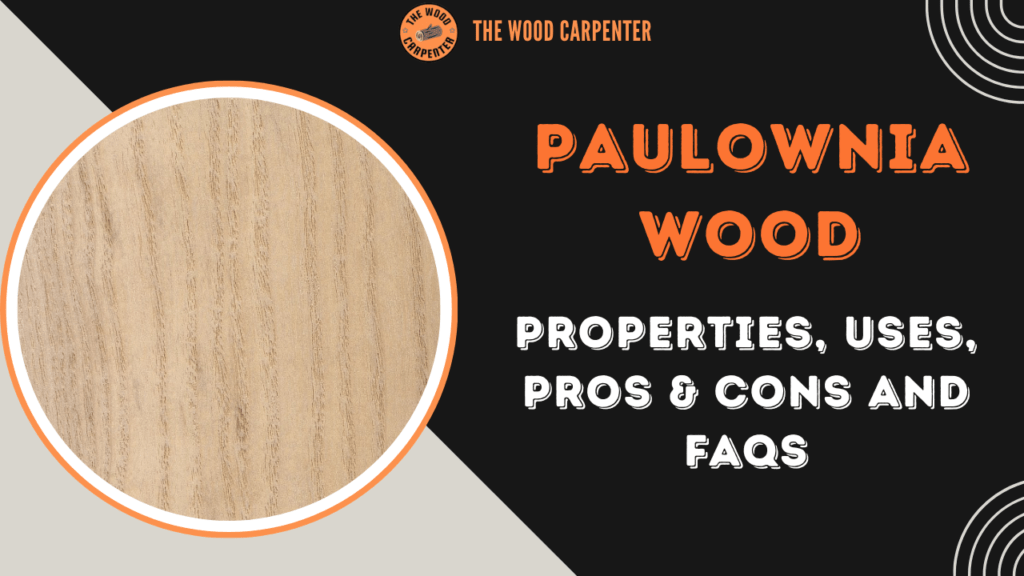
Paulownia has a pale, silvery color. It almost looks like it has been lightly bleached. The grain is straight and fine. There are almost no knots, which I really liked because knots are annoying — they catch your saw blade and cause uneven staining.
The wood is prized for its light silvery color, fine grain, and characteristic burls and ripples, which some compare to flowing water.
When I ran my hand across a freshly planed paulownia board, the surface felt almost silky. It is clean-looking wood. If you want a piece that takes paint or stain beautifully and looks refined, paulownia delivers that.
Is Paulownia a Hardwood or Softwood ?
This trips people up all the time. Paulownia is technically classified as a hardwood — but it feels like a softwood. It is softer than pine in some ways.
It is the second lightest hardwood after balsa wood, with a Janka hardness of 300 lbf (1,330 N). It is almost knot-free, which means less waste and more beauty.
For comparison, oak sits at around 1290 lbf. Hard maple is around 1450 lbf. Paulownia at 300 lbf is nowhere near those. But the “hardwood” label in botany just means the tree produces seeds in a pod or fruit — it has nothing to do with how hard the wood actually feels.
So yes — hardwood by classification, but soft and light by feel.
My Personal Observations After Using It
I used paulownia on a small bedroom shelf project. I wanted something light because the wall studs were not in ideal spots and I did not want heavy shelving stressing the anchors.
Here is what I noticed:
It cut like butter. My table saw moved through it with almost no resistance. Same with my hand plane. If you have ever planed a hard piece of oak and felt the burn in your arms, paulownia is the opposite of that.
Staining was smooth. The pale base color made it easy to see exactly how the stain was going. I used a medium walnut stain and it came out even and clean. I did use a pre-stain conditioner just to be safe, and I am glad I did — it helped avoid any blotchy spots.
It dented faster than I expected. I bumped one shelf edge with the corner of a toolbox. Left a mark right away. Paulownia wood can dent easily, with its wood fibers crushing under even the smallest of impacts. Scratches and dents will mar the overall finish, making this wood look worn out well before its time. That part is real. I can confirm it from experience.
The finished shelves felt solid. Even though the wood is light, once the shelf was mounted and stained, it did not feel flimsy. It handled book weight without any flex.
Overall — I liked it for that project. But I would not use it for a coffee table or a workbench.
Paulownia Wood Properties at a Glance
| Property | Detail |
| Weight | Very light — around 270 kg/m³ |
| Janka Hardness | 300 lbf (very soft) |
| Grain | Fine, straight, almost knot-free |
| Color | Pale silvery brown |
| Warping | Extremely stable — does not warp |
| Rot Resistance | Good — naturally resistant |
| Water Resistance | Decent, but not fully waterproof |
| Workability | Excellent — easy to saw, plane, nail, glue |
| Staining | Takes stain very well |
| Denting | High risk — dents easily |
What Is Paulownia Wood Used For?

Furniture
Paulownia’s lightweight yet sturdy nature makes it perfect for crafting modern dining tables, office desks, and coffee tables. Its ability to take stain and finishes well allows for a variety of aesthetic choices.
That said, I would personally use it for bedroom furniture and storage pieces rather than a dining table that gets heavy daily use. Drawer sides, cabinet backs, and shelf units are where it really shines. The lightness means drawers glide easily and shelves do not strain their brackets.
Surfboards and Water Sports
Paulownia has become a go-to material for handmade wooden surfboards, paddleboards, and foil boards. Its natural buoyancy keeps boards light and responsive in the water, while its workability lets shapers achieve the precise curves they need.
This is a case where the softness does not matter as much, because the boards are typically coated in fiberglass. The wood just acts as the core.
Guitar Bodies
Paulownia’s light weight and tonal properties make it ideal for creating resonant guitar bodies. A lot of boutique guitar builders use it now. The lightness means a guitar you can wear for a three-hour gig without your shoulder giving out.
Just do not use it for the neck or fretboard. If you were to press down hard on a thin paulownia fretboard, you would likely snap it in two. Which is why paulownia is no good for making the fretboard or neck of your guitar.
Traditional Japanese Uses
In Japan, paulownia trees were traditionally planted after the birth of baby girls, and the mature wood would be used to make a dresser for their homes when they married.
It was also used for traditional wooden clogs, knife boxes, and musical instruments like the koto. In Asia, paulownia is traditionally used for storage chests and boxes as it naturally repels insects.
Outdoor Projects
Paulownia wood’s resistance to decay and insects makes it ideal for outdoor projects including garden furniture, benches, tables, chairs, decking, pergolas, and sheds.
If you go that route, make sure to seal it properly. It is resistant, not waterproof — there is a difference.
DIY and Carving Projects
Paulownia’s workability makes it a favourite for hobbyists and DIY enthusiasts — ideal for carving, scrollwork, and small decorative pieces, as well as photo frames and jewellery boxes.
The softness that makes it prone to dents actually works in your favor when carving. It carves cleanly and quickly.
Practical Scenario: Choosing Wood for a Kid’s Bedroom Shelf
Let’s say you are building a floating shelf for your kid’s bedroom. Nothing fancy — just a place for books, toys, and a lamp.
Here is why paulownia makes sense for that:
- It is light, so if it ever comes off the wall, it will not cause serious damage
- It takes paint well — you can match any room color
- Books and toys do not generate enough impact to dent it badly
- It will not warp from humidity changes in the room
- It is cheaper than solid oak or walnut
Where it would not make sense is if your kid is rough with things. Toy trucks getting banged against the shelf edges will leave marks fast.
Practical Scenario: Building a Guitar Body
You want to build an electric guitar and keep it light because you play standing up for long sets.
Paulownia is a smart choice for the body. Guitars made from paulownia can weigh from 600 to 700 grams for the body alone. That keeps the total guitar weight way down. The tone is clear and resonant. And it is easy to shape with a router.
Just pair it with a maple or rosewood neck, not a paulownia one.
The Big Weakness: Denting
I want to talk about this more because it is the thing that catches people off guard.
Due to its softness, paulownia wood may dent easily. This means it may not be the most suitable option for high-traffic areas or applications where durability is a primary concern. Additionally, it has a high tannin content, which can cause staining if not properly sealed.
The denting is not like what you get with pine, where you can sometimes steam out the dent. With paulownia, the fibers compress more completely. The dent stays.
If you are building something for a kitchen, a hallway, or anywhere that gets regular bumps and scrapes — choose a harder wood. Oak, maple, or even pine would hold up better under that kind of use.
But for wall shelves, bedroom furniture, decorative items, and projects where things sit still and do not get knocked around? Paulownia is excellent.
Is Paulownia Sustainable?
Yes, and this is one of its best qualities.
Paulownia is one of the fastest-growing trees in the world, making it a highly sustainable choice for furniture manufacturers. Using paulownia wood helps reduce deforestation and promotes responsible sourcing of materials.
Paulownia is one of the fastest-growing trees in the world, with growth rates of over seven feet per year as a seedling. That means plantations can be harvested and regrown relatively quickly compared to slow-growing hardwoods like oak or walnut that take decades.
If you are someone who thinks about the environmental side of buying wood, paulownia is a genuinely good choice. It is not just marketing — the fast growth rate is real and well documented.
How to Finish Paulownia Wood
The good news: paulownia is one of the easiest woods to finish. The pale color is like a blank canvas.
For staining:
Use a pre-stain wood conditioner first. Pre-conditioner seals the wooden pores to even out the rate of absorption and make finishing more uniform. Blotchy stains occur because wood absorbs stains unevenly. With paulownia, this step makes a real difference in how clean the final color looks.
For painting:
Sand to 180 grit, apply a primer coat, then paint. Because the surface is fine-grained and almost knot-free, you do not need a lot of prep work. It comes out smooth.
For outdoor use:
Seal it with an exterior-grade finish or oil. Paulownia handles moisture better than most woods, but you still want to protect it for long-term outdoor exposure. Linseed oil is a popular traditional choice, especially for surfboards made from paulownia.
Where to Buy Paulownia Wood
Paulownia is seldom offered for sale in the United States, though it is actually grown on plantations and exported to Japan, where demand for the wood is much higher. Prices are likely to be high for a domestic species.
Your best bet in the US is to look for specialty lumber dealers online. Some woodworking supply companies stock it. You may also find it through exotic wood dealers who carry lighter-weight lumber for instrument builders and surfboard makers.
High-quality paulownia lumber can cost US$460 to US$480 per cubic meter in the online market of Asia. You may pay a higher price for paulownia in the United States because of transportation charges.
It is not cheap, but it is not absurdly expensive either. For small projects like guitar bodies or decorative boxes, the cost per board foot is manageable.
Paulownia vs. Other Woods
| Wood | Weight | Hardness (Janka) | Best For |
| Paulownia | Very light | 300 lbf | Furniture frames, instruments, boats |
| Pine | Light | ~870 lbf | Construction, cabinets, floors |
| Poplar | Medium | ~540 lbf | Painted furniture, trim |
| Oak | Heavy | ~1290 lbf | Floors, tables, heavy furniture |
| Balsa | Lightest | ~100 lbf | Models, crafts |
Paulownia sits between balsa and poplar. Lighter than poplar, stronger than balsa. That is a useful middle ground for a lot of projects.
FAQ
Is paulownia wood good for furniture?
Yes, for certain types of furniture. It is excellent for bedroom pieces, shelves, and cabinet frames. It is not ideal for tabletops or anything that gets daily impact, because it dents easily.
Is paulownia a hardwood or softwood?
It is technically classified as a hardwood by botanical definition, but it feels and behaves more like a softwood. It has a very low Janka hardness rating of 300 lbf.
How strong is paulownia wood?
It has an impressive strength-to-weight ratio. It is not strong in the way that oak or maple is strong — but relative to how light it is, it holds up well. Think of it as strong for its size rather than strong in absolute terms.
Does paulownia wood warp?
No, this is one of its best qualities. Paulownia is dimensionally stable even in humid conditions. It absorbs very little moisture, so it does not expand and contract the way other woods do.
Can paulownia be used outdoors?
Yes, with proper sealing. It is naturally rot and decay resistant, but it is not fully waterproof. Seal it with an exterior finish and it will handle outdoor conditions well.
Is paulownia easy to work with?
Very easy. It saws, planes, nails, glues, and sands without much effort. Tools stay sharp longer than with denser hardwoods. It is a beginner-friendly wood.
Why does paulownia dent so easily?
Because of its low density and soft wood fibers. The internal structure is mostly air, which makes it light — but also means the fibers compress easily under impact.
Is paulownia expensive?
It depends on where you buy it. In Asia, it is more affordable. In the United States, it can be on the pricier side because it is less commonly stocked at local lumber yards.
Final Recommendation
If you want a wood that is light, easy to work with, stable, and eco-friendly — paulownia is worth trying. It is a genuinely unique material.
Just go in knowing the one rule: protect the surface. Use it where it will not get banged around, or apply a tough finish coat to give the surface more protection.
I would recommend it for shelves, cabinet frames, drawer boxes, decorative pieces, guitar bodies, and outdoor furniture that you plan to seal properly. I would not recommend it for floors, kitchen counters, workbenches, or any surface that takes regular abuse.
For a beginner woodworker especially, the ease of working with paulownia makes it a satisfying material. Your tools glide through it. Your stain goes on smooth. And the finished piece looks clean and professional.
That lightweight feeling when you pick up a paulownia board for the first time still surprises me every time.