
Last Updated on August 1, 2026 by Sam Wood Worker
Pinus contorta — North America’s most fire-obsessed conifer
Key Takeaways:
- Covering millions of acres from Alaska to Baja California, lodgepole pine (Pinus contorta) is one of the most widespread conifers in western North America.
- Its serotinous cones stay sealed for years and only open when wildfire heat melts the resin — releasing thousands of seeds onto freshly burned, nutrient-rich ground
- After a fire, up to 20,000 seedlings can sprout in a single acre — forming dense forests called “doghair stands”
- It grows at high altitudes of 2,000 to 12,000 feet and has a lifespan of 150 – 400 years
- Indigenous tribes named it lodgepole because its straight, lightweight trunks were perfect for building tipis and lodges
- Today, its biggest threats are climate change and mountain pine beetles.
Lodgepole pine is a fire-adapted conifer native to western North America whose serotinous cones stay sealed until wildfire heat releases thousands of seeds — allowing it to rapidly regenerate entire forests from the ashes.
Key Facts at a Glance

The Basics First
Scientific name: Pinus contorta Where it grows: Yukon to Baja California. Pacific coast to South Dakota. Height: Typically 50–75 ft. Idaho has trees recorded at 156 ft. Needles: Grow in pairs. Slightly twisted. 1.2–2.4 inches long. Lifespan: 100 to 400+ years. One Sierra tree was dated at 471 years.
The name? Indigenous nations across the Rockies used its straight trunks to build tipi frames and lodge poles. Settlers borrowed the name. It stuck.
Four Trees in One
Lodgepole pine isn’t a single uniform tree. It comes in four varieties, each shaped by its environment.
Shore pine — Grows on Pacific coastal bluffs and sand dunes. Short, gnarled, wind-beaten. Tough as nails.
Rocky Mountain lodgepole — The classic tall, straight, dense-stand version. Dominates Yellowstone, Colorado, and most of the Rockies above 6,000 ft.
Sierra lodgepole (tamarack pine) — Slower growing. Lives longer. Found in California’s Sierra Nevada, some trees pushing past 400 years.
Bolander pine — A dwarf variety. Found only in one county in California. Grows on waterlogged, nutrient-starved soil where almost nothing else survives.
Same species. Four completely different survival strategies.
The Cone That Changed Everything
Here’s where lodgepole gets genuinely interesting.
Most pine cones open when seeds ripen. Lodgepole cones — in many populations — don’t. They’re coated in a thick resin that keeps them sealed shut. Seeds sit inside, locked away, sometimes for decades.
What opens them? Heat. Around 113–140°F (45–60°C).
In nature, only one event reliably hits that temperature inside a forest: wildfire.
The moment a fire tears through, thousands of sealed cones crack open simultaneously. Seeds rain down onto warm, ash-rich, competition-free soil — precisely the conditions they need to germinate.
This is called serotiny. And it’s one of the most remarkable reproductive strategies in the plant kingdom.
A single acre of lodgepole forest can hold over a million viable seeds stored in sealed cones above the canopy. All waiting. All ready. Just needing the right trigger.
After a major fire, lodgepole seedlings emerge so densely that virtually nothing else can compete. Those even-aged, wall-to-wall stands you see in Yellowstone? That’s the aftermath of fire, not poor biodiversity. It’s a designed response.
How It Compares to Other Mountain Conifers
Lodgepole pine shares mountain ranges with some of North America’s most impressive trees. Here’s how it stacks up:
| Feature | Lodgepole Pine | Ponderosa Pine | Douglas-fir |
| Height | 30–80 ft | 60–200 ft | 40–300 ft |
| Elevation range | 2,000–12,000 ft | 3,000–8,000 ft | Sea level–6,000 ft |
| Fire strategy | Cones open after fire | Thick bark resists fire | Moderate resistance |
| Shade tolerance | Very low | Low | Moderate |
| Wood uses | Poles, lumber | Lumber, construction | Heavy framing |
The key distinction is the fire strategy. Ponderosa pine grows thick, corky bark specifically to survive fires that would kill other trees. Lodgepole pine does the opposite — thin bark, burns easily, but regenerates in massive numbers immediately after.
Two completely different evolutionary answers to the same problem. Both work remarkably well.
Where It Thrives (And Why That’s Surprising)
Lodgepole pine grows where other trees give up.
Thin volcanic rock. Nutrient-poor soils. Waterlogged peat. Subalpine zones with two-month growing seasons. It handles temperatures from 45°F on the coast to -70°F in the northern Rockies — a cold tolerance range no other North American conifer matches.
In Yellowstone, it covers nearly the entire forest canopy — largely because the volcanic geology beneath the park is so difficult that competitors can’t establish. Lodgepole moves in and simply stays.
Best growth happens on granite-derived, slightly acidic, sandy loam soils with decent drainage. But “best” is relative. It will grow in conditions where most species simply refuse to try.
The Wildlife It Supports
Dense lodgepole stands look empty. They aren’t.
Research documents roughly 49 bird species and 35 mammal species using lodgepole habitat, including wolverine, goshawk, bald eagle, and prairie falcon. The grassy, herbaceous meadow pockets within lodgepole zones attract even more.
Dead lodgepole — killed by fire or beetles — creates snag habitat critical for cavity-nesting birds. The decay process feeds insects, which feed woodpeckers, which create holes used by owls, ducks, and small mammals. Death in a lodgepole forest isn’t an ending. It’s a resource transfer.
The Beetle Problem (And What Climate Has Done to It)
Mountain pine beetles have always attacked lodgepole. For millennia, cold winters kept beetle populations in check — temperatures below -40°F killed larvae before outbreaks got out of hand.
That balance is breaking.
Warmer winters mean beetles now survive at higher elevations and further north than before. Since the early 2000s, mountain pine beetles have killed lodgepole across tens of millions of acres in Canada and the western US — the largest insect-driven forest disturbance ever recorded in North American history.
Dead trees fuel bigger fires. Bigger fires regenerate more lodgepole. In theory, the cycle continues. In practice, some areas burned so severely — or at intervals too short for seedling survival — that regeneration has failed entirely.
What Humans Have Done With It
Indigenous use went far beyond tipi poles:
- Inner bark eaten as emergency food (by humans and horses)
- Infusions of bark medicinally for chest troubles, rheumatism, and colds
- Pitch used as waterproof sealant on canoes and containers
To European settlers, the timber was prized for its straightness. Log walls at Yellowstone’s Old Faithful Inn are lodgepole pine. This resulted in a commonly used timber which found its way into cabins, fence rails, mine supports, and railroad ties throughout the West.
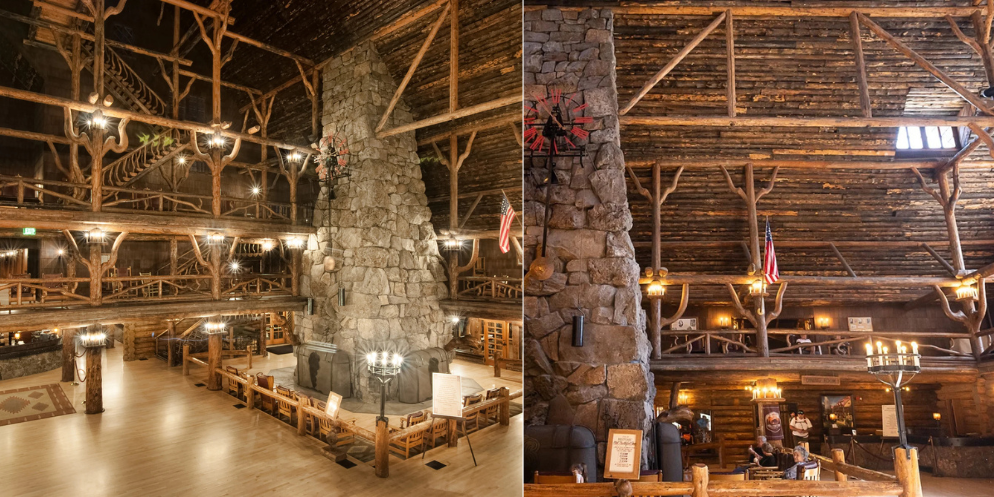
It is used for dimensional lumber, pulp, and bioenergy today. It has also been introduced more widely around the world — especially in Scotland and New Zealand — for commercial forestry and dune stabilization.
Shore pine’s dense root system makes it especially useful for anchoring unstable coastal soils.
Is Lodgepole Pine Threatened ?
Not as a species. It covers tens of millions of acres across two countries.
But specific populations are under genuine pressure. Climate-driven beetle outbreaks, altered fire regimes, and reduced snowpack are stressing lodgepole in ways the tree hasn’t faced before — at least not at this pace or scale.
The tree’s saving grace may be its own genetic diversity. Because it grows across such an extreme range of environments — from sea level fog to subalpine rock — its gene pool is broad. Populations at lower elevations may already carry traits suited to warmer conditions.
Whether that diversity can keep pace with how fast conditions are shifting is the open question researchers are currently trying to answer.
Frequently Asked Questions About Lodgepole Pine
Why does lodgepole pine need fire?
Many lodgepole pines create special cones. The cones are sealed shut with resin.
Heat from fire melts the resin and opens them.
After a fire, the ground is cleared and full of nutrients. That is just what the seeds require to grow wildly.
How do I spot a lodgepole pine?
The first thing to look for are the needles — they grow in pairs and measure roughly 1–2 inches long.
The bark is thin and scaly. The tree are tall and narrow in growth. The cones are small and egg-shaped with tiny sharp prickles.
In thick forests, the trunks are straight as poles with almost no branches near the ground. That’s actually how the tree got its name.
What’s the difference between shore pine and Rocky Mountain lodgepole?
They’re the same species — just different varieties shaped by where they grow.
Shore pine grows along the Pacific coast. It’s short, twisted, and built to handle wind and salt spray.
Rocky Mountain lodgepole grows inland at higher elevations. It grows tall, straight, and handles fire well.
Same tree. Very different life.
How long do lodgepole pines live?
Most live between 100 and 300 years.
In the Sierra Nevada, some trees make it past 400 years under the right conditions.
Are lodgepole forests good for wildlife?
Yes — much more than they appear.
Nearly 50 bird species and 35 mammal species live in lodgepole habitat. Dead standing trees left behind by fire and beetles are some of the most useful. Woodpeckers and other cavity-nesting birds depend on them heavily.
A burned or beetle-hit forest looks dead. It usually isn’t.
What is the mountain pine beetle doing to these forests?
It’s causing serious damage — more than most people realize.
Warmer winters used to kill off large numbers of beetles. That natural control is gone in many areas now. Since 2000, outbreaks have killed lodgepole pine across tens of millions of acres.
Scientists call it the largest insect disturbance ever recorded in North American forest history. And it’s still ongoing.