
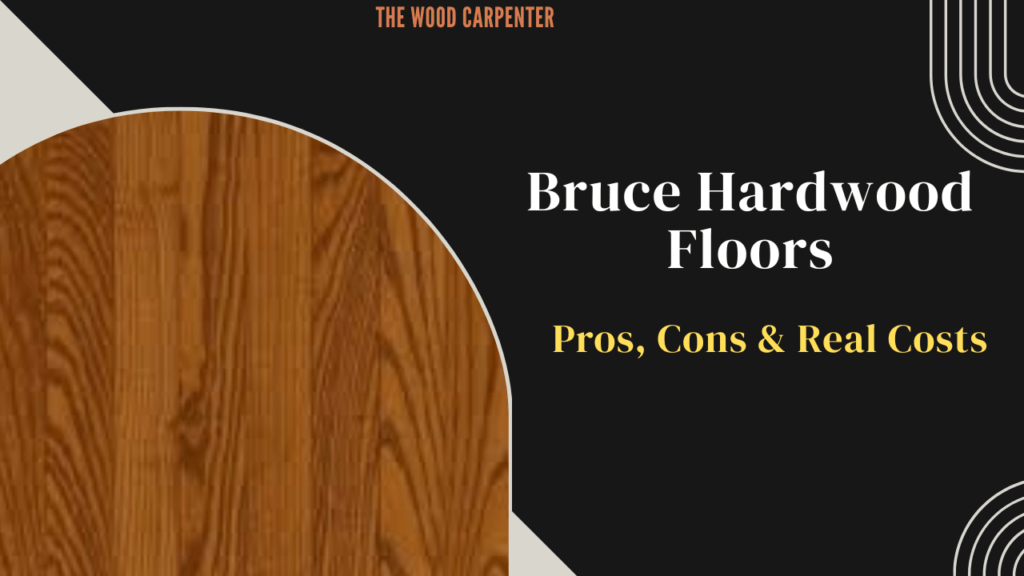
Selecting hardwood flooring is a major decision. It affects how your home looks, feels, and performs over time. Bruce hardwood flooring is one of the oldest and most recognized names in the flooring industry. But is it the right choice for your home?
This guide combines real user experience, expert insight, and practical advice to help you decide.
What Is Bruce Hardwood Flooring?
Bruce is an American flooring brand which was established in 1884 and is owned by AHF Products. For more than 140 years the company has been making solid and engineered hardwood floors for everyday homes.
Bruce has popular species of wood including oak, maple, hickory and cherry which is available in both solid and engineered styles. The vast majority of the products are sold at big retailers like Lowe’s, making them easy to find and replace if needed.
There are three main types.
Solid Hardwood
Solid planks are made from one piece of wood. They are usually three quarters of an inch thick. These floors are nailed to a wood subfloor and can be refinished multiple times. With proper care, they can last 50 to 100 years.
Engineered Hardwood
Engineered planks have a real wood surface bonded to a layered core. This makes them more stable in areas with moisture or temperature changes. They work well in basements and over concrete.
Wood Look Alternatives
Bruce also offers luxury vinyl plank and laminate flooring. These options are suitable for areas where real wood is not ideal.
Bruce Hardwood Flooring Technical Specifications
Most buyers ignore technical details. That often leads to poor decisions.
Here are the key numbers:
- Oak hardness around 1290 lbf
- Maple hardness around 1450 lbf
- Hickory hardness around 1820 lbf
- Engineered wear layer ranges from 1.5mm to 4mm
- Finish type is usually aluminum oxide
I once tested oak and hickory samples during a renovation. Hickory handled impact much better. That difference matters in busy homes.
Harder wood resists dents better. Thicker wear layers allow refinishing. Finish quality affects long term durability.
Key Advantages of Bruce Hardwood Flooring
Bruce is considered a mid-range brand that balances quality and affordability. Many homeowners choose it for its durability, availability, and long history.
Key Advantages of Bruce Hardwood Flooring
Bruce sits in the mid range category. It balances cost and performance well.
Many homeowners report their floors still look good after 15 to 20 years with proper care.
Bruce Hardwood Flooring Pros Explained
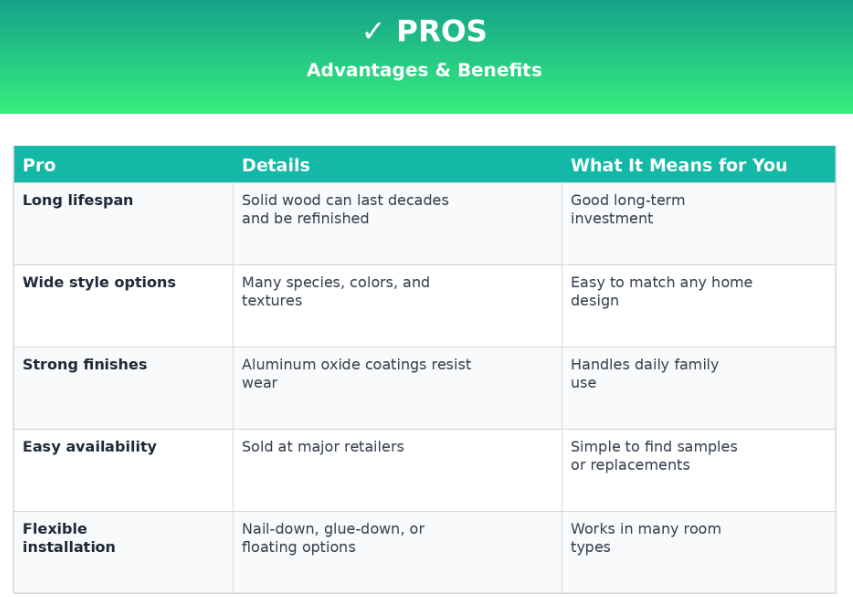
Here is a clear breakdown of Bruce flooring advantages based on real performance and user feedback:
| Advantage | What It Means for You |
| Affordable Pricing | Costs less than premium hardwood brands |
| Wide Availability | Easy to find at stores like Lowe’s |
| Variety of Styles | Many colors, finishes, and wood species |
| Real Hardwood Feel | Authentic look and natural texture |
| Easy Replacement | Matching boards are easier to source later |
| Durable Finishes | Aluminum oxide coatings improve wear resistance |
Bruce performs well for homeowners who want real wood without paying luxury prices.
From experience, availability is a huge benefit. I have replaced damaged planks years later without matching issues.
Pros of Bruce Hardwood Flooring
What Bruce Does Better Than Many Competitors
Bruce has some practical advantages.
- Easy availability across major stores
- Matching planks are easier to find later
- Consistent pricing across product lines
I have worked on projects where replacing damaged boards was simple because Bruce stock was widely available.
That is not the case with many niche brands.
The Downsides You Should Know
No flooring brand is perfect. Bruce has real limitations that you should understand.
Inconsistent Board Quality
Some batches include warped or short planks. Color variation can also be noticeable.
I have seen installers reject several boards from a single box.
Inspection Is Required
You must inspect each plank before installation. Skipping this step can lead to visible defects.
Finish Durability Varies
Lower tier products may scratch faster. High traffic areas show wear sooner if the finish is not strong.
Limited Premium Options
Bruce does not focus on luxury designs. Wide planks and custom finishes are limited.
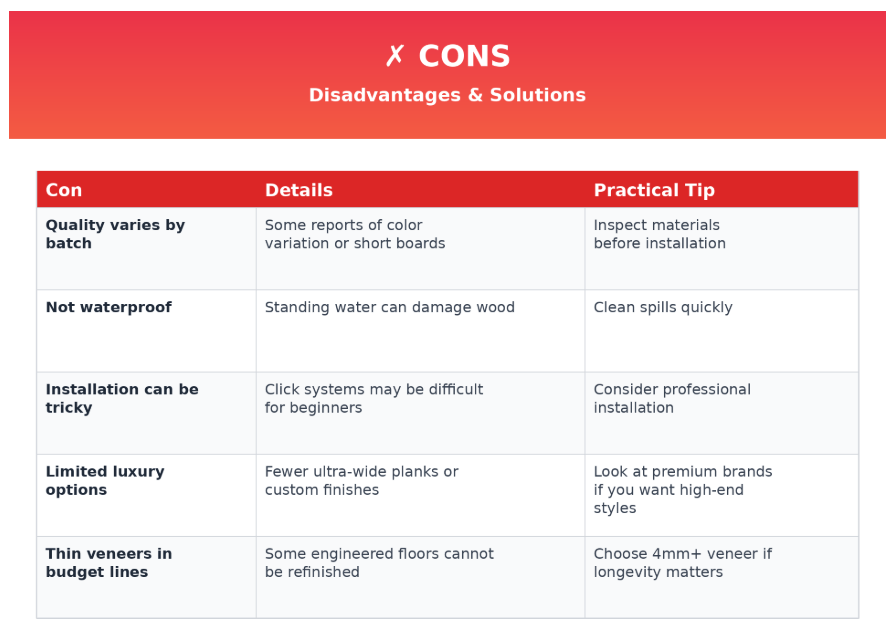
| Disadvantage | What It Means for You |
| Inconsistent Quality | Some boards may be warped or uneven |
| Limited Premium Designs | Fewer wide plank and luxury styles |
| Scratch Sensitivity | Softer woods show wear faster |
| Moisture Sensitivity | Not suitable for wet areas |
| Finish Variability | Lower lines wear faster over time |
| Installation Issues | Poor boards can slow down installation |
Cost Breakdown (2026)
Bruce flooring sits in the middle price range compared to other hardwood brands.
Average material costs
- Engineered hardwood: $2.50 – $7 per sq ft
- Solid hardwood: $3 – $8 per sq ft
- Premium styles: up to $10–$12 per sq ft
Installation costs
- Labor: $3 – $7 per sq ft
- Total installed: $7 – $17 per sq ft
A typical 1,000 sq ft project may cost between $8,000 and $15,000 depending on wood type and labor rates..
How Bruce Performs in Real Homes
High-traffic areas
Floors with aluminum oxide finishes hold up well in living rooms, hallways, and kitchens.
Homes with pets
Harder woods like hickory or maple resist dents better. Textured finishes help hide scratches.
Humidity and moisture
Engineered flooring performs better in humid climates. Solid wood may expand or shrink if indoor humidity falls outside the 35–55% range.
Maintenance Made Simple
Bruce floors are not difficult to care for, but they do require basic attention.
Daily sweeping or vacuuming removes dirt that can scratch the finish. A damp mop with a hardwood-safe cleaner once a week is enough. Avoid excess water or steam cleaning.
Use felt pads under furniture and door mats near entrances. Solid hardwood can be sanded and refinished several times while engineered floors are only able to accept light refinishing depending on the thickness of the veneer.
Bruce vs Other Popular Brands
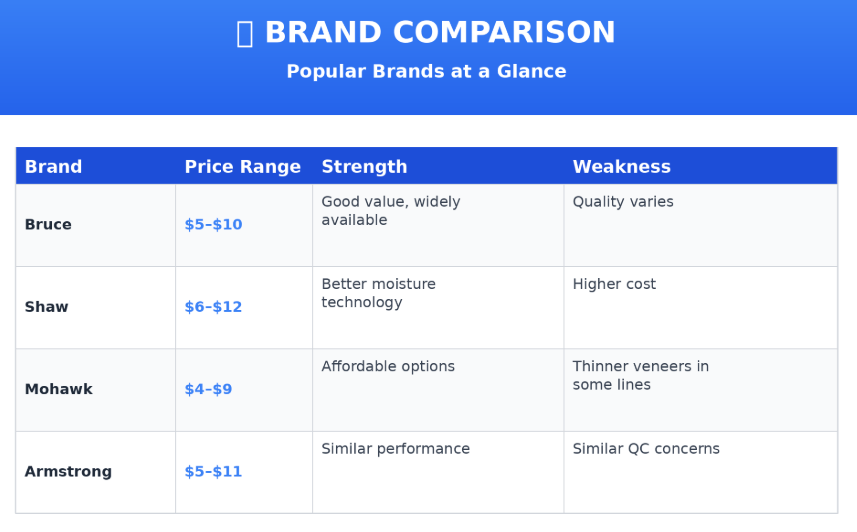
Bruce stands out for tradition and value, while Shaw is often preferred for moisture resistance.
Installation Tips from Experts
Before installation, let the flooring sit in the room for at least 48–72 hours so it adjusts to the environment. The subfloor should be flat and dry to avoid future problems.
Floating engineered floors are possible for DIY projects, but solid hardwood installation usually requires professional tools and experience.
Improper installation can result in leaks, noise and warranty problems.
Who Should Choose Bruce Flooring?
If you’re looking for solid hardwood that’s also economical, Bruce is a great pick. Ideal for families, rental properties and anyone just looking for the real thing but doesn’t want to pay premium brand prices.
This might not be the choice for you if what you are looking for is luxury wide planks, custom colors or wood that is completely waterproof.
Real-World Feedback
Many installers describe Bruce as a “solid mid-tier brand.” Homeowners often like the balance between cost and appearance. However, professionals recommend checking each box before installation and buying extra material from the same lot to avoid color differences.
Lighter stains and textured finishes tend to perform best in busy homes.
Frequently Asked Questions
1. Is Bruce hardwood flooring good quality
Bruce hardwood flooring offers mid-range quality. It uses real wood and durable finishes like aluminum oxide. Performance depends on the product line and installation. Higher-end lines perform better than budget options.
2. How long do Bruce hardwood floors last?
Solid Bruce hardwood floors can last 50 to 100 years with proper care. Engineered floors usually last 20 to 40 years. Lifespan depends on wood type, finish quality, and maintenance.
3. What are the pros and cons of Bruce hardwood flooring?
Bruce flooring is affordable, widely available, and easy to replace. However, some products have inconsistent quality and limited design options. Lower-tier finishes may wear faster in high-traffic areas.
4. Is Bruce flooring real hardwood or engineered?
Bruce offers both solid hardwood and engineered hardwood flooring. Solid planks are made from one piece of wood. Engineered planks have a real wood surface over a layered core for better stability.
5. Does Bruce hardwood flooring scratch easily?
Scratch resistance depends on the wood species and finish. Hickory and maple resist dents better than oak. Floors with aluminum oxide finishes resist scratches more effectively than basic finishes.
6. How much does Bruce hardwood flooring cost installed?
Installed cost usually ranges from 7 to 17 dollars per square foot. The final price depends on material type, labor, and additional work like subfloor preparation.
7. Is Bruce flooring worth the price?
Bruce flooring is worth the price for buyers who want real hardwood at a reasonable cost. It offers good durability and availability, but it may not match premium brands in design or consistency.
8. Which Bruce flooring is best for pets?
Hickory or maple flooring with a textured finish works best for homes with pets. These options resist dents and help hide scratches from claws and daily use.
9. Can Bruce hardwood floors be refinished?
Solid hardwood can be sanded and refinished multiple times. Engineered flooring can only be refinished if the wear layer is thick enough, usually 3mm or more.
10. Is Bruce hardwood flooring waterproof?
Bruce hardwood flooring is not waterproof. Engineered products resist moisture better than solid wood, but standing water can still cause damage. It is not recommended for wet areas.
Conclusion
Bruce hardwood flooring sits in the middle of the market. It offers real wood, decent durability, and fair pricing. It is not a luxury brand. It is a practical choice.
From my experience, Bruce works best for homeowners who want reliable flooring without overspending. The key is choosing the right product line and installing it correctly.
If you want premium design or perfect consistency, you should look elsewhere. If you want dependable hardwood at a reasonable price, Bruce remains a safe and proven option for 2026.