
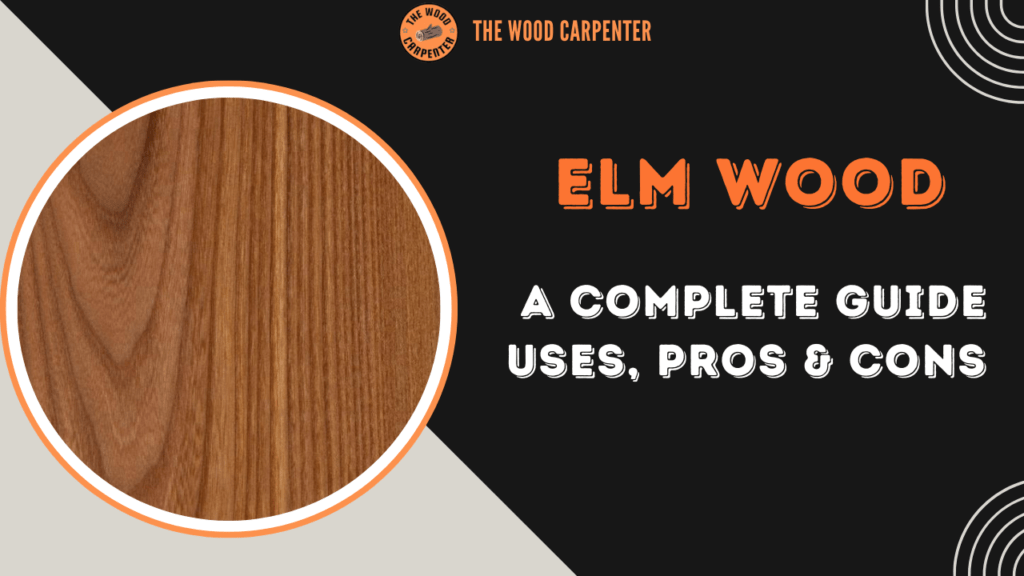
Elm is one of those woods that surprises people. At first glance, it looks charming and rustic. But when you look closer, it reveals a wood that combines strength, character and old-world history in a way few woods can match.
In this guide we will cover everything you need to know about elm wood from its strength, weaknesses, and everything in between so you can decide for yourself if it is suitable for your next furniture project or woodworking undertaking.
By the close, you’ll know elm as not just a material but also as a living tradition in woodworking.
What Is Elm Wood? A Quick Introduction
Elm wood comes from trees in the Ulmus genus. There are many species, but wood experts often classify elm into two main types:
✅ Hard Elm
– Higher density (approx. 41–47 lb/ft³)
– Includes species like Cedar Elm, Winged Elm, Rock Elm
– Slightly stronger, heavier, and better for structural work
✅ Soft Elm
– Lower density (approx. 35–38 lb/ft³)
– Includes American Elm, Red Elm, English Elm, Wych Elm
– Lighter, easier to work with, beautiful grain
Both types share the signature elm look—an interlocked, “twisting” grain pattern that makes every board feel unique.
Elm Wood Appearance: Why People Fall in Love With It
Elm’s appearance is one of its biggest advantages, especially for furniture.
Here’s what makes it visually special:
🌈 Rich, warm colours
Elm heartwood ranges from medium brown to deep brown, sometimes with hints of reddish or even purplish tones.
The sapwood is lighter—often creamy or pale yellow—creating beautiful contrast.
🌪️ Swirled, interlocked grain
Elm doesn’t grow straight like oak or maple. Instead, its fibers weave and twist, creating patterns that look like:
- ripples,
- waves,
- swirls,
- “cat’s-paw” figures, and
- marbled textures.
These natural designs make elm ideal for statement furniture, tabletops, and decorative pieces.
🎨 Unpredictable beauty
Especially in “burr elm” or “figured elm,” you may see dramatic color variation, knots, curls, and eye-catching figure. These rare boards can be very expensive—and highly sought after for artistic woodworking.
Elm Wood Strength & Durability: How Tough Is It Really?
Elm is not the hardest hardwood in the world, but it offers a practical balance of strength, toughness, and flexibility.
🪵 Janka Hardness: ~830 lbf
This places elm:
This hardness makes it durable enough for indoor furniture, but soft enough to work with tools without frustration.
💪 Strong but flexible
Unlike many hardwoods, elm has excellent shock resistance. That means it absorbs impact without cracking or breaking—great for chairs, benches, and heavily used tables.
🧱 Resistant to splitting
Because of its interlocked grain, elm is naturally resistant to split lines. That’s one reason it was historically used for wagon wheels, chair parts, and even old water pipes.
🧬 Natural durability rating: Slightly durable
According to modern timber assessments, elm is:
- not the best for outdoor use
- moderately resistant to decay
- vulnerable if exposed to moisture long-term
Indoors, however, elm performs very well.
Workability: Is Elm Easy to Work With?
Elm is known for being both a joy and a challenge in the workshop.
👍 The Good:
- Takes stain, oil, and finish beautifully
- Glues well
- Bends easily with steam (excellent for curved furniture)
- Strong and holds joinery securely
👎 The Challenging:
Because of its twisted grain, elm can be:
- difficult to plane without tear-out
- tricky to sand cleanly
- prone to “fuzzy” surfaces if tools are dull
Sharp hand tools or high-quality carbide cutters are essential for clean results.
Common Uses of Elm Wood
Elm has been used for thousands of years—literally. In Europe, elm logs once served as underground water pipes because the wood withstands water remarkably well when constantly wet.
Today, elm is used for:
🪑 Indoor furniture
– tables
– chairs
– dining sets
– bedroom sets
– cabinets
– bookcases
– benches
🎨 Decorative woodworking
– paneling
– veneers
– turned bowls
– carved décor
– high-end artisan pieces
– burr elm luxury products
🏠 Interior architecture
– flooring (less common)
– stair parts
– trims
– wall paneling
Elm is rarely used outdoors unless properly treated, because it is moisture-sensitive.
Pros of Elm Wood
Here are the top advantages supported by Cabinfield, Logie Timber & Wood Database:
✔ Beautiful, character-rich grain
Unique swirls make it popular for statement furniture and high-end interiors.
✔ Good strength and durability for indoor use
Strong enough for everyday furniture.
✔ Resistant to splitting
Great for pieces that need strength under pressure.
✔ Bends well
Ideal for curved or steam-bent furniture parts.
✔ Takes finish very well
You can highlight its grain with natural oil, stain, or clear finishes.
✔ Warm, welcoming tone
Unlike colder woods, elm creates a cozy, inviting feel in living spaces.
The Ultimate Guide to Woodworking: Types of Wood
Cons of Elm Wood
No wood is perfect. Elm has a few limitations:
❌ Hard to work due to interlocked grain
Planing and cutting require sharp tools and careful technique.
❌ Not ideal for outdoor use
Moisture can cause warping or rot.
❌ Can dent easier than very hard woods
It’s strong, but not as hard as oak or hickory.
❌ Limited availability and inconsistent supply
Diseases like Dutch Elm Disease reduced elm populations in many areas, making high-quality boards harder to find.
❌ Grain patterns vary widely
Great for art pieces, but not ideal if you want a perfectly uniform look.
Is Elm a Good Wood for Furniture?
Absolutely—yes, as long as you are using it indoors.
Elm gives you:
- durability
- attractive natural grain
- a unique look
- excellent joinery behavior
- solid performance for decades
It’s especially popular for:
- dining tables
- cabinets
- statement pieces
- rustic to modern interior styles
But if you need outdoor furniture or extremely hard, scratch-resistant surfaces, elm may not be the top choice.
Elm Wood vs Other Popular Woods
Elm vs Oak
- Oak is harder and more plentiful
- Elm has more dramatic grain patterns
- Oak is better outdoors; elm is better for unique indoor pieces
Elm vs Maple
- Maple is harder and more scratch-resistant
- Elm has a warmer, more rustic look
Elm vs Walnut
- Walnut is more stable and luxurious
- Elm is more affordable and visually expressive
Sustainability: Is Elm an Eco-Friendly Choice?
Elm trees suffered heavily from Dutch Elm Disease, especially in North America and Europe.
However:
- many disease-resistant hybrids are now being planted
- sustainably harvested elm is considered environmentally acceptable
- reclaimed elm (from barns and old structures) is increasingly popular
Buying from reputable sawmills ensures ethical sourcing.
Final Thoughts: Should You Choose Elm Wood?
If you are a fan of wood that has character, warmth and natural movement then elm is an excellent pick. It brings a depth and authenticity to your home that few commercial woods can match. Its grain tells a story. Its colors glow with character. And its robustness means that it’s suitable for all heavy-duty indoor uses.
Elm is not the perfect wood for every project—but for indoor furniture, decorative woodworking, and artistic pieces, it remains one of the most beautiful and underrated hardwoods available.
Frequently Asked Questions (FAQ)
1. Is elm wood durable enough for daily-use furniture?
Yes. Elm is strong and tough, making it great for dining tables, chairs, and cabinets.
2. Does elm scratch easily?
Elm can dent more easily than very hard woods like oak or maple, but proper finishes minimize damage.
3. Can elm wood be used outdoors?
Not recommended. Elm doesn’t resist decay well unless constantly wet (like old water pipes). Outdoors, it should be protected or avoided.
4. Is elm a hardwood or a softwood?
Elm is a hardwood, even though some elm species are softer than others.
5. Why is elm wood so hard to find?
Dutch Elm Disease significantly reduced elm populations, especially American elm. That’s why certain species or high-figure elm can be pricey.
6. What finishes work best on elm?
Natural oils, clear varnish, and matte polyurethane highlight elm’s grain beautifully.
7. Does elm move or warp?
Elm has medium movement, so proper drying and sealing are important.