Weevils are much more common that one might think. They can show up in houses, kitchens, grocery shelves, storage jars, garden beds, balcony pots and even outdoor lawns.
My first big confrontation with them occurred during the monsoon, when I opened a new bag of rice to find thousands of minuscule brown beetles with long snouts crawling out. When I examined it closer, I could see the sides of the grains moving with tiny white larvae.
It was startling and sour. A week later, I learned that the same kind of pest was also eating away at the roots of my strawberry plants. That’s when I discovered weevils can be a nuisance inside and outside.
If you’ve gone to your cabinets and opened up flour or rice and there were an insect or multiple insects inside, or if all of a sudden plants are yellowing and wilting without any reason you can see, it might be some type of weevil.
This guide blends actual experiences with the advice of experts and information from gardeners around the world
My aim is to help everyone know what weevils are, how they behave and what we can do to get rid of them without harmful chemicals or poisons that can stress both your family and pets.
What Weevils Look Like and How to Identify Them
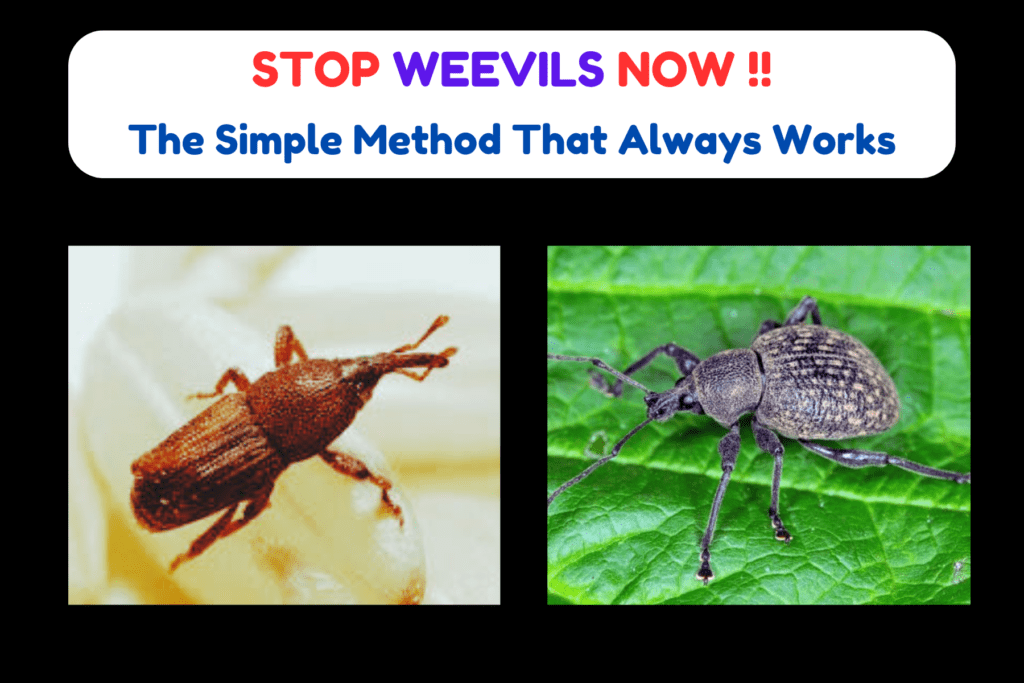
Weevils are small beetles with long snouts, and the majority of them are brown, black or dark reddish. Pantry weevils, which infest food items are generally 2 mm to 4 mm long and infest rice, flour, pasta, wheat, dal and cereal.
Garden weevils are a little bit larger, and they tend to burrow in soil or under leaves. Their long snout is their most infamous characteristic, and if you look closely you’ll also notice that they are very slow moving and lay dead even when touched.
If you look inside a packet of food and notice fine powder, hollow grains, or small round holes, that is a sign of weevil activity. You may also see small white larvae inside grains. In the garden, you may find notches on leaf edges or damaged roots. Sometimes the adult weevil is not visible because it hides underground during the day, especially species like vine weevils.
Different Types of Weevils You Might Find
There are many different kinds of weevils, but the most common types that affect homes and gardens include:
Pantry Weevils – Rice weevils, flour weevils and wheat weevils are examples of this species. They’re usually carried into your home in packaged foods you’ve purchased at a store.
Seed and Grain Weevils – They infest the grains like wheat, corn, barley, dal and rice which are stored in big packs.
Garden or Root Weevils – These little guys will munch through plant roots -especially those of strawberries, hibiscus, ornamental plants and small potted shrubs.
Also read:
Garden Pests: Spot, Prevent & Control Naturally
Vine Weevils – These are garden pests that chew notches on leaves and whose larvae destroy plant roots.
While they appear very different, their life cycle is broadly similar. The eggs are laid within grains or in soil. Larvae are nourished, turn to Pupae and develop into adults.
How Weevils Enter Homes and Gardens
The vast majority of pantry weevils come from store-bought food. “Even though your package is perfectly sealed, there may be an egg, or eggs or larvae in the crack.” Once inside your home, they begin to spread to other food containers if a location suits them.
How do garden weevils get in my home? Garden weevils are frequently brought inside when they infest nursery plants, potting soil or other outdoor environments. They can also walk or fly in from neighboring gardens. In warm and damp conditions, their population multiplies rapidly.
Do Weevils Bite, Fly, or Harm People?
Weevils are incapable of biting humans or animals and they do not transmit diseases. They are primarily herbivorous, feeding on plants, grains and seeds. Pantry weevils can fly, but a lot of garden weevils can’t. While they do not directly affect people, ignoring pests can lead to stress, food waste and plant death.
What Weevils Eat Indoors and Outdoors
Indoors, pantry weevils love dry food such as rice, flour, dal, pasta, oats, cereal, nuts, spices, and even stored bird food. Outdoors, they eat plant leaves, stems, and roots. Some species target soft leaves whereas others stay hidden underground until night.
Whitefly Invasion? 9 Natural Ways to Save Your Garden
How to Get Rid of Weevils in the Kitchen
To eliminate pantry weevils without any harmful side effects, inspect all rice, flour and grain containers. Discard any infested packets right away and tie them up tightly in an outdoor trash can.
Clean your shelves with warm, soapy water and a wipe of white vinegar. Let everything dry completely. Hot water cleanse all jars and containers before refilling them.
Once your shelves are cleaned, keep new food items in airtight glass or steel containers. Some people also freeze new rice or flour for two to three days to kill any hidden eggs.
Bay leaves, cloves, and neem leaves can help repel weevils naturally, although they may not remove existing infestations.
Mealybugs: How to Spot them, Stop them, 7 Step Guide
How to Get Rid of Weevils in the Garden
Removing weevils from plants is a little more of a waiting game. Begin by examining plant leaves, stems and the soil. If you spot notched leaves or root damage, you may have vine weevils. Hand-picking adult weevils at night is quite effective, since they are most active after dark.
Nematodes are one of the best natural treatments for killing garden weevil larvae. You can mix them with water and pour them into the soil. They are safe for plants, pets, and humans. Neem oil is another excellent natural solution for treating adult weevils and keeps the plant protected when used regularly.
If your infestation is bad, you can try chemical pesticides, but these should be a final option. Always take instructions seriously and keep chemical use to a minimum.
How to Prevent Weevils from Returning
Prevention is the most effective long-term solution. Store all dry foods in airtight containers, clean pantry shelves often, and check new grocery packets before storing them. In gardens, keep your plants healthy and water them regularly because strong plants resist pests better. Choosing clean potting soil, inspecting nursery plants before buying, and using neem oil once a month can help keep your garden pest-free.
Freezing dry foods for a few days before storing them in containers adds an extra layer of protection. Regular cleaning and proper storage make a huge difference in preventing future infestations.
Aphids: The Shocking Truth & Natural way to Fix them!
Common Questions About Weevils
How long does it take to get rid of weevils?
This typically requires one to two weeks, depending on how large the infestation is.
Are weevils harmful if eaten accidentally?
There is no known harm to humans eating a few.
Can weevils spread quickly?
Yes, they breed quickly because a single female can deposit dozens of eggs.
Do garden weevils kill plants?
Their larvae can kill plants by eating the roots, so early detection is important.
Can I use natural remedies?
Yes, neem oil, vinegar, freezing food, and nematodes are effective natural options.