
Last Updated on August 14, 2026 by Sam Wood Worker
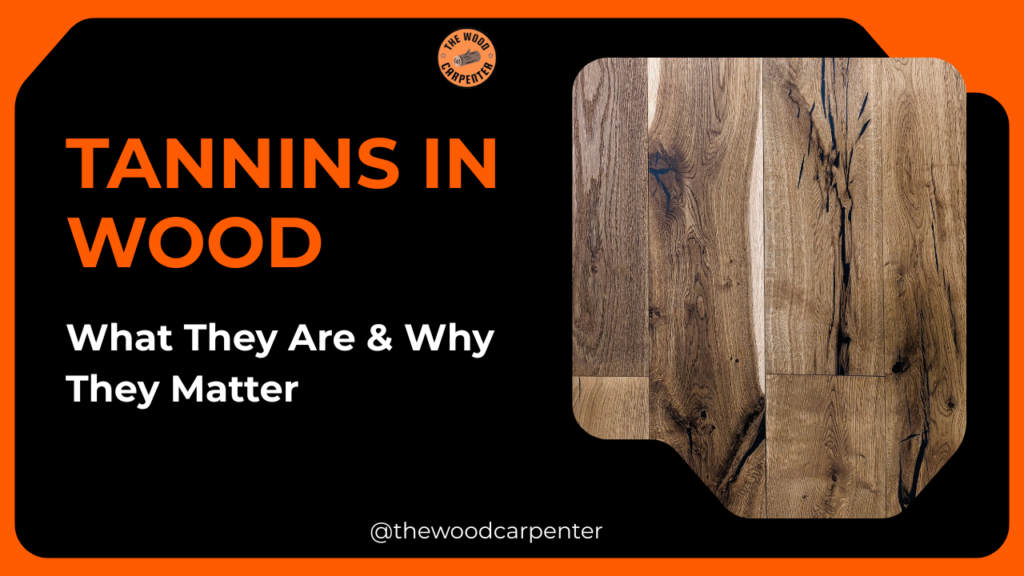
Tannins in wood are natural compounds that help protect trees from insects, rot and other threats. They’re a tree’s best defense mechanism. Although tannins confer durability to wood, they can pose other kinds of problems for woodworkers: dark stains, color shifts and paint bleed.
Tannins occur in the bark, leaves and wood (sapwood). When wood is wet, tannins can leach out and react with metal or finishes. This reaction frequently causes dark black or blue stains, particularly on woods such as oak and cedar.
Tannins are a common issue among woodworkers, furniture makers, and any do-it-yourselfer. Understanding how tannins function supports you in selecting better finishes, and to avoid staining and produce stronger and more durable projects.
What Are Tannins in Wood?
Tannins are natural chemicals found in plants, called polyphenols. They are bitter and can combine with proteins and minerals. For trees, tannins help prevent insects from eating the wood, and keep fungi and decay at bay.
Tannin is soluble in water, especially under the conditions of fresh or hot wood or when wet. This is why new lumber can bleed brown or rust-colored marks after a rain. Some woods produce more tannins than others, and generally older heartwood contains higher levels of tannin than wood from younger trees.
There are two main types of tannins:
- Hydrolyzable tannins
These break down easily with heat or moisture. Oak bark is rich in this type.
- Condensed tannins
These are stronger and more durable. Walnut heartwood contains many condensed tannins, which improve rot resistance but react more with metal.
Woods That Contain High Tannins
Some woods have much higher tannin levels than others.
- Oak (white and red)
Very high tannins (about 5–10%). Strong, durable, but stains easily with iron. - Walnut
High tannins that give it a deep, rich color. Can turn tools black. - Chestnut
High tannins similar to oak. Strong but prone to bleed. - Mahogany and cherry
Medium tannin levels. Darken nicely and resist insects. - Cedar
Medium tannins. Good for outdoor use. - Maple and birch
Low tannins. Easy to paint with little risk of bleed. - Teak and pine
Tannin levels vary. Teak resists water well; pine tannins are often found in knots.
Soil, tree age, climate, and growing conditions can all change tannin levels.
Why Tannins Cause Stains and Bleeding
Water activates tannins. When wood gets wet, tannins dissolve and move to the surface, especially through cut ends. If tannins touch iron—like nails, screws, or rusty water—they react and form a dark stain called iron-tannin stain.
These stains look like mold but are not mold. They are permanent unless treated properly.
Water-based paints and stains can pull tannins through the finish. This often causes yellow or brown stains on white paint. High humidity and fresh wood make the problem worse.
Even though this reaction causes trouble, tannins also make wood stronger by improving resistance to rot and decay.
Benefits of Tannins in Woodworking
Tannins are not all bad. They offer many benefits:
- Natural rot resistance
High-tannin woods last longer outdoors without chemicals. - Deeper wood color
Tannins help create rich, natural tones under finishes. - Traditional finishing methods
Techniques like ammonia fuming on oak rely on tannins. - Eco-friendly uses
Tannins are extracted from bark for leather tanning, adhesives, and insulation materials. - Natural antibacterial properties
Cutting boards made from tannin-rich wood resist bacteria.
Tannins also help reduce environmental waste by turning bark and wood scraps into useful products.
How to Remove and Prevent Tannin Stains
Removing black stains
- Use oxalic acid mixed with water
- Scrub the stained area
- Rinse well and neutralize with baking soda
This method safely removes iron-tannin stains without damaging wood.
Preventing tannin bleed
- Seal wood with shellac or oil-based primer before painting
- Use stainless steel or coated fasteners
- Let green wood dry fully before finishing
- Clean decks yearly with oxalic acid instead of bleach
Proper preparation stops most tannin problems before they start.
Extracting and Using Tannins
Tannins can be removed from bark or wood chips using hot water. No harsh chemicals are needed. The liquid is then dried into powder for use in:
- Leather tanning
- Wood adhesives
- Insulation foams
- Natural preservatives
After extraction, leftover bark can be reused as fuel or compost, making the process sustainable.
Health and Safety Information
Tannins are safe to work with but need basic care:
- Wear gloves to prevent dry skin
- Avoid breathing wood dust
- No proven cancer risk
- Tannins can reduce iron absorption if consumed, so avoid taking supplements with meals
Once wood is sealed, tannin exposure is very low and safe for homes.
Practical Tips for Woodworkers
- Always test finishes on scrap wood first
- Avoid iron tools on wet oak or walnut
- Use oil-based finishes on high-tannin woods
- Control moisture below 12% before finishing
- Reclaimed wood still contains active tannins—seal it well
Outdoor projects last much longer when tannins are managed correctly.
Final Thoughts
Tannins are what transform ordinary wood into long-lasting, character-rich material. While they can cause stains and finish problems, but they also offer wood natural protection. With a bit of know-how, you can manage those tannins rather than fighting them.
Seal smart, use some elbow grease and let nature’s chemistry work for you.
FAQs
What causes black stains on oak furniture?
Tannins in the wood combine with iron, whether from nails or water, to cause black stains
Which woods have the most tannins?
It is highest in oak, walnut and chestnut.
How do you stop tannin bleed on decks?
Clean the wood, seal it well and use stainless fasteners.
Are tannins good or bad for wood?
Both. They protect wood but can cause stains if not sealed.
Can tannins be used for other purposes?
Yes. They are found in leather tanning agents, adhesives and insulation.
Are tannins toxic?
No. Tannin stains are cosmetic and safe once wood is sealed.
 Thomas Steve