
Walk into almost any furniture store today and you’ll probably see parawood — even if the label doesn’t say so. It might be called “rubberwood.” Sometimes it’s marketed as “Malaysian oak.” Occasionally it’s just labeled “solid hardwood.”
Behind those names is one of the most practical and environmentally sensible woods used in modern furniture.
Parawood doesn’t come from ancient forests. It doesn’t carry the luxury reputation of teak or walnut. What makes it special is something far more interesting: it gets a second life.
It begins as a rubber tree grown for latex. After 25 to 30 years of producing rubber, the tree’s latex yield declines. Instead of burning or discarding the tree, it’s harvested and turned into furniture, cutting boards, toys, cabinets, and flooring used in homes around the world.
That story alone makes it worth understanding properly.
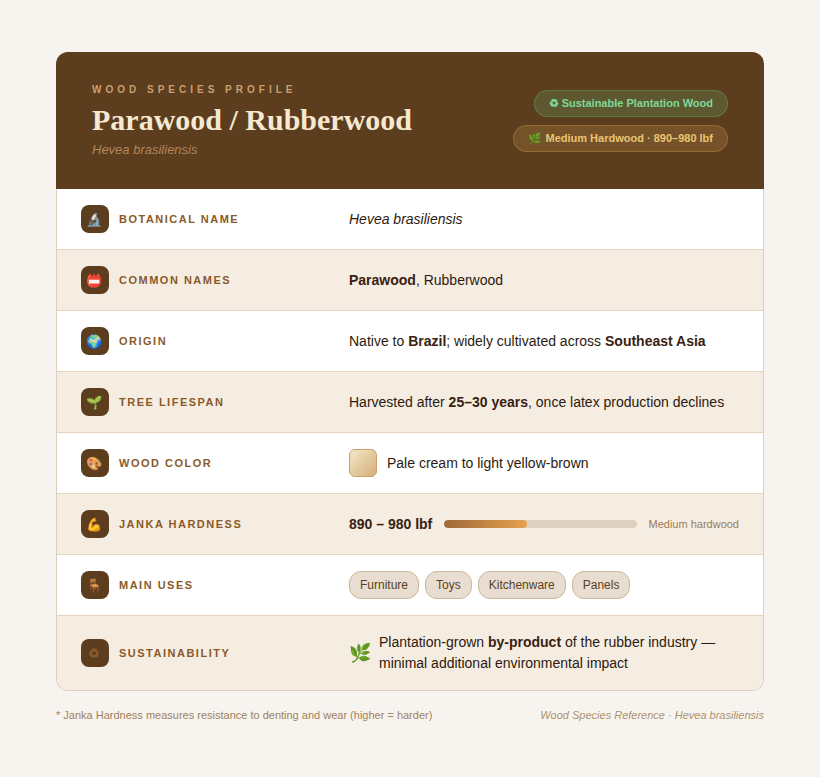
Quick Wood Profile: Parawood at a Glance
What Exactly Is Parawood ?
Hevea brasiliensis is the rubber tree, and parawood is a product of that tree. Native to Brazil, but cultivated in tropical area especially Thailand, Malaysia, Vietnam, and part of India.
There is one big reason rubber trees are grown: latex. It is a milky sap that is harvested when workers tap the bark and used to produce natural rubber products. This tapping process continues productively for about 25 years.
When the latex production slows down, the tree is taken down and then they plant a new one. Those old trees used to be burned decades ago. Today, they’re milled into lumber. That lumber is parawood.
Parawood therefore does not come from wild forests. It’s a by-product of an existing agricultural system. That’s an important difference.
From Latex Tree to Lumber: How It’s Processed
The moment a rubber tree is cut down, the clock starts ticking. Fresh parawood contains starch, which can attract fungi and insects if left untreated.
Here’s what happens next:
The logs are quickly transported to mills. They are sawn into boards and treated to prevent fungal staining or insect damage. Then they’re kiln-dried at controlled temperatures to reduce moisture to about 8–12%, which makes them stable for indoor furniture.
After drying, the wood is graded and often laminated or finger-jointed into panels. If you’ve ever looked closely at a tabletop and noticed small rectangular joints across the surface, that’s finger-jointing. It reduces waste and increases stability.
Once processed properly, parawood machines easily. It cuts cleanly, sands smoothly, and takes glue well. Many furniture makers like working with it because it’s consistent and not overly hard on tools.
How It Looks and Feels
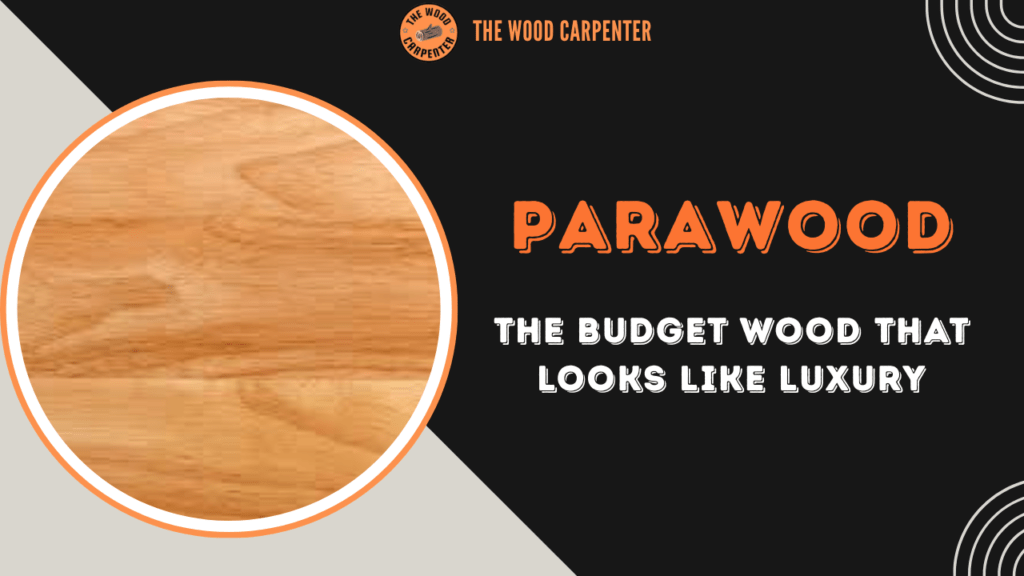
Parawood is light in color. It ranges from pale cream to light golden brown. The grain is usually straight and fairly open.
On its own, it doesn’t have dramatic character like walnut or oak. But it stains extremely well. Manufacturers often stain it darker to resemble more expensive woods.
That’s why you may see a “dark oak” dining table at a reasonable price — and it’s actually stained parawood underneath.
In terms of weight and feel, it sits in the medium hardwood category. It feels solid but not overly heavy.
Durability in Real Life
With a Janka hardness rating around 900–980 lbf, parawood is harder than pine but softer than oak or maple.
What does that mean in everyday terms?
A parawood dining table can easily handle daily family meals. Chairs won’t wobble if built properly. Shelves can hold books without sagging when designed correctly.
However, it’s not indestructible. Dragging heavy items across the surface can cause scratches. Pet claws may leave marks over time. A heavily used table might show wear after a decade.
That said, compared to MDF or particleboard furniture, solid parawood is far more durable and repairable. You can sand and refinish it. You can tighten screws. It behaves like real wood — because it is.
Sustainability: Does the Eco-Claim Hold Up ?
Yes, and here’s why.
Rubber plantations already exist for latex production. Parawood doesn’t require cutting additional forest land. Also, these trees are already being replaced as part of the agricultural cycle.
If we use the wood, it saves the waste, and stores the carbon in products such as furniture.
Compared to tropical hardwoods that may involve deforestation risks, plantation-grown rubberwood is generally more traceable and responsibly sourced.
That doesn’t mean every product is perfect. It still depends on how it’s processed and transported. But as a raw material, parawood has a strong environmental argument.
Parawood Compared to Other Woods
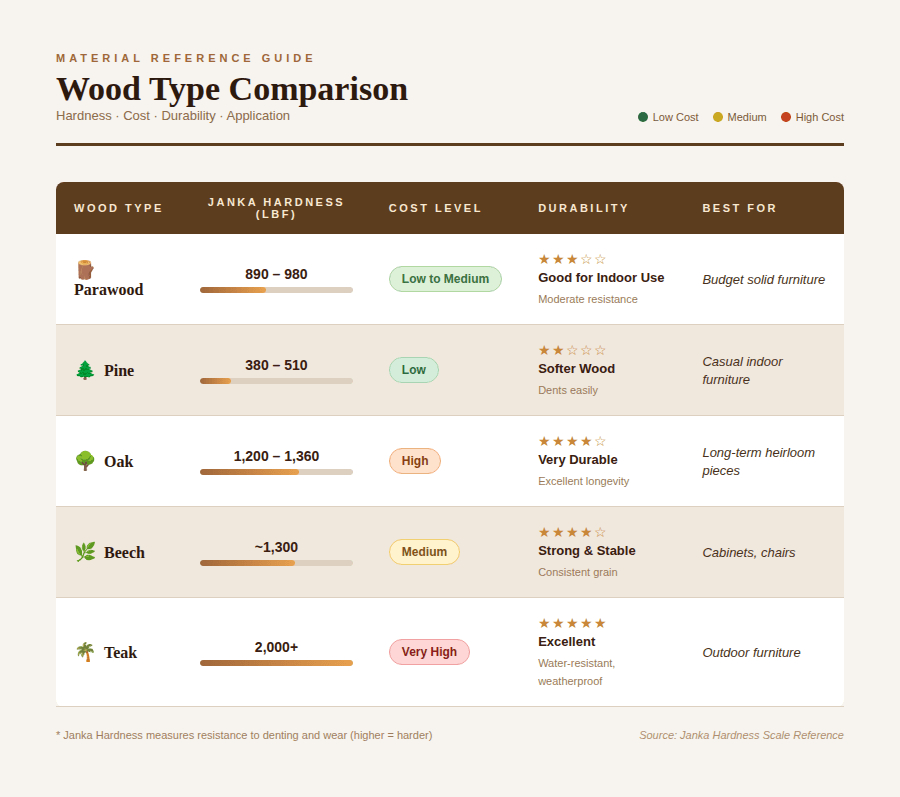
Parawood sits in the practical middle. It offers solid wood construction without premium pricing.
Caring for Parawood Furniture
Maintenance is simple.
Dust regularly. Wipe spills quickly with a slightly damp cloth. Avoid soaking the surface.
For unfinished or oiled pieces, apply mineral oil or beeswax occasionally to keep the surface nourished.
Keep furniture out of prolonged direct sunlight to prevent uneven fading. Avoid placing it right next to heaters or radiators, which can dry the wood and cause small cracks.
Avoid exposure to prolonged direct sunlight as it may cause fading to uneven places on the furniture. Don’t put it near the heater or radiator, because of that they can also create small cracks.
Unless you heavily seal them and protect the wood, parawood is not suitable for outdoor use. It also doesn’t naturally repel moisture like, say, teak or cedar.
Common Questions
Is parawood real wood?
Yes. It is solid hardwood from a rubber tree.
Does it smell like rubber?
No. Any latex scent disappears during processing and drying.
Is it safe for children’s furniture?
Yes, when finished with non-toxic coatings. It’s widely used for toys because it machines smoothly and doesn’t splinter easily.
Can it be refinished?
Yes. Solid parawood can be sanded and restained if scratched or worn.
How long does parawood furniture last?
With normal indoor use and care, 15–25 years is realistic.
The Bottom Line
Parawood isn’t flashy. It doesn’t carry luxury status. It won’t age like a centuries-old walnut heirloom.
But it does something important: it makes solid wood furniture accessible, practical, and more sustainable than many alternatives.
It converts an retired rubber tree into a dining room table, a toy chest, or a kitchen chopping board.
In a world where many furniture pieces are made from compressed board and synthetic veneers, that matters.
Parawood may not sound glamorous — but it’s one of the smarter materials shaping modern homes today.