
Last Updated on July 7, 2026 by Sam Wood Worker
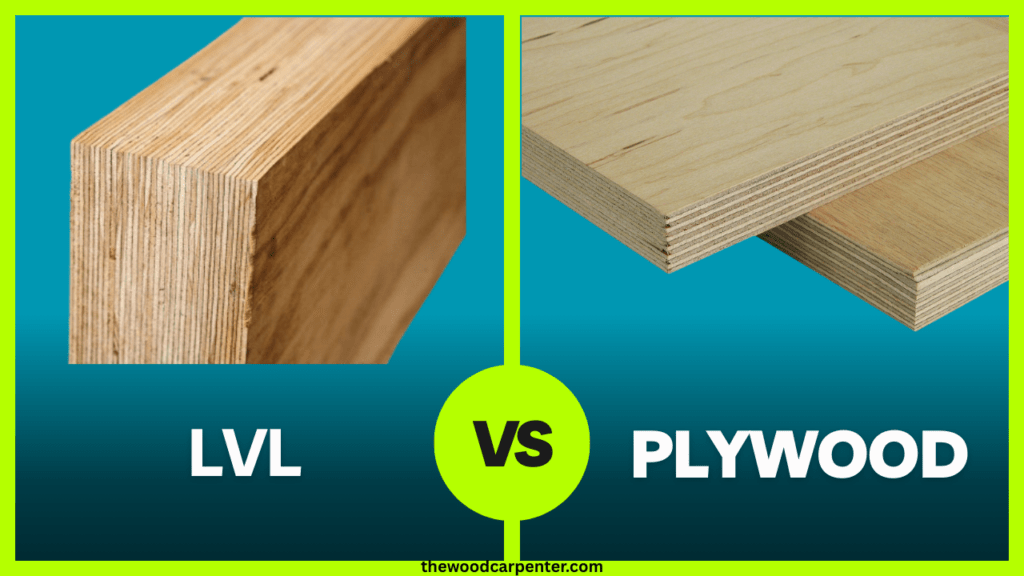
If you have ever stood at a lumber yard trying to figure out whether to grab LVL plywood or standard sheet plywood for a structural build, you are not alone. Contractors debate it. DIY owners get confused by it. And the wrong choice can mean undersized beams, failed inspections, or money wasted on overkill material for a simple shelf.
This guide breaks down exactly what LVL and plywood are, where each one performs best, what they cost, and which one belongs in your project. No engineering degree required
What is Laminated Veneer Lumber (LVL)?
Laminated veneer lumber (LVL) is an engineered wood product. It’s constructed by bonding thin sheets of wood together. These are then pressed and heated to form a solid, stable material. LVL is typically used for construction, such as beams, headers and columns, because it is extremely strong.
How is LVL Made?
LVL is constructed from thin wood layers, often coming from fast growing trees such as softwood. The wood is initially peeled into thin sheets and dried. Next, these facings are associated through high-strength adhesive.
The layers are disposed so that grain of the wood in adjacent layers is parallel. This is why LVL is stronger and more stable than solid wood. The adhesive also removes natural defects of wood, so LVL is a more consistent material.
Types of Laminated Veneer Lumber
LVL is available in a range of sizes and grades for various applications. The most common grades include:
Standard LVL: Typically they are used in framing, flooring, and as beams or headers.
High-strength LVL: These are used for applications which will require greater load-bearing capacity, such as in large beams.
Moisture-resistant LVL: It is designed for the environments which are exposed to high humidity.
What all this means is that each type of LVL can be used according to your particular structural requirements, so you can choose which one would suit your project.
What is Plywood ?
Plywood is one type of engineered wood, though it’s made and used in a different way than LVL. It is manufactured by bonding thin layers of wood together. The grain of each layer is orientated in opposite direction to the attached one.
This cross-grain design makes plywood strong and helps prevent warping.
How is Plywood Made ?
Plywood is produced by layering thin wood plies on one another. These layers may be hardwood or softwood. They are bonded together with a powerful glue, with each layer’s grain running in the opposite direction..
This technique, known as cross-lamination, is what makes plywood strong yet flexible and less susceptible to cracking or warping than solid wood.
Types of Plywood
Plywood comes in a variety of types, based on the wood used to produce it and its desired application:
Softwood Plywood: It is usually made of fir, pine or spruce and they are used in structural projects.
Hardwood Plywood: This type is from deciduous trees such as oak and maple, and used for cabinetry and fine woodworking.
Marine Plywood: Exceptionally water resistant; it is utilised for a wet area where you need the added protection, such as boat making.
There are different types of saws that suit different needs such as rough cutting wood or detailed designs of furniture.
What Is LVL and How Is It Different from Plywood?
Before comparing them, you need to understand what each product actually is. They look similar on the surface but are engineered for fundamentally different purposes.
Laminated veneer lumber (LVL) is an engineered wood product made by bonding multiple thin layers of wood veneer together with all grain running in the same direction, then pressing them under heat and adhesive into a solid, uniform billet. The result is a structural member that is denser, stiffer, and more predictable in performance than natural sawn lumber.
Plywood is also made from thin wood veneers bonded under pressure, but the key difference is that plywood alternates the grain direction of each layer at 90 degrees. This cross-lamination is what gives plywood its dimensional stability, resistance to warping, and strength in multiple directions simultaneously.
Key Structural Difference
- LVL has all veneers running in the same direction, making it extremely strong along one axis (like a beam carrying a load)
- Plywood has alternating grain directions, making it strong in multiple directions (like a panel resisting racking, puncture, or surface load)
LVL meaning in construction refers specifically to its role as a structural replacement for solid sawn beams and headers. LVL wood is not a panel product. It comes as beams, planks, and rimboards designed to carry point loads and span distances that regular lumber cannot handle reliably.
If you want to understand how engineered wood products fit into a broader material decision for furniture or construction, our wood types and properties guide gives a solid foundation before getting into specifics.
LVL vs Plywood Strength: Which Is Actually Stronger?
This question does not have a single answer because the two products are strong in different ways. Understanding that distinction is what separates smart material selection from guesswork.
LVL Strength vs Lumber and Plywood
Is LVL stronger than plywood? For beam applications carrying vertical loads across a span, yes. LVL consistently outperforms both dimensional lumber and plywood used in a similar orientation.
Specific strength advantages of LVL
- LVL has a modulus of elasticity (stiffness) of approximately 1.9 to 2.0 million psi, compared to 1.5 to 1.7 million psi for equivalent Douglas fir dimensional lumber
- How much stronger is LVL than lumber? LVL is typically 40 to 50 percent stiffer and stronger in bending than comparable dimensional lumber of the same size
- LVL eliminates the knots, grain deviations, and natural defects that create weak points in sawn lumber
- LVL beam span charts allow engineers and contractors to specify exact spans with predictable load ratings, something solid lumber cannot offer with the same consistency
Plywood Strength in Panel Applications
Plywood is not trying to do what LVL does. Its cross-laminated construction gives it:
- High resistance to racking forces in wall sheathing
- Uniform load distribution across a panel surface in subfloor and roof deck applications
- Resistance to splitting when fasteners are driven near edges
- Predictable performance under concentrated point loads across its face
For scenario: For a garage workshop with a mezzanine level, LVL beams carry the span load across the opening while structural plywood sheathing provides the floor deck surface that distributes weight across those beams. They work together, not in competition.
LVL vs plywood for floor joists is a common contractor question. LVL wins for long spans and heavy load applications where a deeper, stiffer member is needed. Plywood wins as the subfloor deck material is nailed across those joists. They serve different roles in the same floor system.
LVL vs Plywood Cost Comparison
Cost is one of the biggest practical factors when deciding between LVL plywood and standard structural plywood for a project.
LVL Cost Per Foot and Per Board
LVL beam pricing varies by size, depth, and supplier. General 2026 market ranges:
- 1.75-inch x 9.25-inch LVL: $3.50 to $5.50 per linear foot
- 1.75-inch x 11.25-inch LVL: $4.50 to $7.00 per linear foot
- 1.75-inch x 14-inch LVL: $6.00 to $9.50 per linear foot
- Multi-ply LVL beams (2 or 3 plies nailed together) multiply cost accordingly
LVL vs plywood cost per sheet is not a direct comparison since LVL is sold by linear foot, not by panel. But to put it in context, a 10-foot LVL header costs roughly $35 to $95 depending on depth, while a 4×8 sheet of 3/4-inch structural plywood costs $55 to $80 at standard retailers.
Plywood Cost Per Sheet
Standard structural plywood pricing in 2026:
- 1/2-inch CDX plywood (4×8 sheet): $35 to $50
- 3/4-inch CDX plywood (4×8 sheet): $55 to $80
- 3/4-inch tongue and groove subfloor plywood: $60 to $90
- Marine grade plywood: $80 to $150+ per sheet
Is LVL cheaper than plywood? Per unit of structural capacity, LVL often delivers better value for beam applications because it allows longer spans without intermediate supports, reducing overall framing cost. The higher upfront material cost can be offset by fewer posts, fewer columns, and simpler framing.
Our beginner woodworking guide covers how to budget material costs for different project types, including when engineered products make financial sense over dimensional lumber.
Where to Use LVL and Where to Use Plywood
This section is the practical payoff of the whole comparison. Here is where each product belongs.
Best Uses for LVL
LVL beam uses in construction and woodworking:
- Structural beams and headers spanning door and window openings
- Floor joists for long spans exceeding what dimensional lumber can handle
- Rim boards and stair stringers requiring consistent, predictable strength
- Ridge beams in roof structures
- Garage door headers carrying roof load across wide openings
- Scaffold planks and temporary shoring
- LVL vs plywood for walls: LVL is used as a header material above openings, not as wall sheathing
LVL is not a panel product. Can I use plywood instead of an LVL beam? In most structural applications governed by building codes, no. LVL beam specifications are calculated based on actual load requirements. Substituting plywood for a structural LVL beam is not a like-for-like replacement and can create serious safety and code compliance issues.
Best Uses for Plywood
Plywood vs LVL for non-structural and panel applications:
- Subfloor and floor decking over joists
- Roof sheathing and wall sheathing
- Furniture carcasses and cabinet boxes
- Workbench tops and shop fixtures
- Shelving for light to moderate loads
- LVL vs plywood for furniture and cabinetry: plywood wins in almost every case because sheet goods are what furniture and cabinetry construction requires
LVL vs plywood for furniture is not a competitive comparison. LVL is a structural billet, not a sheet good. You cannot cut cabinet sides from an LVL beam the way you would from a sheet of plywood. For furniture, cabinetry, and shelving, plywood is always the correct choice.
For scenario: For a garden room or shed structure with a span of 12 feet or more across the opening, LVL for the structural header and ridge beam will perform better and potentially save money by eliminating intermediate posts. For the floor, walls, and roof cladding of that same structure, structural plywood is the right panel product throughout.
LVL vs Plywood vs OSB
A quick comparison to include the third common option:
- LVL: structural beam and member product, strong in one direction, premium price
- Plywood: cross-laminated panel, strong in multiple directions, moderate price, best for visible and precision applications
- OSB (oriented strand board): strand-based panel, lower cost than plywood, used for sheathing, subfloor, and roof deck where appearance does not matter
LVL vs plywood vs OSB covers different positions in the market. OSB has largely replaced plywood for structural sheathing in residential construction on cost grounds. Plywood retains advantages in furniture, cabinetry, marine applications, and anywhere that edge stability and finish quality matter.
LVL vs Plywood: Workability, Installation and Limitations
Knowing how each product behaves in the shop and on site helps you plan realistically.
Working with LVL
LVL boards and beams work similarly to dimensional lumber with standard power tools. Key practical notes:
- Cuts cleanly with circular saw or miter saw using a standard framing blade
- Nailing and screwing require pre-drilling near edges to avoid splitting the laminations
- LVL must be kept dry during storage and installation, moisture causes delamination and permanent strength loss
- LVL is not rated for outdoor or exposed applications without special treatment
- Can LVL be used outdoors? Standard LVL is not weather resistant. Exposure-rated LVL products exist but are specialty items. For outdoor structural beams, glulam or pressure-treated alternatives are more common
Working with Plywood
Plywood is one of the most workshop-friendly sheet materials available:
- Cuts with circular saw, table saw, jigsaw, or track saw
- Accepts screws, nails, and adhesives reliably without splitting when fasteners are placed correctly
- Sands and finishes well for visible applications
- Available in a wide range of grades from construction sheathing to furniture-grade hardwood plywood
- Laminated wood vs plywood often refers to MDF or particleboard laminated with a veneer face, which is a different product from structural plywood entirely
What is the difference between LVL and glulam? Both are engineered structural members, but glulam uses larger dimension lumber boards laminated together rather than thin veneers. Glulam is often left exposed for aesthetic reasons in timber-frame and post-and-beam construction. LVL is typically hidden within the framing. For comparable spans, glulam is wider and sometimes more visually appealing; LVL is thinner and easier to fit within standard wall and floor assemblies.
If you are planning a structural project involving beams, our wood finishing and preparation guide also covers how to treat exposed engineered wood members to protect them over time.
Conclusion
LVL plywood and structural plywood are not competing products trying to do the same job. They are complementary engineered wood products designed for different structural roles. LVL belongs in beams, headers, ridge members, and long-span floor joists where concentrated load-bearing capacity is the requirement. Plywood belongs in panels, decking, sheathing, furniture, and cabinetry where sheet coverage and multi-directional strength are what the application demands.
The mistake most builders and DIY owners make is treating them as interchangeable. They are not. Match the product to the structural role, confirm your specification against actual load requirements for anything governed by building codes, and you will have the right material in the right place.
For more guidance on structural and project wood selection, explore our posts on choosing the right wood for any project and types of wood for furniture making for practical, experience-backed advice across the full range of woodworking and construction applications.
Frequently Asked Questions
1. What is LVL wood used for?
LVL wood is used for structural beams, headers above door and window openings, floor joists for long spans, ridge beams, and stair stringers in construction. It is an engineered lumber product designed to carry heavy loads across spans that standard dimensional lumber cannot handle reliably without intermediate support.
2. Is LVL better than plywood?
LVL is better than plywood for structural beam applications requiring high load capacity and long spans. Plywood is better for panel applications including subfloors, wall sheathing, furniture, and cabinetry. LVL plywood are not interchangeable products and comparing them directly only makes sense within a specific application context.
3. How much does LVL cost vs plywood?
LVL costs $3.50 to $9.50 per linear foot depending on depth and ply count. Standard 3/4-inch structural plywood costs $55 to $80 per 4×8 sheet. LVL is sold by the linear foot as a beam product, so direct sheet-to-sheet price comparison is not meaningful. Per unit of structural beam capacity, LVL often delivers good value.
4. Can LVL be used outdoors?
Standard LVL is not suitable for outdoor or weather-exposed applications. Moisture causes delamination and permanent strength loss in standard LVL products. Exposure-rated LVL exists but is a specialty item. For outdoor structural beams, glulam with exterior-rated adhesive or pressure-treated dimensional lumber are more commonly specified alternatives.
5. What is the difference between LVL and glulam?
LVL uses thin wood veneers laminated with all grain parallel, producing a dense, uniform structural member. Glulam uses larger dimension lumber boards laminated together and is often left exposed for aesthetic appeal in post-and-beam construction. Both serve as structural beams, but glulam is wider and more visually prominent while LVL fits within standard framing dimensions.
6. Can plywood replace an LVL beam in construction?
No. Plywood cannot replace an LVL beam in a structural application. LVL beams are specified based on calculated load requirements. Substituting plywood for a structural LVL member creates a serious safety risk and typically violates building codes. If cost is a concern, consult a structural engineer about alternative options rather than substituting materials.
7. What is stronger for floor joists, LVL or plywood?
LVL is stronger for floor joists in long-span applications. LVL floor joists are stiffer, span further without intermediate support, and perform more consistently than dimensional lumber. Plywood serves as the subfloor deck material laid across those joists. In a floor system, LVL plywood works together in complementary structural roles rather than competing for the same application.