
Last Updated on June 3, 2026 by Sam Wood Worker
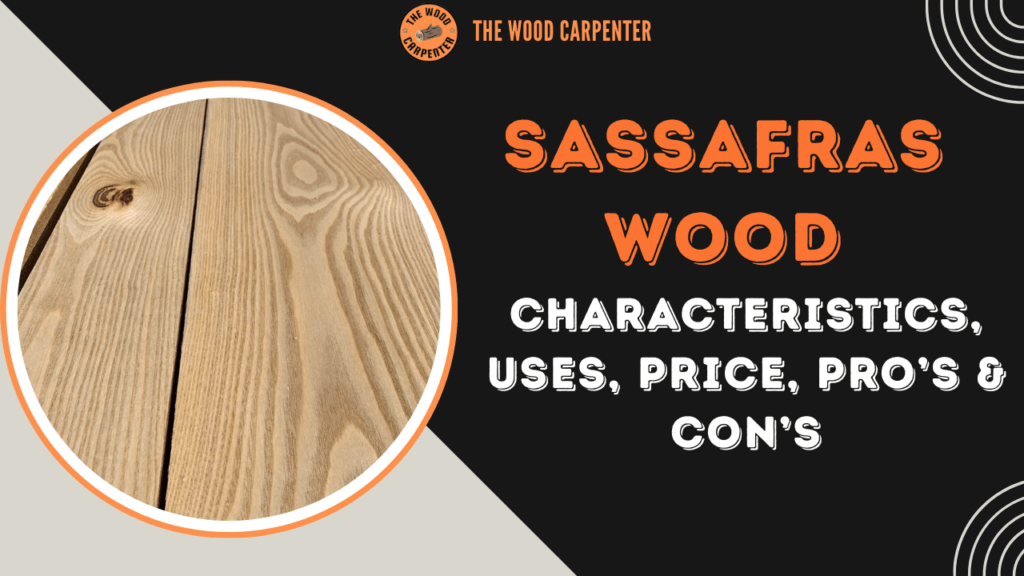
Sassafras Wood
Sassafras wood is one of the most underrated hardwoods in North America. It is light, naturally rot-resistant, easy to work with, and it looks beautiful. But most beginner woodworkers have never heard of it.
This guide will tell you everything you need to know — from how to identify sassafras wood to how to use it in real projects.
Sassafras Wood: Quick Facts
| Property | Details |
|---|---|
| Scientific Name | Sassafras albidum |
| Tree Family | Lauraceae |
| Janka Hardness | 630 lbf |
| Color | Light yellow to golden brown with dark streaks |
| Grain Pattern | Coarse, open, straight to slightly interlocked |
| Density | ~30 lbs/ft³ (relatively light) |
| Rot Resistance | Good — rated moderately to highly durable |
| Workability | Easy to work with hand and machine tools |
| Common Uses | Furniture, fence posts, boat building, cabinets, turned objects |
What Is Sassafras Wood?
Sassafras wood comes from the sassafras tree (Sassafras albidum). It is a medium-sized tree that loses its leaves in winter, and it grows naturally in eastern North America. You can find it from southern Maine all the way down to Florida, and as far west as Texas and Kansas.
The tree usually grows between 30 and 60 feet tall. In the best conditions, it can reach up to 100 feet. One interesting thing about this tree — it has three different leaf shapes on the same tree. Some leaves look like a mitten, some have three lobes, and some are just a simple oval shape.
Sassafras has a long history. Native Americans used it for medicine, food, and to build canoes. When European settlers arrived, they started exporting sassafras root bark to Europe because people believed it had healing properties. For a while, it was one of the most valuable exports from North America.
Today, woodworkers like sassafras because it is light, rot-resistant, and good-looking — especially for outdoor and rustic projects.
Sassafras Wood Identification
You can identify sassafras wood by a few clear signs.
Color When you first cut sassafras, it looks light yellowish-brown to golden brown. The heartwood often has olive-green or grayish streaks running through it. Over time, it gets darker and turns a warm tan or light brown color.
Grain and Texture Sassafras has a coarse, open grain — similar to ash or oak. The grain usually goes straight, but it can be slightly interlocked. The surface feels a little rough compared to fine-grained woods like cherry.
Weight When you pick up a piece of sassafras, you will notice it feels lighter than you expect. It weighs around 30 pounds per cubic foot, which is lighter than most hardwoods of a similar size.
Smell This is the easiest way to tell if a wood is sassafras. When you cut or sand it, the wood releases a spicy, sweet smell — similar to root beer or anise. This smell comes from the same oils found in the root bark of the sassafras tree. No other common North American hardwood smells like this.
Beginner Tip: If you are not sure about a piece of wood, scrape a small area with a knife. If it is sassafras, you will smell that sweet, spicy scent right away.
Sassafras Wood Properties
Appearance Sassafras looks warm and attractive. The heartwood goes from light tan to golden brown, and it often has olive or grayish streaks. The sapwood is pale yellow and clearly different from the heartwood.
Grain Pattern The grain is coarse and open, similar to white ash or ring-porous oak. This open grain gives sassafras a rustic, natural look that works very well in farmhouse and outdoor-style projects.
Texture The texture is coarse and uneven. It does not have the smooth, fine feel of maple or cherry. If you want a very smooth finish, you will need to use a grain filler before you apply your topcoat.
Density and Weight Sassafras is a lightweight hardwood. It is not a dense wood, which makes it easy to handle and work with. This also makes it a good choice for projects where weight matters, like boat parts or large pieces of furniture.
Strength Sassafras is moderately strong. It is not as strong as oak or hard maple. If you need wood for structural or load-bearing parts, choose a denser hardwood. But for most furniture and decorative work, sassafras is strong enough.
Stability Once it is properly dried, sassafras is reasonably stable. It does not move a lot when the humidity changes with the seasons. Like with any wood, it is important to dry it properly before you use it.
Durability and Rot Resistance This is where sassafras really stands out. It is rated as moderately to highly durable against rot and decay. The heartwood contains natural oils that resist moisture and fungal damage. This makes it a solid choice for outdoor projects like fence posts, outdoor furniture, and garden beds.
Insect Resistance Sassafras also has some natural resistance to insects, including termites. Its aromatic oils help keep insects away. This is part of the reason it was historically used for fence posts and outdoor timber.
Is Sassafras Wood Good for Woodworking?
Yes, sassafras wood is good for woodworking — especially for beginners and for outdoor projects.
Advantages for Woodworkers
- Easy to cut, plane, and shape
- Lightweight and easy to handle
- Takes nails and screws without splitting badly
- Glues well with standard woodworking adhesives
- Accepts stains, oils, and finishes nicely
- Natural rot resistance reduces the need for chemical treatments
- Attractive grain and color for rustic and natural-style projects
Limitations
- Not as strong as oak, ash, or hard maple
- Coarse grain requires grain filler for smooth finishes
- Can be hard to find at mainstream lumber yards
- The strong smell may stay for a while after cutting
Best Applications Sassafras is best for furniture, cabinetry, outdoor projects, turned objects, and carving. It is not the best choice for heavy structural work or flooring where hardness is critical.
Pros and Cons of Sassafras Wood
| Pros | Cons |
|---|---|
| Good natural rot resistance | Lower strength than oak or maple |
| Lightweight and easy to work | Coarse grain needs filler for smooth finishes |
| Pleasant spicy aroma | Limited availability at most lumber yards |
| Attractive appearance | Strong smell can be overpowering when cutting |
| Takes finishes and stains well | Not suitable for heavy load-bearing use |
| Good insect resistance | Can warp if not properly dried |
| Affordable when available | Less well-known, harder to source |
Common Uses of Sassafras Wood
Furniture Sassafras works well for tables, chairs, benches, and bed frames — especially for rustic, farmhouse, or outdoor-style furniture. Because it is light, large pieces are easier to move around.
Cabinets Sassafras makes attractive cabinet doors and drawer fronts. The grain pattern adds visual interest. Use a grain filler if you want a smooth painted finish.
Outdoor Projects This is where sassafras does its best work. Its natural rot resistance makes it a great choice for garden furniture, planters, outdoor benches, and raised garden beds.
Fence Posts Sassafras has a long history as fence post timber. The heartwood resists ground contact rot better than many other species. It was a very popular fencing choice before pressure-treated pine became common.
Boat Building Historically, sassafras was used for small boat planking and parts. Its rot resistance and light weight make it suitable for small watercraft, canoes, and dock components.
Decorative Woodworking The attractive grain and color make sassafras a good choice for decorative panels, wall cladding, and accent pieces.
Turned Objects Sassafras turns very well on the lathe. Woodturners use it for bowls, vases, pens, and small decorative items. The pleasant smell during turning is a nice bonus.
Carving Sassafras is soft enough to carve with hand tools. Beginners find it easy to cut and shape. It is a good wood for relief carving and whittling.
Working With Sassafras Wood
Cutting Sassafras cuts cleanly with both hand saws and power tools. Use sharp blades to get the best results. The wood does not dull blades quickly.
Planing Sassafras planes well in most cases. If the grain is slightly interlocked, work at a slight angle to avoid tear-out. A sharp hand plane produces a clean surface.
Sanding Sand sassafras in stages — start with 80 or 100 grit and work your way up to 180 or 220 grit. The open grain means you may need a grain filler if you want a perfectly smooth surface.
Turning Sassafras turns beautifully. It responds well to standard turning tools. The wood cuts cleanly and does not crack easily on the lathe. You will also enjoy the pleasant aroma while you work.
Carving Sassafras is one of the easier hardwoods to carve. It responds well to gouges, chisels, and knives. Beginners especially enjoy how cleanly it cuts.
Gluing Sassafras glues well with standard PVA (white or yellow) woodworking glues and epoxy. Clean the surfaces well before gluing. The natural oils in the wood can sometimes interfere with glue adhesion, so wipe the surfaces with naphtha or mineral spirits first to get the best bond.
Finishing Sassafras accepts oils, stains, lacquers, and polyurethane well. For a natural look, use a boiled linseed oil or Danish oil finish. For a smooth painted or lacquered finish, apply a grain filler first, then sand lightly before your topcoat.
Shop Tip: The aromatic oils in sassafras can slightly slow the drying time of oil-based finishes. Give extra drying time between coats, or use a water-based finish to avoid this problem.
Sassafras Wood vs Cedar
| Property | Sassafras | Cedar |
|---|---|---|
| Janka Hardness | 630 lbf | 350 lbf (Eastern Red Cedar) |
| Weight | Light | Very light |
| Rot Resistance | Moderate to high | High |
| Workability | Easy | Very easy |
| Smell | Spicy, sweet (root beer) | Earthy, cedar aroma |
| Grain | Coarse, open | Fine to medium |
| Strength | Moderate | Lower |
| Best Uses | Furniture, outdoor projects, turning | Outdoor furniture, closet lining, fencing |
| Availability | Limited | Widely available |
| Price | Moderate | Moderate to low |
Summary: Cedar is easier to find and slightly better for pure outdoor rot resistance. Sassafras is stronger, turns better, and is more versatile for furniture and decorative work.
Sassafras Wood vs White Oak
| Property | Sassafras | White Oak |
|---|---|---|
| Janka Hardness | 630 lbf | 1,360 lbf |
| Weight | Light | Heavy |
| Rot Resistance | Moderate to high | High |
| Workability | Easy | Moderate |
| Grain | Coarse, open | Coarse, open with ray flecks |
| Strength | Moderate | High |
| Best Uses | Furniture, outdoor, turning | Flooring, furniture, barrels, outdoor |
| Availability | Limited | Widely available |
| Price | Moderate | Moderate to high |
Summary: White oak is significantly harder and stronger than sassafras. For flooring, heavy furniture, or structural work, white oak is the better choice. For lighter projects, carving, or turning, sassafras is easier to work with and much lighter.
Sassafras Wood vs Black Walnut
| Property | Sassafras | Black Walnut |
|---|---|---|
| Janka Hardness | 630 lbf | 1,010 lbf |
| Weight | Light | Medium-heavy |
| Rot Resistance | Moderate to high | Moderate |
| Workability | Easy | Easy to moderate |
| Color | Golden brown, olive streaks | Rich chocolate brown |
| Grain | Coarse, open | Medium, straight to wavy |
| Strength | Moderate | High |
| Best Uses | Outdoor projects, rustic furniture | Premium furniture, gunstocks, decorative work |
| Availability | Limited | Moderate |
| Price | Moderate | High to very high |
Summary: Black walnut is much more popular for premium furniture because of its rich color, strength, and reputation. Sassafras is lighter, more rot-resistant, easier on the budget, and better suited for outdoor and rustic work.
Is Sassafras Wood Good for Outdoor Use?
Yes, sassafras wood is a good choice for outdoor use. It is one of the better naturally rot-resistant hardwoods in North America.
Weather Resistance The natural oils in sassafras heartwood help it resist moisture and weathering. It holds up better outdoors than many common hardwoods like poplar or soft maple.
Rot Resistance Sassafras heartwood is rated moderately to highly durable against rot and decay. It performs well even in ground contact applications like fence posts. However, the sapwood is not rot-resistant, so always use only the darker heartwood for outdoor projects.
Lifespan Outdoors A well-finished sassafras fence post or outdoor bench can last 10 to 20 years or more with basic maintenance. Without any finish, exposed surfaces will weather to a silvery gray — similar to cedar or teak.
Maintenance Tips
- Apply a penetrating oil finish (teak oil or linseed oil) every one to two years for outdoor pieces
- Keep wood off direct ground contact where possible to slow decay
- Use heartwood only for outdoor projects — avoid sapwood
- Sand and re-oil weathered surfaces to restore their appearance
Can Sassafras Wood Be Used for Furniture?
Yes, sassafras makes attractive and functional furniture.
Indoor Furniture For indoor use, sassafras is great for tables, chairs, shelves, bed frames, and benches. Its light weight makes it easy to move. The golden-brown color and open grain give it a warm, rustic look that suits farmhouse, cottage, and natural-style interiors very well.
Outdoor Furniture Sassafras is also an excellent choice for outdoor furniture — garden benches, patio chairs, and picnic tables. Its natural rot resistance means it can handle weather exposure without deteriorating as quickly as non-resistant species.
Best Furniture Projects
- Farmhouse dining tables
- Adirondack chairs
- Garden benches
- Rustic bookshelves
- Bed frames
- Side tables and end tables
Sustainability and Availability
Availability in North America Sassafras grows across a large area of eastern North America, but it is not a dominant commercial timber species. You will not find it at most big-box lumber stores. Check specialty hardwood dealers, local sawyers, and urban timber salvage operations. In areas where sassafras grows naturally — like the Midwest and Southeast — it is easier to find locally.
Sustainability Sassafras is not listed as threatened or endangered. It grows readily and comes back well after harvesting. It is considered a sustainable wood choice when sourced from responsibly managed forests or local sawyers.
Lumber Pricing Sassafras is generally affordable compared to premium hardwoods like black walnut or cherry. Prices vary by region. In areas where it grows natively, it can be quite inexpensive. Expect to pay somewhere between poplar and white oak pricing, depending on where you live.
Availability Compared to Other Hardwoods Sassafras is less available than oak, maple, poplar, or pine. It is more available than some exotic hardwoods. If you find a good local source, buy extra — it can be hard to replenish.
Frequently Asked Questions
Is sassafras wood a hardwood or softwood? Sassafras is a hardwood. It comes from a deciduous broadleaf tree. However, it is on the softer end of the hardwood scale, with a Janka hardness of 630 lbf — softer than oak, maple, or walnut, but harder than true softwoods like pine or cedar.
Is sassafras wood rot resistant? Yes. Sassafras heartwood is moderately to highly rot-resistant. Its natural oils help it resist decay and insect damage. This makes it a popular choice for fence posts, outdoor furniture, and any project exposed to moisture.
Is sassafras wood expensive? Sassafras is generally affordable. It is not a premium or exotic wood. Pricing varies by region — in areas where it grows naturally, it can be quite cheap. It typically costs less than walnut or cherry but may be priced similarly to white oak.
Can sassafras wood be used outdoors? Yes. Sassafras is one of the better choices for outdoor woodworking among North American species. Its natural rot and insect resistance make it suitable for fence posts, outdoor furniture, garden structures, and boat components. Use heartwood only for outdoor projects.
What does sassafras wood smell like? Sassafras smells spicy and sweet — similar to root beer, anise, or a mix of both. The smell comes from the same aromatic oils found in the root bark. The scent is most noticeable when you cut or sand the wood.
Is sassafras wood good for furniture? Yes. Sassafras makes attractive and functional furniture, especially for rustic, farmhouse, or outdoor-style pieces. It is light, easy to work with, and has a warm golden-brown color. For fine, formal furniture, harder and finer-grained woods like walnut or cherry may be a better fit.
Is sassafras wood easy to work with? Yes. Sassafras is one of the easier hardwoods to work with. It cuts, planes, sands, and carves well. It is a good wood for beginners. The main challenge is its coarse, open grain, which requires a grain filler for very smooth finishes.
Does sassafras wood take stain well? Sassafras takes stain reasonably well, but its open grain can cause blotching with some stains. Apply a pre-conditioner before staining, or use a gel stain for more even color. Oil finishes like Danish oil give very natural results without blotching.
Is sassafras good for turning on a lathe? Yes. Sassafras turns very well. It is lightweight, cuts cleanly, and produces a pleasant aroma during turning. It is a favorite among woodturners for bowls, vases, and small decorative objects.
How hard is sassafras compared to oak? Sassafras has a Janka hardness of 630 lbf. White oak is 1,360 lbf and red oak is 1,290 lbf. Sassafras is roughly half as hard as oak. It is more suited for furniture and decorative work than for flooring or heavy-use surfaces.
Is sassafras wood good for carving? Yes. Sassafras is an excellent carving wood, especially for beginners. It is soft enough to cut easily with hand tools but firm enough to hold fine detail. It is used for relief carving, whittling, and decorative carving work.
Where does sassafras wood come from? Sassafras wood comes from the sassafras tree (Sassafras albidum), which grows naturally across eastern North America. Its range goes from southern Maine to Florida and west to Texas and Kansas. It grows best in well-drained soils in mixed hardwood forests.
Can you use sassafras wood for fence posts? Yes. Sassafras heartwood is one of the traditional choices for fence posts in North America. Its natural rot resistance allows it to stand up to ground contact for many years. Before pressure-treated pine became common, sassafras was widely used for this purpose.
Does sassafras wood warp? Sassafras can warp if it is not properly dried. Like most woods, it needs to be dried to the right moisture content before use — typically 6 to 8 percent for indoor projects and 9 to 12 percent for outdoor projects. Properly dried sassafras is reasonably stable in use.
Is sassafras wood sustainable? Yes. Sassafras is considered a sustainable wood. The tree is not endangered, it grows back readily, and it covers a wide area of eastern North America. Buying from local sawyers or urban timber sources is the most sustainable option.
Final Verdict
Sassafras is an underrated gem in the North American hardwood world. It is lightweight, naturally rot-resistant, easy to work with, and has a beautiful warm color. It also has a distinctive smell that makes it one of the most memorable woods you will ever work with.
Best uses: Outdoor furniture, fence posts, rustic indoor furniture, turned objects, carving, cabinets, and boat components.
Who should use it: Beginners will love how easy it is to cut, sand, and shape. Woodworkers who focus on outdoor projects or rustic-style work will find it hard to beat for the price. Woodturners and carvers will enjoy how cleanly it works.
Is it worth buying? Yes — if you can find it. Sassafras is not always easy to source, but when you do find it, it offers excellent value. Its combination of natural rot resistance, workability, and attractive appearance puts it above many more commonly used species.
Key strengths: Rot resistance, light weight, workability, attractive grain, pleasant aroma, affordable price.
Key weaknesses: Limited availability, coarse grain needs filler for smooth finishes, not suitable for heavy structural use.
If you want a wood that works easily, looks great, and holds up outdoors without heavy chemical treatments — sassafras deserves a serious look.