
Last Updated on October 21, 2026 by Sam Wood Worker
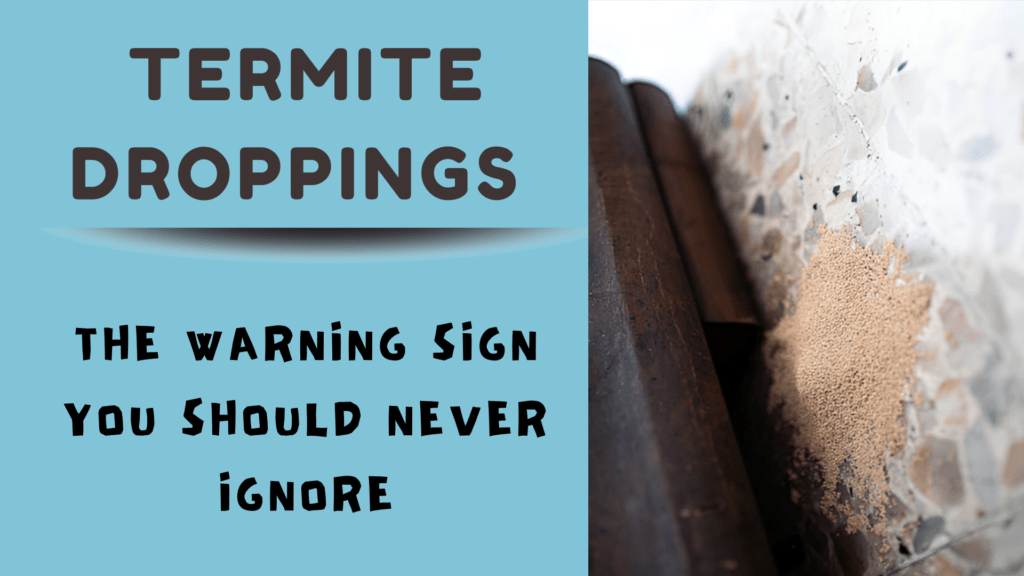
Discovering tiny piles of what looks like sawdust or sand in your home can be alarming. More often than not, these piles are actually termite droppings—also known as frass—a sure sign of a termite infestation.
Understanding what termite droppings look like, where they come from, and what to do if you find them is crucial for protecting your property from costly damage.
What Are Termite Droppings?
Termite droppings, or frass, are the waste products left behind after termites digest wood and other cellulose materials. These droppings are not just a nuisance—they are a warning sign that termites are actively feeding and living inside your home or wooden structures.
What Do Termite Droppings Look Like?
Termite droppings are small, pellet-like, and usually about 1 millimeter in length. They often have six concave sides with rounded ends, resembling miniature capsules or grains of sand.
The color of the droppings can vary depending on the type of wood the termites have consumed:
- Light woods: Droppings may be beige or light brown.
- Dark woods: Droppings can appear dark brown or even black.
You’ll typically find these pellets in small piles beneath tiny holes in wood, which are called “kick-out holes” or “exit holes.” These holes are used by termites to push frass out of their nests, keeping their living spaces clean.
Drywood vs. Subterranean Termite Droppings: A Detailed Comparison
Not all termite frass looks the same. The two most common home-infesting species—drywood termites and subterranean termites—produce distinctly different droppings. Knowing the difference can help you identify which species you’re dealing with and guide your pest control response.
Drywood Termite Droppings
Drywood termites live entirely inside the wood they consume, so they actively push their frass out through small kick-out holes to keep their galleries clean. This makes their droppings the most visible and easiest to identify.
- Color: Ranges from beige, tan, and light brown to dark brown or near-black, depending on the species of wood being consumed. A single pile may contain pellets of mixed colors.
- Shape: Distinctly oval or elongated pellets with six flattened or concave sides and rounded ends—often described as a tiny football or capsule shape.
- Size: Approximately 1 mm in length, uniform and consistent across a pile.
- Texture: Hard, dry, and granular. Individual pellets feel gritty between the fingers and do not crumble easily.
- Where found: Neat, cone-shaped or scattered piles on windowsills, floors, countertops, or furniture directly below kick-out holes in wood. The piles can accumulate quickly and reappear even after cleaning—a telltale sign of an active infestation.
Subterranean Termite Droppings
Subterranean termites behave very differently. They live in underground colonies and travel through mud tubes to reach wood. Rather than expelling frass, they incorporate their waste into the mud tubes and tunnel walls as a construction material. This means their droppings are rarely found in distinct piles.
- Color: Dark brown to black, often blending into the mud material surrounding them.
- Shape: Irregular and formless—not the distinct pellet shape seen in drywood frass. Individual particles are not easily separated.
- Size: Much finer than drywood frass; particles are tiny and powdery rather than pellet-like.
- Texture: Soft, moist, and compacted when fresh; dries to a hard, clay-like consistency when incorporated into mud tubes.
- Where found: Embedded within mud tubes along foundations, walls, and wooden beams—rarely found as standalone piles. If you do see loose dark powder near mud tubes, that can indicate subterranean activity.
Quick Reference: Drywood vs. Subterranean Frass
| Feature | Drywood Termite Frass | Subterranean Termite Frass |
|---|---|---|
| Color | Beige to dark brown/black (mixed) | Dark brown to black |
| Shape | Oval, 6-sided pellets with rounded ends | Irregular, formless particles |
| Size | ~1 mm, consistent and uniform | Much finer, powder-like |
| Texture | Hard, dry, granular | Soft/moist when fresh, hardens dry |
| Found as piles? | Yes—neat piles below kick-out holes | Rarely—embedded in mud tubes |
| Key indicator | Kick-out holes nearby in wood | Mud tubes on walls/foundation |

Where Are Termite Droppings Found?
Knowing where to look for termite droppings is essential for identifying an infestation. Here are some common places:
1. Around Wooden Structures
Check for piles of droppings near wooden beams, frames, or furniture. These are common areas for termites to infest.
2. In Your Attic or Basement
Termites often hide in attics or basements where they can feed on wooden materials undisturbed. Look for droppings in these areas, particularly if you notice any other signs of termite activity.
3. Along Walls
If termites have been feeding inside the walls, droppings might collect near cracks or holes in the drywall. These could indicate that termites are tunneling through the interior of your home.
4. Near Wooden Fixtures
Examine wooden doorframes, window sills, and other fixtures for signs of termite damage and droppings. Termites tend to gravitate toward these areas for food.
Types of Termites and Their Droppings
1. Subterranean Termites
The Subterranean Termites are the most common type that causes damage to homes. Their droppings are typically fine, powdery, and dark in color, and are rarely found in standalone piles—they mix waste into their mud tube construction.
2. Drywood Termites
Their droppings are larger and more distinctive than those of subterranean termites—small, hard, oval pellets expelled through kick-out holes. Drywood termites infest dry wood and do not require contact with the soil.
3. Formosan Termites
An invasive species known for causing widespread damage. Their droppings resemble those of subterranean termites but are typically more compact and often appear in larger piles.
Termite Droppings vs. Other Insect Droppings vs. Sawdust
It’s easy to confuse termite droppings with sawdust, wood mite debris, or carpenter ant droppings. Here’s how to tell the difference:
| Feature | Termite Droppings (Frass) | Carpenter Ant Droppings | Sawdust / Shavings |
|---|---|---|---|
| Shape | Small, oval, six-sided pellets | Larger, irregular pellets | Fine, powdery, or chunky |
| Color | Varies: beige, brown, black | Similar, but may contain insect parts | Light, uniform color |
| Texture | Granular, compact, hard | Gritty, may contain debris | Fibrous, soft |
| Location | Near exit holes in wood | Near nest entrances in wood | Near woodworking areas |
| Uniformity | Very uniform pellet shape | Irregular, mixed debris | Inconsistent flakes |
Also read: Carpenter Ants vs Termites: Which One’s Worse?
Powderpost Beetles: How to Spot the Damage Early
Wood-Boring Beetles: Identification, Damage, and Control
Termite Damage vs Wood Rot: How to Tell the Difference
✅ Action Checklist: What to Do If You Find Termite Droppings
If you spot what you believe to be termite frass, work through this checklist immediately. Speed matters—termites can cause thousands of dollars in structural damage before most homeowners realize they have a problem. See our full guide on termite damage repair costs to understand what’s at stake.
Step 1 — Do Not Disturb the Pile
Resist the urge to vacuum or sweep the droppings. Leave the pile intact so a pest control professional can examine the frass and confirm the species. Cleaning up immediately removes valuable diagnostic evidence.
Step 2 — Photograph Everything
Take clear, close-up photos of the frass pile, the surrounding wood, and any visible holes or damage. Photograph from multiple angles and include a coin or ruler in the shot for scale. These images will help a pest inspector assess the situation remotely and track the infestation over time.
Step 3 — Mark and Note the Location
Place a small sticky note or piece of tape near the pile—do not touch the frass itself. Note the exact location (e.g., “base of window frame, master bedroom, south wall”) and the date you discovered it. If new piles appear after cleaning, that confirms active infestation.
Step 4 — Look for Kick-Out Holes
Examine the wood directly above or near the frass pile. Drywood termites create tiny circular exit holes (roughly 1–2 mm in diameter) to push frass out. Shining a flashlight at an angle along the wood surface makes these holes much easier to spot.
Step 5 — Probe the Surrounding Wood
Gently press a screwdriver or the tip of a pen against the wood near the frass. Termite-damaged wood feels soft, hollow, or spongy and may give way easily. Tap the surface—a hollow sound suggests internal tunneling. Do not break open the wood, as this disturbs the colony.
Step 6 — Check for Other Infestation Signs
Expand your inspection to surrounding areas and look for: mud tubes on walls or foundations (subterranean termites), discarded wings near windowsills or doorways (swarmer termites), bubbling or peeling paint (moisture from termite activity inside walls), and tight-fitting doors or windows (structural warping from termite damage). Not sure if it’s termite damage or something else? Read our guide on termite damage vs wood rot to help you tell the difference.
Step 7 — Contact a Licensed Pest Inspector
Call a licensed termite inspector as soon as possible—ideally the same day. Provide your photos, location notes, and observations. Before you call, it helps to understand what a termite inspection costs so you know what to expect. A professional will conduct a full structural inspection, confirm the species, assess the extent of damage, and recommend a targeted treatment plan. Do not attempt to treat a confirmed infestation with DIY sprays alone, as these rarely address the full colony.
How to Prevent Termites from Entering Your Home
Reduce Moisture Around Your Home
Fix leaky pipes, faucets, and roofs promptly. Ensure proper drainage away from your home’s foundation. Avoid overwatering plants near the house.
Eliminate Wood-to-Ground Contact
Keep firewood, lumber, and wooden debris at least 20 feet away from your home and elevated off the ground. Make sure wooden siding and any other wood elements are at least 6 inches above the soil.
Seal Entry Points
Inspect and seal cracks, gaps, and holes in your foundation, walls, and around utility lines. Use caulk or other appropriate materials to block potential entryways.
Use Termite-Resistant Materials
When building or renovating, opt for pressure treated wood or metal framing for added protection. Consider installing physical barriers such as stainless steel mesh or sand barriers during construction.
Manage Landscaping and Mulch
Avoid placing mulch or vegetation directly against your home’s foundation. Maintain a clear zone of at least 6 inches between soil or mulch and the bottom of your weep holes. Use cellulose-free mulch or keep mulch layers thin.
Regular Inspections and Monitoring
Schedule annual professional termite inspections to catch early signs of infestation. Use DIY monitoring tools or bait stations to keep an eye on termite activity between inspections.
Additional Tips
- Remove dead trees and stumps from your property—they are prime termite food sources.
- Inspect any used or reclaimed wood before bringing it into your home or garden.
- Ensure weep holes are not blocked by soil, mulch, or vegetation.
When to Call a Professional
- For severe or hard-to-access infestations
- If DIY methods have failed
- To maintain preventive treatments and warranties
- Any time you find frass and are unsure of the source
Before calling, check our guides on termite inspection costs and how much termite treatment costs so you can budget and ask the right questions.
Final Thoughts
Termite droppings, or frass, are an important sign of an active termite infestation. Identifying them early—and knowing the difference between drywood and subterranean frass—can help you prevent extensive structural damage. If you find termite droppings, do not disturb them, document everything, and contact a licensed pest control professional right away. Left untreated, the cost of termite damage repair can run into thousands of dollars—proactive prevention is always the smarter and cheaper choice.
Frequently Asked Questions (FAQs)
Q: What do termite droppings look like?
Drywood termite droppings are small, oval, six-sided pellets about 1 mm long, ranging from beige to dark brown. Subterranean termite frass is finer and powdery, usually embedded in mud tubes rather than found in open piles.
Q: How can I tell if I have a termite infestation?
Look for piles of tiny pellets near wooden furniture or walls, kick-out holes in wood, mud tubes on foundations, hollow-sounding wood when tapped, discarded wings near entry points, or bubbling paint on walls.
Q: Are termite droppings harmful?
Termite droppings are not directly harmful to humans, but they signal an active infestation that can cause significant—and expensive—structural damage if left untreated.
Q: How do I clean termite droppings?
Leave the pile undisturbed until a pest professional has inspected it. After inspection and confirmation, you can vacuum the frass and wipe the area with soap and water. Cleaning alone will not eliminate the infestation.
Q: Can termite droppings be mistaken for other pests?
Yes—termite frass is often confused with carpenter ant debris or sawdust. Termite pellets are distinctive for their uniform oval shape and six concave sides. Carpenter ant debris tends to be coarser and may contain insect body parts.
Q: How quickly should I act after finding termite droppings?
As soon as possible—ideally the same day. Termites are active year-round and colonies can number in the hundreds of thousands. The longer an infestation goes untreated, the more extensive and costly the termite damage repair becomes.