
Last Updated on August 14, 2026 by Sam Wood Worker
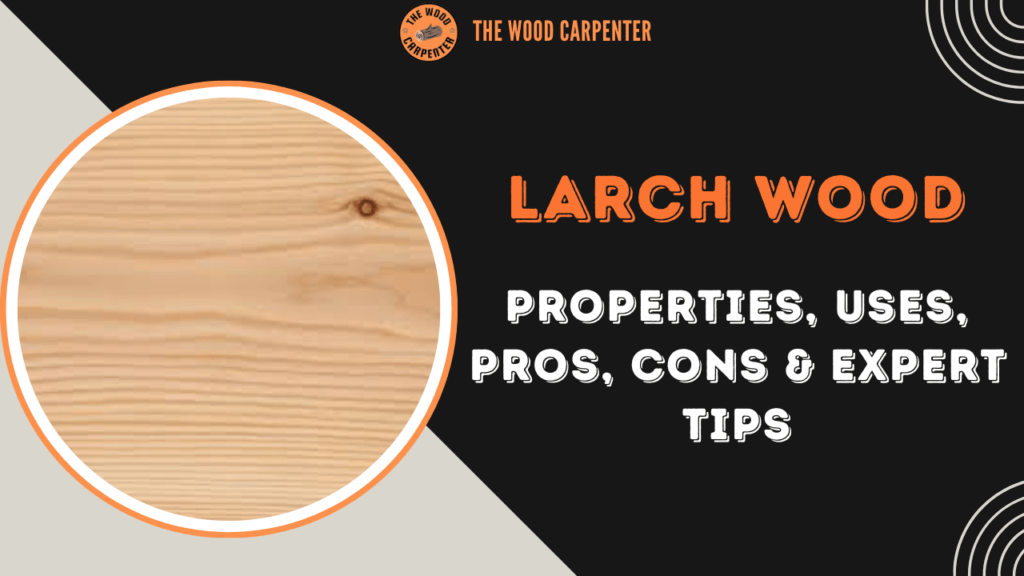
As you begin to look up wood for outdoor projects, siding, decking and even furniture Larch wood will keep making its way back into your view. And there is good reason for that.
Great for those projects where you are looking for a nice softwood that is strong, durable and moisture resistant with an interesting grain pattern and appearance, larch—one of the only genus known as Larix.
It’s a favorite for many builders in Europe, gaining fans in the U.S., and often chosen for uses when pine or spruce won’t hold up.
But what is it that makes Larch wood special?
Is it right for your project?
And how does it stack up against alternatives, such as cedar, Douglas fir or tropical hardwoods?
This guide reveals everything for you with proven facts and industry standards from well-known wood scientists along with reliable timber resources. By the end, you’ll have a genuine expert-level grasp of what Larch brings to the table, what it doesn’t and when it’s worth pulling the trigger.
What Is Larch Wood?
Larch is the wood that from deciduous conifer trees native to cool areas of Europe, Asia and North America. Unlike most evergreens, larch trees shed their needles each fall which is what sets them apart in the wood world.
There are several major species, including:
- European Larch (Larix decidua)
- Siberian Larch (Larix sibirica)
- Western Larch (Larix occidentalis)
Though there are differences between species, all larch timbers have some of these key features in common: distinctiveness in grain contrast, high levels of resin content; and a level of durability higher than the average for softwoods.
A defining visual feature is the sharp contrast between:
- Sapwood: pale, creamy yellow
- Heartwood: warm reddish-brown that darkens with age
These color tones, combined with the distinct growth rings, give larch a rustic yet clean appearance that fits modern architectural design just as well as traditional cabin aesthetics.
Key Physical & Mechanical Properties of Larch Wood
Larch sits at an interesting intersection of softwood and hardwood qualities. It is technically a softwood, but its density and mechanical performance often outperform many hardwoods used in construction.
Density & Hardness
Most larch species fall between 550–590 kg/m³ (air-dry), though Siberian larch can be even denser. This puts larch far above common softwoods like pine and spruce.
Its hardness gives it:
- Better impact resistance
- Greater wear tolerance
- A more solid, furniture-friendly feel
For flooring, decking, and exterior cladding, this density is a major advantage.
Resin Content
Larch is one of the most resin-rich coniferous woods. Resin naturally increases:
- Water resistance
- Decay resistance
- Pest resistance
This is why larch has historically been used in shipbuilding, bridge construction, and other wet-environment structures.
Dimensional Stability
Properly dried larch is stable, but it must be dried carefully. If rushed, it can warp, crack, or check. That’s primarily because of:
- Its density
- Resin pockets
- High contrast between earlywood and latewood
Once installed and sealed, however, larch performs reliably even in harsh weather conditions.
Durability: How Weatherproof Is Larch Wood Really?
Larch’s durability rating varies by species, but most fall under “moderately durable” to “durable.”
That means:
- Better than cedar, pine, and spruce
- Close to Douglas fir
- Not as durable as tropical hardwoods like Ipe or Teak
The heartwood is the star—it naturally resists:
- Moisture
- Rot
- Fungal decay
- Wood-boring insects
The sapwood, however, is much less durable and should be avoided for exterior work when possible.
When left untreated outdoors, larch will slowly weather to a silvery gray. This color change is cosmetic, not structural, but using oil or UV sealant can preserve its reddish tone.
Advantages of Larch Wood
Larch offers an exceptional blend of appearance, strength, and resistance—without the cost or harvesting concerns associated with exotic hardwoods.
1. Naturally Weather-Resistant
One of larch’s biggest selling points is that it can thrive outdoors without chemical treatment. Builders often choose it for siding and decks because it survives years of rain and sun with minimal structural wear.
2. Strong for a Softwood
Builders appreciate its impressive strength-to-weight ratio. It’s stiff, resists bending, and can be used structurally in:
- Beams
- Rafters
- Framing
- Timber construction.
3. Beautiful Grain & Color
Larch’s warm tones and visible growth rings look stunning in both rustic and modern designs. Its rich heartwood darkens beautifully with age.
4. More Affordable Than Hardwood
For many exterior or structural applications, larch delivers hardwood-like performance at a softwood price—making it a budget-friendly choice for many homeowners.
5. Works Indoors and Outdoors
Larch is one of the few woods equally suited to:
- Siding
- Decking
- Interior flooring
- Furniture
- Sauna interiors
- Plywood
Siberian larch plywood, in particular, is known for its strength and stability.
Disadvantages of Larch Wood
Larch is impressive, but not perfect. Understanding its downsides helps you avoid surprises during installation or long-term use.
1. Can Warp or Crack If Poorly Dried
Because of its density and resin content, larch must be dried slowly and properly. Boards that weren’t kiln-dried under controlled conditions are more likely to twist or check after installation.
2. Resin Can Make Machining Messy
High resin content means:
- Tools get gummed up
- Sandpaper clogs quickly
- Some finishes require extra prep
Sharp blades and frequent cleaning are essential.
3. Appearance Can Be Inconsistent
Compared to cedar or fir, larch has:
- More knots
- More variation in grain
- Potential resin pockets
This is great for rustic designs but less ideal for ultra-minimalist aesthetics.
4. Heavy for a Softwood
Its above-average density means larch is heavier than pine or spruce, which can make handling, hauling, or DIY installation a little more challenging.
The Ultimate Guide to Woodworking: Types of Wood
Most Common Uses of Larch Wood
Thanks to its versatility, larch is used in a wide range of projects.
Outdoor Uses
- Decking
- Siding / cladding
- Fencing
- Pergolas & gazebos
- Garden furniture
- Boat building
Its weather resistance makes it one of the best outdoor softwoods available.
Indoor Uses
- Flooring
- Wall paneling
- Staircases
- Doors & window frames
- Dining tables
- Cabinets
- Sauna benches and interiors
Because larch has a warm hue and durable surface, it’s increasingly used in interior design.
Construction
Larch’s structural strength makes it useful in:
- Timber frames
- Bridges
- Trusses
- Posts and beams
Historic buildings in Europe built from larch still stand centuries later—a testament to its longevity.
Larch Plywood
Larch plywood, especially Siberian larch plywood, is valued for:
- Stability
- Strength
- Moisture resistance
It’s used for furniture, flooring, and premium cabinetry.
Larch Compared to Other Woods
Here’s a simplified comparison to help you decide where Larch fits:
| Wood Type | Durability | Price | Best Use |
| Larch | High (heartwood) | Moderate | Outdoor + Indoor |
| Cedar | High | Higher | Outdoor siding, decks |
| Douglas Fir | Moderate | Moderate | Structural beams |
| Pine/Spruce | Low–Moderate | Low | Interiors, framing |
| Ipe/Teak | Very High | Very High | High-end outdoor |
Larch strikes a sweet spot between affordability, performance, and sustainability.
How to Maintain Larch Wood
If you want your larch wood to stay strong and attractive for decades, follow these tips:
✔ Seal it with UV-resistant oil
Preserves color and reduces cracking.
✔ Allow for airflow
Gaps behind siding are essential for proper moisture dissipation.
✔ Avoid ground contact
Even its heartwood isn’t ideal for direct soil exposure.
✔ Clean outdoor surfaces yearly
This prevents mold, grime, and discoloration.
✔ Re-oil every 1–3 years if color retention matters
Untreated larch naturally turns silver-gray.
Is Larch Wood Worth It? (Expert Take)
For homeowners, woodworkers, and builders who want:
- A durable outdoor wood
- Attractive natural grain
- Strong mechanical performance
- A sustainable, chemical-free option
- Lower cost than tropical hardwoods
Larch wood is one of the smartest choices available.
It’s strong, long-lasting, beautiful, and versatile enough for both rustic cabins and modern homes. While it requires proper drying and thoughtful installation, the long-term performance makes those extra steps well worth it.
FAQs About Larch Wood
Is larch wood good for outdoor use?
Yes. Larch resists moisture, rot, and insects naturally making it ideal for siding, decks or garden structures.
Does larch need to be treated?
Treatment isn’t required structurally, but sealing helps prevent color from fading as well as reduces surface cracking.
Does larch turn gray outdoors?
Yes. Larch, like cedar and teak, will develop a silver-gray patina if not treated with UV-resistant oil.
Is larch better than cedar?
Cedar is more dimensionally stable and lighter, while larch is harder, stronger and less expensive. Both have their own advantages depending on the work you’re doing.
Is larch good for flooring?
Absolutely. Because it is both hard and warm colored, it can be used as a floor material but must be well sealed.
Can larch wood warp?
Poorly dried larch can warp, but high-quality kiln-dried boards are stable and reliable.
How long does larch last?
Properly installed, larch has a life span of 30–50+ years outdoors and almost indefinitely indoors.