
Last Updated on July 6, 2026 by Sam Wood Worker
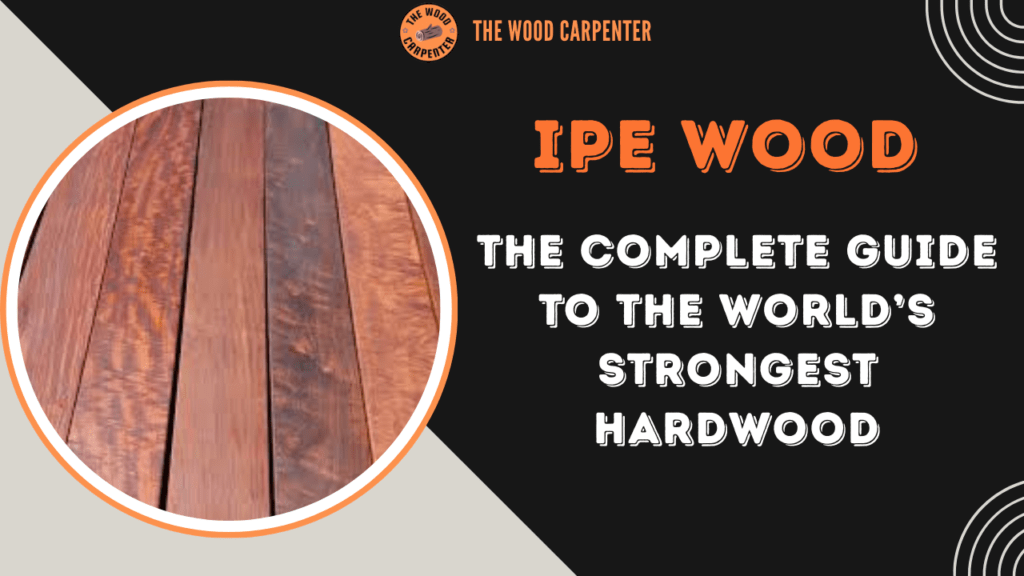
Ipe Wood
The first time my neighbor pointed to his deck and said it was 25 years old I did not believe him. It looked like it had been installed last summer. Dark brown, smooth, solid — not a single warped board. Not one crack. He smiled and said two words: Ipe wood. I went home and spent the next three hours reading everything I could find about it.
If you want to know what ipe wood is, why people pay serious money for it, and whether it is right for your project — this is the only guide you need. Written simply. Just honest real information.
What Is Ipe Wood?
Ipe (pronounced EE-pay) is a tropical hardwood that comes from trees in South America — mainly Brazil, Peru, and Bolivia. Its scientific name is Handroanthus spp and it belongs to a family of trees also called Brazilian Walnut or Ironwood.
The nickname Ironwood tells you everything. Ipe is so dense and hard that it sinks in water. Most woods float. Ipe goes straight to the bottom like a piece of metal.
It is one of the hardest, densest, and most durable woods on the entire planet. And it grows naturally in the rainforests of South America where the climate produces wood of extraordinary quality.
Woodworkers and builders who discover ipe for the first time often describe the same experience — they cannot believe a natural wood can be this hard, this heavy, and this beautiful all at once.
Quick Facts About Ipe Wood
| Property | Detail |
|---|---|
| Scientific name | Handroanthus spp |
| Common names | Brazilian Walnut, Ironwood, Lapacho |
| Where it grows | Brazil, Peru, Bolivia, Paraguay |
| Color | Dark olive brown to blackish brown |
| Janka hardness | 3680 |
| Weight | 68 lbs per cubic foot |
| Natural fire rating | Class A — same as concrete and steel |
| Lifespan outdoors | 40 to 75 years |
| Cost | $4 – $12 per linear foot |
| Best uses | Decking, boardwalks, siding, flooring |
Why Is Ipe Wood So Special?
Let me give you the short version first.
Ipe wood has a Class A fire rating. This is the same fire resistance rating as concrete and steel. A natural wood that is as fire resistant as concrete. That alone should stop you in your tracks.
It also has natural resistance to rot, insects, mold, and moisture — all without any chemical treatment whatsoever.
And it lasts 40 to 75 years outdoors with very basic maintenance.
Nothing else in the wood world comes close to this combination of properties. That is why ipe has become the premium choice for decking, boardwalks, outdoor flooring, and exterior siding all over the world.
What Does Ipe Wood Look Like?
Ipe has a rich dark brown color — similar to dark walnut but with slightly more olive and greenish undertones when freshly cut and finished.
The grain is typically fine and interlocked — sometimes with a subtle wavy pattern that catches the light beautifully. The surface when sanded and oiled has a natural luster almost like polished leather.
Over time outdoors without any treatment ipe weathers to a beautiful silver-grey color — similar to teak. Many people love this weathered silver look. Others prefer to maintain the original dark brown color with regular oiling.
Both looks are genuine and beautiful. It is entirely your personal preference.
Real life example: A couple in Seattle built an ipe deck in 2004. They never oiled it or treated it in 20 years. Today it is a gorgeous uniform silver-grey color — solid, flat, and completely intact. Not a single board needs replacing. Their neighbor built a pressure-treated pine deck the same year. It has been rebuilt twice since then.
How Hard Is Ipe Wood?
Ipe has a Janka hardness rating of 3680.
Let me put that number in context for you:
Ipe is harder than ebony. Harder than cocobolo. Harder than every wood most people have ever heard of.
This hardness is part of why ipe lasts so long outdoors. Insects cannot easily burrow into it. Foot traffic barely affects it. Water cannot easily penetrate it.
The downside of this hardness is the same as with all extremely hard woods — it is genuinely difficult to cut, drill, and fasten. You need sharp carbide tools and pre-drilled holes for every screw. More on that later.
Where Does Ipe Wood Come From?
Ipe grows in the tropical rainforests of South America. The main producing countries are:
Brazil — The largest producer by far. Brazilian ipe is the standard against which all other sources are measured. The Amazon basin and Atlantic Forest regions produce the finest quality.
Peru — Growing source of ipe. Peruvian ipe is generally considered excellent quality and often comes with better sustainability documentation than some Brazilian sources.
Bolivia — Smaller quantities. Good quality.
Paraguay — Southernmost range. Slightly different color characteristics — sometimes more olive-brown.
The trees grow slowly in the rainforest — taking 40 to 100 years to reach a usable size. This slow growth is what produces the incredibly dense, tight-grained wood that makes ipe so durable.
What Is Ipe Wood Used For?
Ipe is primarily an outdoor wood. Its extraordinary durability, natural weather resistance, and fire rating make it ideal for applications where other woods fail.
1. Decking — The Number One Use
Ipe decking is what most people know this wood for. It is the premium choice for residential and commercial decks that need to last decades without constant maintenance.
Real life example: The famous Coney Island Boardwalk in New York City — one of the most heavily trafficked public boardwalks in America — used ipe for its decking. Millions of people walk on it every year. The ipe handles the foot traffic, the salt air, the harsh winters, and the hot humid summers without complaint.
The same story repeats at boardwalks, piers, and public outdoor spaces across the country. When engineers and architects need wood that will genuinely last — they specify ipe.
For homeowners the appeal is simple. Build an ipe deck once. Never rebuild it.
2. Outdoor Furniture
Ipe outdoor furniture — benches, chairs, tables, loungers — lasts for decades in any climate. No cover needed in winter. No treatment required. Just leave it outside year-round and it handles everything nature throws at it.
Many cities and parks use ipe benches because the long-term cost is lower than cheaper alternatives that need replacing every 5 to 10 years.
3. Exterior Siding and Cladding
Ipe is increasingly used as exterior wall cladding on contemporary homes and commercial buildings. The dark brown wood against glass and steel or white render creates a stunning modern aesthetic.
Because ipe does not rot, warp, or deteriorate like other wood sidings — it is a genuinely practical choice for cladding not just a beautiful one.
4. Dock and Marine Applications
Boat docks and marine structures need wood that handles constant water exposure, salt air, and the freeze-thaw cycles of northern climates.
Ipe handles all of these without treatment. Many marine engineers specify ipe for dock decking and structural members because the lifespan is dramatically longer than alternatives.
5. Commercial Boardwalks and Public Spaces
As mentioned with Coney Island — ipe is the go-to choice for public boardwalks that need to handle extreme foot traffic in coastal environments. It is used at beaches, parks, airports, shopping centers, and public plazas around the world.
6. Interior Flooring
While most people think of ipe as an outdoor wood it also makes extraordinary interior flooring. Its hardness at 3680 on the Janka scale means it resists scratches and dents better than virtually any other flooring option.
Ipe interior floors have a rich dark color similar to Brazilian cherry or dark walnut but with better durability than either.
7. Pool Surrounds and Spa Decking
The area around a swimming pool gets wet constantly. It needs to handle pool chemicals, constant moisture, bare feet, and intense sun.
Ipe handles all of this with ease. It also stays cooler underfoot in direct sun than many composite decking materials — an important consideration around pools.
Ipe Wood vs. Other Decking Materials
This is a comparison people make constantly. Let me lay it out simply.
| Material | Lifespan | Maintenance | Cost upfront | Cost over 25 years | Looks |
|---|---|---|---|---|---|
| Ipe wood | 40-75 years | Low | High | Low | Excellent |
| Pressure treated pine | 10-15 years | Medium | Low | Medium | Average |
| Cedar | 15-20 years | Medium | Medium | Medium | Good |
| Teak | 30-50 years | Low | Very High | Medium | Excellent |
| Composite decking | 25-30 years | Very low | Medium-High | Medium | Good |
| Redwood | 15-25 years | Medium | High | Medium | Good |
The key insight in this table is the cost over 25 years column.
Ipe costs more upfront than most alternatives. But because it lasts 40 to 75 years — you only build it once. Cheaper alternatives need replacing every 10 to 15 years. By the time you have rebuilt a pine deck twice or a cedar deck once — you have spent more money than the ipe deck cost in the first place.
And you still do not have a deck as beautiful or as durable as ipe.
Real life example: A homeowner in New Jersey priced both options for a 400 square foot deck in 2010. Pressure treated pine came in at $4,800. Ipe came in at $12,000. He chose pine to save money. In 2018 he rebuilt the pine deck for $6,200. In 2024 it needs rebuilding again. Total spent on pine decks through 2024 — over $20,000. An ipe deck built in 2010 would still be in perfect condition today and cost less total.
How Long Does Ipe Wood Last?
This is the question that makes people’s eyes go wide.
Outdoors with no maintenance: 25 to 40 years minimum. Many ipe structures last 50 to 75 years.
Outdoors with basic annual oiling: 40 to 75 years easily. Some properly maintained ipe installations are over 100 years old and still structurally sound.
Indoors as flooring: Essentially forever with normal care. The hardness means it resists wear better than virtually any other flooring option.
The Janka hardness, natural oils, and extremely dense cell structure all work together to make ipe almost impervious to the things that destroy other woods — moisture, insects, rot, and wear.
Is Ipe Wood Sustainable?
This is an important question and deserves an honest answer.
The Concern
Ipe grows in tropical rainforests in South America. Poorly managed or illegal logging of ipe has contributed to deforestation in the Amazon and Atlantic Forest regions — both critically important ecosystems.
This is a real concern. Not a small one.
The Good News
Certified sustainable ipe is available and increasingly common. Look for wood certified by:
FSC (Forest Stewardship Council) — The gold standard for sustainable timber certification. FSC-certified ipe comes from forests managed to protect biodiversity and local communities.
IBAMA certification — Brazil’s own environmental certification for legally harvested timber.
What To Do As a Buyer
Always ask your supplier for FSC certification or equivalent documentation. Reputable ipe suppliers will have this. If a supplier cannot document the legal origin of their ipe — walk away.
The price difference between certified and uncertified ipe is usually small. The difference in environmental impact is significant.
Plantation-grown ipe is also becoming more available as the industry responds to sustainability concerns. Plantation ipe is not yet as widely available as old-growth but supplies are growing.
How To Work With Ipe Wood
Ipe is not a beginner-friendly material to install. Its hardness makes it challenging but completely manageable if you know what you are doing.
Cutting Ipe
Always use carbide-tipped saw blades. Regular steel blades will dull almost immediately on ipe.
Use a sharp circular saw or miter saw for cross cuts. A table saw for rip cuts. Take steady passes — do not rush.
Ipe cuts cleanly with sharp blades. The cuts produce a fine reddish-brown dust that is mildly irritating — always wear a dust mask.
Pre-Drilling — Not Optional
You must pre-drill every single hole before driving a screw into ipe. Every single one. Without exception.
Ipe is so hard that trying to drive screws without pre-drilling will either snap the screw or split the wood. Pre-drilling is not optional — it is essential.
Use a drill bit slightly smaller than the diameter of your screw. Countersink the hole slightly so the screw head sits flush.
Use stainless steel screws only. Standard steel screws will cause dark staining on ipe due to a chemical reaction between the wood’s natural tannins and regular steel.
Hidden Fastener Systems
Many professional ipe installers prefer hidden fastener systems — special clips that hold the boards down from underneath without any visible screws on the surface.
Hidden fasteners create a cleaner look and avoid the need for visible screw holes. They are slightly more time-consuming to install but the finished result looks significantly better.
Spacing Ipe Boards
Leave a gap of 3mm to 6mm between ipe deck boards. This allows for drainage and the very slight seasonal movement of the wood. Ipe is very stable compared to other hardwoods but it still moves slightly with extreme humidity changes.
Finishing Ipe Before Installation
Apply a penetrating oil finish to all six sides of each board — including the bottom — before installation. This seals the end grain and all surfaces before the deck is assembled and helps prevent checking (small surface cracks) as the wood acclimatizes.
Ipe Wood Maintenance Guide
One of the best things about ipe is how low-maintenance it is. But basic care makes it last even longer and look much better.
Option 1 — Let It Go Natural Silver
Do absolutely nothing. Ipe will weather naturally to a beautiful silver-grey over 6 to 12 months. This silver patina is beloved by many homeowners and architects for its natural elegant look.
If you choose this option — just clean the deck once a year with a deck cleaner to remove mold, mildew, and dirt buildup. Rinse thoroughly and let dry.
The silver color does not mean the wood is deteriorating. It is purely a surface color change. The structural integrity of the wood is completely unaffected.
Option 2 — Maintain the Original Dark Brown Color
Apply a high-quality hardwood deck oil or ipe-specific penetrating oil once a year — or twice a year in very sunny or very wet climates.
How to do it properly:
Clean the deck thoroughly with a deck cleaner and stiff brush. Rinse and let dry for at least 48 hours.
Apply oil with a brush, roller, or cloth. Work it into the wood in the direction of the grain. Apply a thin even coat — do not puddle the oil.
Let the first coat soak in for 20 to 30 minutes then wipe off any excess that has not absorbed.
Let dry for 24 hours then apply a second thin coat if desired.
The oil soaks in and nourishes the wood keeping the colors rich and dark and providing additional protection against UV damage.
Best oils for ipe: Penofin Hardwood Oil, Messmer’s UV Plus, Armstrong Clark Wood Deck Stain, Defy Hardwood Deck Stain. All are specifically formulated for dense tropical hardwoods like ipe.
Ipe Wood Cost Guide
Here is a realistic price breakdown for 2025:
| Product | Typical Price |
|---|---|
| Ipe decking boards (per linear foot) | $4 – $12 |
| Ipe decking (per square foot installed) | $15 – $35 |
| Ipe outdoor furniture bench | $300 – $1,200 |
| Ipe outdoor dining table | $800 – $3,000 |
| Ipe interior flooring (per sq ft) | $8 – $18 |
| Ipe cladding/siding (per sq ft) | $10 – $20 |
| Ipe decking full project 400 sq ft | $8,000 – $18,000 |
Prices vary by region, grade, and supplier. FSC-certified ipe typically costs 10 to 20 percent more than uncertified — worth every penny.
Where To Buy Ipe Wood
Ipe is not available at regular hardware stores. You need specialist suppliers.
What to look for in a supplier:
- FSC certification documentation
- Clear photos of actual stock
- Moisture content information — should be air dried to 18-25% for outdoor use
- Consistent grading — ask about FAS (First and Second grade) for best quality
- Good customer reviews specifically about wood quality not just shipping
Common Mistakes People Make With Ipe
Let me save you from the mistakes I have seen people make:
Mistake 1 — Not pre-drilling Snapped screws and split boards result from not pre-drilling. Always pre-drill. Every single hole.
Mistake 2 — Using regular steel screws They will cause dark staining within months. Always use stainless steel or hidden fasteners.
Mistake 3 — Not letting ipe acclimate Store ipe boards flat in the outdoor environment where they will be installed for 2 to 4 weeks before installation. This lets the wood adjust to local humidity and reduces movement after installation.
Mistake 4 — Installing too tight No gaps between boards means no drainage and the boards can buckle. Leave 3mm to 6mm gaps.
Mistake 5 — Using water-based finishes They sit on top of ipe rather than penetrating it and peel off quickly. Always use penetrating oil finishes specifically formulated for dense hardwoods.
Mistake 6 — Buying cheap uncertified ipe Save a little money. Contribute to deforestation. Feel bad about it. Not worth it. Buy certified ipe from reputable suppliers.
Frequently Asked Questions
Q: What is ipe wood?
Ipe is a tropical hardwood from South America — mainly Brazil — known for its extraordinary hardness, natural durability, and beautiful dark brown color. Its Janka hardness is 3680 making it one of the hardest woods in the world. It has a natural Class A fire rating the same as concrete and steel. It is the premium choice for decking, boardwalks, outdoor furniture, and exterior cladding.
Q: How long does ipe wood last outdoors?
Ipe wood lasts 40 to 75 years outdoors with basic maintenance. Even with no maintenance at all ipe typically lasts 25 to 40 years before showing any significant deterioration. Many ipe boardwalks and decks installed decades ago are still in excellent structural condition today.
Q: Is ipe wood worth the cost?
Yes — when you calculate the total cost over 25 to 40 years. Ipe costs more upfront than pressure treated pine or cedar but lasts 3 to 5 times longer. By the time cheaper alternatives have been rebuilt once or twice the ipe deck costs less in total and still looks and performs better.
Q: Does ipe wood need to be sealed or treated?
No treatment is required for ipe to last outdoors. Its natural oils and extreme density protect it without any chemical treatment. However applying a penetrating hardwood oil once a year maintains the original dark brown color and provides additional UV protection. Without oiling ipe weathers naturally to an attractive silver-grey.
Q: Is ipe wood sustainable?
Ipe from certified sustainable sources — carrying FSC certification or Brazilian IBAMA documentation — is a responsible choice. Always ask your supplier for certification and avoid uncertified ipe which may come from illegally logged sources. Certified sustainable ipe costs only slightly more than uncertified.
Q: Why does ipe wood need pre-drilled holes?
Ipe is so hard at 3680 on the Janka scale that driving screws directly into it without pre-drilling will snap the screw or split the wood. Pre-drilling every hole is essential — not optional. Use carbide-tipped drill bits and stainless steel screws for best results.
Q: What is the difference between ipe and teak?
Both are premium tropical hardwoods with excellent outdoor durability. Ipe is significantly harder than teak at 3680 versus 1155 on the Janka scale and generally lasts longer outdoors. Teak has higher natural oil content making it slightly easier to work with and finish. Teak is usually more expensive than ipe. Both are excellent choices — ipe wins on durability and value, teak wins on workability and prestige.
Q: Can ipe wood be used for interior flooring?
Yes. Ipe makes extraordinary interior flooring. Its hardness at 3680 means it resists scratches and dents better than virtually any other flooring option. The rich dark brown color is beautiful and deepens with age. It is more difficult to install than softer flooring woods but the results and longevity are exceptional.
Final Word
I started this article with my neighbor’s deck. Let me end there too.
Last summer he had a party. About 40 people standing on that deck. Eating, drinking, moving chairs around. After everyone left he got out a broom and swept it. That was the entire cleanup.
No boards squeaked. Nothing wobbled. Nothing needed fixing. A 25 year old deck that handles 40 people like it was installed yesterday.
He told me he has spent exactly zero dollars on that deck since he built it. No repairs. No replacing boards. No rebuilding. Just an occasional clean and an oil coat every couple of years when he feels like it.
That is ipe wood. It just works. Year after year. Decade after decade.
If you are building an outdoor deck, boardwalk, or any structure that needs to last — and you only want to build it once — ipe is the answer.
Buy it from a certified sustainable source. Install it properly. Give it the occasional oil coat if you want to maintain the color.
Then forget about it for the next 40 years.