
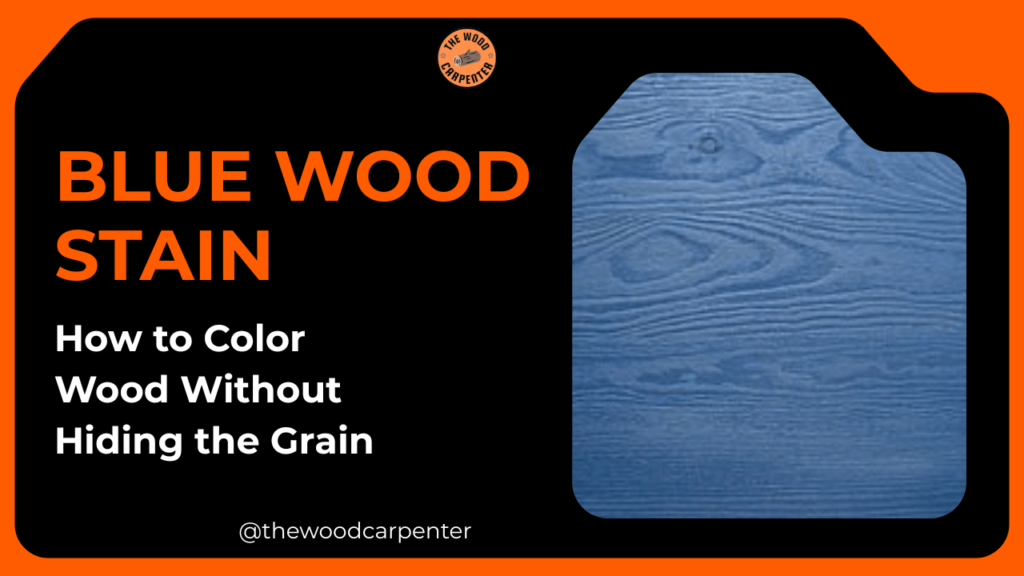
Blue wood stain can easily transform the mood of a room or piece of furniture. It can make wood appear calm and coastal, modern and bold or artistic and unique. With the right stain and the right method, you can create anything from a light, soft blue wash to a deep, rich navy tone while still showing the natural wood grain.
What Is Blue Wood Stain?
A blue wood stain is a type of finish that makes the wooden surface look blue while still allowing you to see the texture beneath it. It penetrates the wood fibers and colors it so that the grain pattern, as well as the texture, are still visible.
That’s not the way paint works, which lays on top of wood and covers the grain.
Blue wood stains come in several common types:
- Water-based stains dry fast, have low odor, clean up with water, and come in many blue shades.
- Oil-based stains dry more slowly, penetrate deeper, and often give richer color on hardwoods.
- Gel stains are thicker and will help minimize blotching on woods such as pine.
- Dye stains give very strong, bright color and are used when deep blue tones are needed.
Since stain is transparent, the color in the end result will also depend on what kind of wood you’re using and how you sand it, and how many coats you use.
Popular Blue Shades and Styles
Blue wood stain works with many design styles. The look depends on how light or dark the blue is and what it is paired with.
Common styles include:
- Light, faded blues for coastal or beach-style spaces
- Dark navy or slate blue for modern or industrial furniture
- Muted blue mixed with gray for farmhouse or rustic looks
- Bright turquoise or teal for artistic or boho designs
Open-grain woods, such as oak, stain more deeply and have more noticeable grain lines. In tight-grain woods like maple, the surface will appear smoother and more even in color.
Choosing the Right Wood and Stain
Before staining, think about the wood type, the lighting in the room, and how the piece will be used.
Softwoods such as pine, spruce, and fir often stain unevenly. Using a gel stain or pre-stain conditioner helps prevent blotches.
Hardwoods like oak, ash, and walnut show blue stain very well. Oak looks especially good with darker blue shades.
Maple and birch can resist normal stains, but dye-based stains usually work better on them.
Lighting also matters. Dark blues can look almost black in low light, while lighter blues stay visible. Matte finishes look rustic, while satin or semi-gloss finishes suit modern furniture and are easier to clean.
Always test the stain on scrap wood or a hidden area first.
How to Apply Blue Wood Stain
A little preparation is the secret to a clean, flat surface. Most of the staining issues are from not having patience with this step.
Step 1: Prepare the wood
Sand the surface starting around 120 grit and finishing at 180 or 220 grit. Always sand with the grain. Remove all dust using a vacuum and a clean cloth. On blotch-prone wood, apply a pre-stain conditioner and let it sit as directed.
Step 2: Mix and test the stain
Stir the stain slowly. Do not shake it. If the color is too strong, some stains can be diluted to create a lighter wash. Always test the color and let it dry fully before deciding.
Step 3: Apply the first coat
Use a good brush, foam brush, or clean cloth. Apply along the grain and work in small sections. Let the stain sit briefly, then wipe off the excess in the direction of the grain. Leaving it on longer makes the color darker.
Step 4: Add more coats if needed
Avoid heavy coats on softwoods, You can apply a second coat for deeper color once the first layer is dry. Heavy coats are best avoided on softwoods, as they can look muddy.
Step 5: Seal the wood
Stain alone does not protect wood. After it dries fully, apply a clear topcoat such as polyurethane, polycrylic, lacquer, or hardwax oil. Use thin coats and lightly sand between them. Always test the topcoat, as it may slightly change the blue color.
Creative Ways to Use Blue Wood Stain
Blue stain can be used as a design feature, not just a color.
It works well on accent furniture like coffee tables, consoles, and headboards. It looks great on two-tone cabinets, feature walls made of wood planks, and small details such as drawer fronts.
For a weathered look, you can layer gray or white stain over blue and lightly sand the edges.
Blue stain pairs well with natural wood tones, black or brass hardware, and light neutral fabrics.
Common Problems and Simple Fixes
Blue stain shows mistakes easily, but most problems can be corrected.
Blotchy color usually comes from uneven sanding or skipping conditioner. Light sanding and re-staining often fixes it.
If the color is too dark, light sanding or a thin lighter wash can soften it. In severe cases, stripping may be needed.
A dull or dirty look is often caused by dust or the wrong topcoat. Let it cure, sand lightly, and add a fresh clear coat.
If the grain disappears, too much stain was left on the surface. Wipe more aggressively or use a dye stain next time.
Care and Long-Term Use
A well sealed blue stained surface can last for many years.
Wash it with soft damp cloth and mild cleaner. It is best to not use harsh chemicals or abrasive pads. Coasters and mats safeguard from heat and water.
If the finish wears over time, you can lightly sand the clear coat and apply a new one without re-staining. For pieces in direct sunlight, a UV resistant topcoat helps prevent colors from fading.
Frequently Asked Questions
Does blue wood stain work on all woods?
Yes, however the wood colour will vary. Softwoods appear more rustic, and hardwoods display a clearer grain.
How do I get a light washed-blue look?
Apply diluted stain or remove it at once. Very thin coats work best.
Can I apply blue stain over old finish?
Most stains need bare wood. Old finishes should be sanded or stripped first.
Will blue stain hide the wood grain?
No, unless it is applied too thickly. Proper wiping keeps the grain visible.
Which topcoat is best?
Clear polyurethane or polycrylic in satin or semi-gloss is good. Test first.
Can I mix my own blue color?
Yes. Many stains can be mixed. Test your mix without fail.
Is blue stain good for outdoor use?
Yes, if its a product that’s rated for exterior use & properly sealed.
How do I avoid streaks on large surfaces?
Work in small sections, keep a wet edge, and wipe along the grain.
Final Thoughts
Blue wood stain is a powerful way to add color without losing the beauty of natural wood. With the right preparation, smart technique and a neat topcoat, you can execute finishes that appear professionally stylish and longevity.