
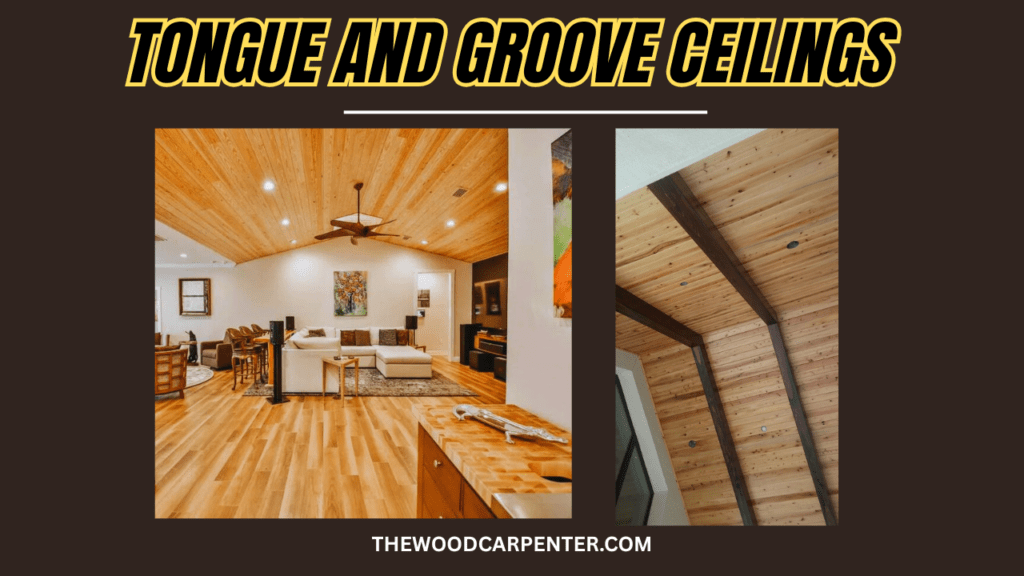
Enter a room with tongue and groove ceiling, and you sense there’s something special about the space. The space feels warmer. More inviting. More thoughtfully designed. Wood ceilings add texture, depth and a touch of craftsmanship that never goes out of style unlike blank drywall.
No matter if you are updating an old ceiling, or creating a new construction space, I will explain everything there is to know about tongue and groove ceilings.
What Is a Tongue and Groove Ceiling ?
A tongue and groove ceiling is made from wooden planks that lock together using a special joint system.
Each board has:
- A “tongue” (a raised edge) on one side
- A “groove” (a slot) on the other side
The tongue on one board fits into the groove of the next board. This creates a tight, smooth surface with no visible gaps.
Think of it as a puzzle coming together overhead.
This technique of joining has been practised for hundreds of years. It became especially popular in traditional American homes, porches, and cottages. Today, it looks as lovely in modern homes as it does in rustic ones.
Why Homeowners Choose Tongue and Groove Ceilings
There are many ceiling options available, but tongue and groove stands out for several reasons.
First, it adds warmth. Real wood grain simply feels richer than painted drywall.
Second, it creates visual height. The straight lines draw your eyes upward, making rooms feel taller and more open.
Third, it lasts a long time. When properly installed and maintained, these ceilings can stay beautiful for decades.
Fourth, it improves acoustics. Wood absorbs sound better than drywall, reducing echo in large rooms.
And finally, it increases perceived home value. Buyers often see wood ceilings as a premium upgrade.
Tongue and Groove vs Other Ceiling Types
Here’s a simple comparison to help you understand the difference:
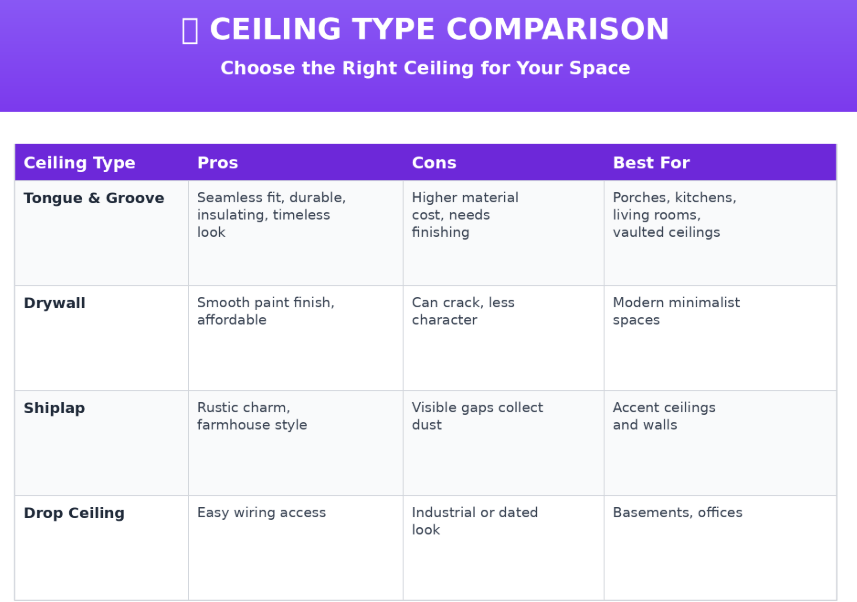
The biggest difference between tongue and groove and shiplap is the seam. Tongue and groove locks tightly with no gaps. Shiplap overlaps and leaves visible lines.
Popular Wood Choices for Tongue and Groove Ceilings
The type of wood you choose affects cost, appearance, and durability.
Pine
Pinewood is the most widely used wood. It is economical, light weight and easy to cut. It takes stain and paint well, and has a nice soft, natural look.
Estimated cost: $2–$4 per square foot.
Cedar
Red cedar resists moisture, bugs and decay. It smells good and comes in a nice variety of colors. Great for porches and humid locations.
Estimated cost: $4–$7 per square foot.
Cypress
Cypress is great for hot and humid applications. It doesn’t warp, and it resists decay naturally.
Estimated cost: $5–$8 per square foot.
Douglas Fir
Strong and durable with bold grain patterns. Slightly more expensive but excellent for large ceilings.
Oak or Walnut
Premium hardwoods used for luxury interiors. Higher cost but very elegant.
For outdoor or low-maintenance areas, PVC or composite boards that mimic wood are also available.
Always choose kiln-dried wood to prevent warping later.
Step-by-Step Installation Overview
Tongue and groove ceilings can be a weekend DIY project if you have basic carpentry skills.
Step 1: Measure and Prepare
Measure your ceiling twice and buy 10-15% more than the area of your ceiling, to allow for waste and cuts.
Let the wood sit in the room for 48 hours before installation so it adjusts to temperature and humidity.
Step 2: Create a Stable Base
Install furring strips (1×2 battens) perpendicular to ceiling joists if needed.
Make sure everything is level.
Step 3: Install the First Board
Start along one wall with the groove side facing the wall.
Leave a small expansion gap (about 1/4 to 1/2 inch).
Step 4: Blind Nail Through the Tongue
Use 15-gauge brad nails at a 45-degree angle into joists or furring strips.
This hides the fasteners.
Step 5: Interlock and Continue
Slide the next board’s tongue into the previous groove.
Tap gently with a rubber mallet for a tight fit.
Stagger end joints for strength and better appearance.
Step 6: Finish Edges
Trim the final board and add molding or trim to cover expansion gaps.
The common tools that are usually required include level, ladder, nail gun, saw and a measuring tape.
Installed by a pro, the cost is $2–$6 per square foot.
Cost Breakdown in 2026
Total installed cost generally ranges between $4–$10 per square foot, depending on wood type and location.
| Room Size (sq ft) | Material Cost | Total Installed Cost |
| 200 (small room) | $400–$1,200 | $800–$2,000 |
| 320 (living room) | $640–$1,920 | $1,280–$4,800 |
| 550 (porch) | $1,100–$3,300 | $2,200–$8,250 |
Additional costs may include:
- Stain or paint: $200–$500
- Electrical adjustments: $180–$370
Outdoor installations cost more due to weatherproofing.
Although more expensive than drywall, tongue and groove is considered a long-term upgrade.
Design Ideas That Transform a Room
Tongue and groove ceilings are incredibly versatile.
You can leave the wood natural for a rustic cabin feel.
You can let it be natural and paint the space a dark color for a cozy, moody vibe.
You can paint it white for a modern farmhouse or coastal look.
Wider boards create a clean, modern appearance. Narrow boards give a classic beadboard feel.
Pairing wood ceilings with exposed beams creates stunning architectural detail. Vaulted ceilings become even more dramatic when lined with wood planks.
In 2026, sustainable reclaimed wood and integrated LED strip lighting are trending in both homes and commercial spaces.
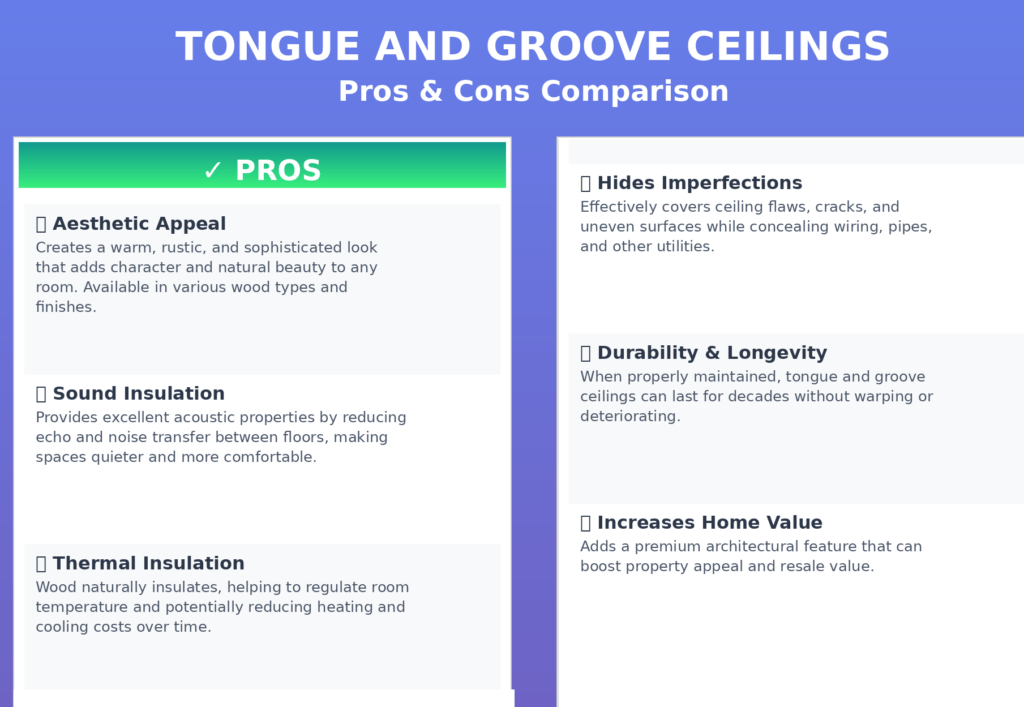
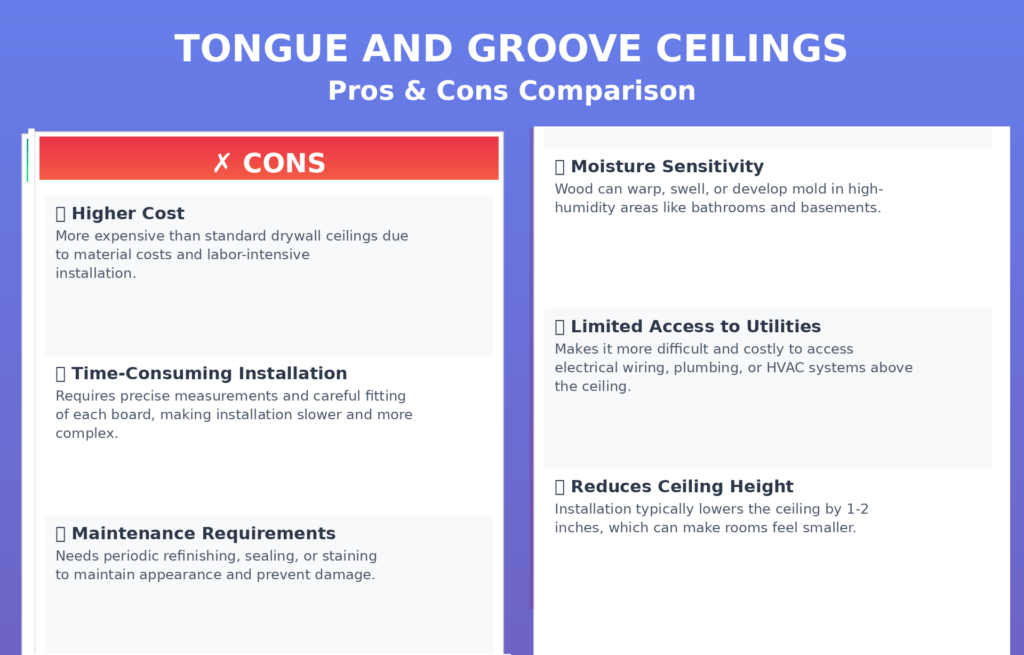
Pros and Cons of Tongue and Groove Ceilings
Pro’s
Con’s
Maintenance and Long-Term Care
One of the reasons homeowners love tongue and groove ceilings is due to their ease of maintenance.
Dust regularly using a microfiber cloth or vacuum attachment.
For more thorough cleaning, use a mild soap and water and a soft cloth. Avoid soaking the wood.
Perhaps every 3–5 years, stained or natural finishes may need to be resealed – more likely so for tropical climates.
Good ventilation is key to avoiding moisture in bathrooms and kitchens.
With the right routine, these ceilings remain in place for decades.
Common Mistakes to Avoid
Skipping the acclimation period can cause boards to shrink or expand later.
Forgetting expansion gaps may lead to buckling.
Installing boards parallel to joists weakens structural support. Always go perpendicular.
The use of the wrong fasteners can cause boards to become loose over time.
Not checking level frequently may result in a wavy appearance.
Careful preparation makes all the difference.
Frequently Asked Questions
What is the difference between tongue and groove and shiplap ceilings?
Tongue and groove boards interlock tightly without visible gaps. Shiplap boards overlap and leave small shadow lines between panels.
Can I install a tongue and groove ceiling myself?
Yes, if you have intermediate carpentry skills and proper tools. Many homeowners complete standard rooms in a weekend.
How much does it cost in 2026?
Expect $4–$10 per square foot installed. Pine keeps costs on the lower end.
What wood is best for a porch ceiling?
Cedar and cypress are good choices because they’re naturally resistant to moisture and insects.
Does a tongue and groove ceiling add value?
Yes. It boosts perceived quality and makes your home stand out to buyers.
How does it affect room acoustics?
Wood absorbs sound better than drywall, reducing echo and creating a warmer sound environment.
Final Thoughts
Tongue and groove ceilings combine beauty, durability, and timeless style. They work in rustic cabins, modern farmhouses, coastal homes, and even sleek contemporary spaces.
The initial cost may be higher than drywall, but the long-term value of the aesthetic and durability is worth it.
If you’re looking for a ceiling that feels custom rather than heavily influenced by other designs, then tongue and groove is something you’ll be grateful for every day.