

Last Updated on April 27, 2026 by Sam Wood Worker
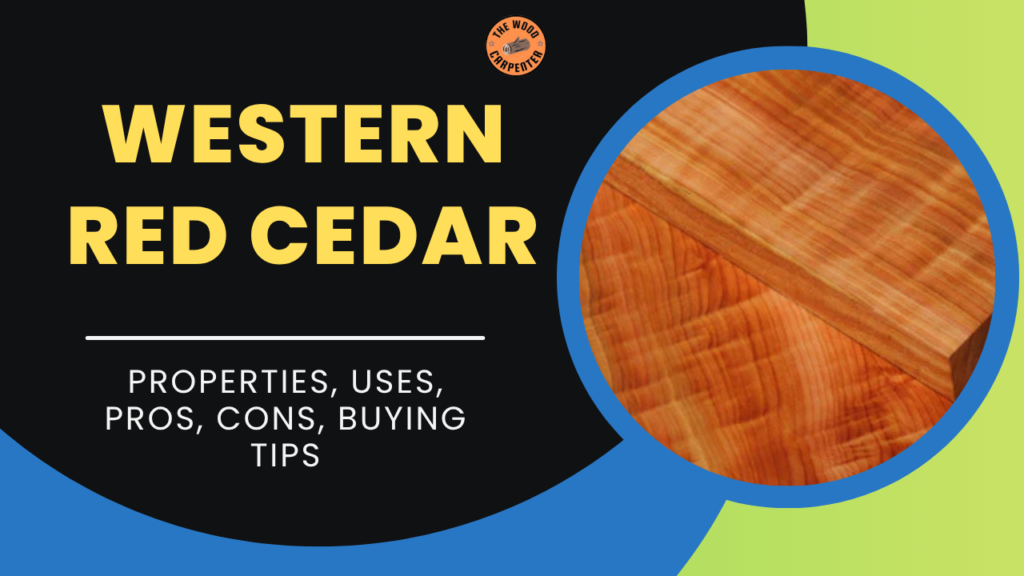
Western red cedar (Thuja plicata) is a lightweight, naturally rot-resistant softwood from the Pacific Northwest. Rich reddish-brown color, straight grain, exceptional outdoor durability — no chemical treatment needed. The go-to wood for siding, decking, fencing, and saunas.
What Is Western Red Cedar?
Indigenous peoples of the Pacific Northwest called it the “Tree of Life.” Once you work with it, that name makes sense.
Western red cedar grows along the Pacific Coast from northern California through British Columbia and into Alaska. It towers up to 200 feet, growing straight and clean — producing long, clear boards with very few knots. Technically it’s a softwood, but outdoors it performs in ways most softwoods simply can’t. The reason is chemistry: natural oils called thujaplicins run through the heartwood, acting as built-in preservatives against moisture, rot, fungi, and insects.
If you’ve admired a weathered cedar fence, stepped into a crisp-smelling sauna, or seen a Pacific Northwest cabin age beautifully over decades — that’s this wood doing what it does.
Key Properties
Hardness
Cedar scores 350 lbf on the Janka scale. Low by hardwood standards, but hardness isn’t the point here. Its value is in natural durability, dimensional stability, and weight-to-strength ratio. For outdoor structural work, it punches well above its weight class.
Grain and Texture
Straight, uniform grain with a fine to medium texture. Trees grown at higher elevations produce tighter growth rings and some of the most stable, knot-free boards you’ll find in any softwood. It splits cleanly along the grain — a property Indigenous craftspeople used for centuries to shape canoes, baskets, and longhouses without metal tools.
Color
Fresh-cut cedar is a warm reddish-brown to pinkish-red, sometimes with cream-colored sapwood streaks. Left unfinished outdoors, it weathers to a clean silver-gray that architects and designers actively design around. Oil it and the warm original color stays. Both directions look intentional — which is rare in any building material.
Workability
Cedar is one of the most pleasant woods to work with. Lightweight, cuts cleanly, sands smoothly, holds paint and stain well. The softness does mean it dents more easily than a hardwood, so it’s not the right choice for surfaces taking heavy impact. But for shaping, routing, and finishing, it’s genuinely easy.
Natural Durability
This is cedar’s main argument. Those thujaplicins in the heartwood repel fungi, bacteria, moisture, and wood-boring insects without any chemical help. A cedar fence post lasts 15–25 years in the ground. Untreated pine in the same conditions? A few years at best. Above ground — decks, siding, pergolas — well-maintained cedar runs 30–50 years.
One thing that matters: only the heartwood carries those natural oils. The cream-colored sapwood doesn’t. For any outdoor project, always specify all-heartwood grades. This is a detail that catches people out.
What It Gets Used For
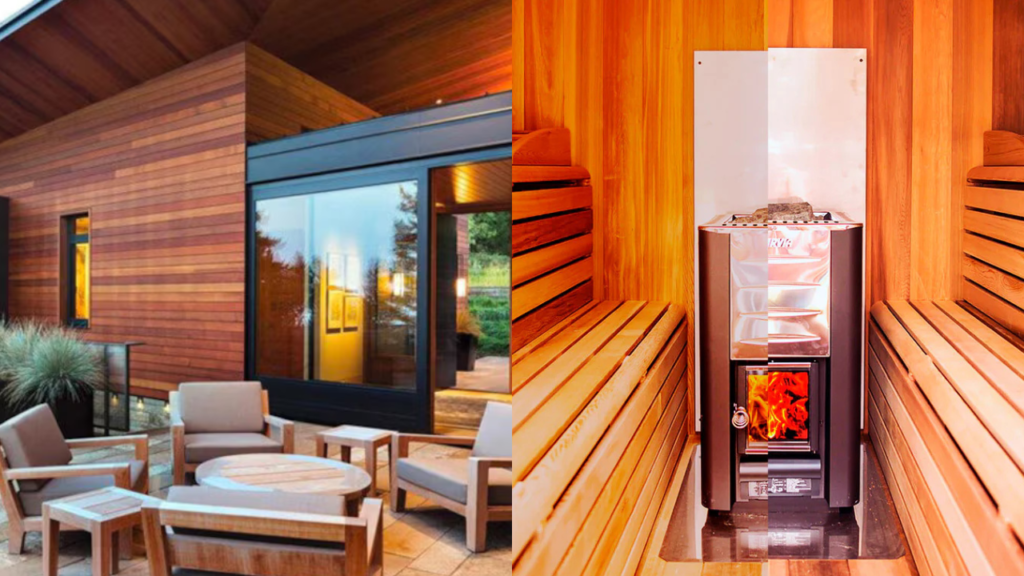
Exterior siding and cladding — Cedar holds paint and stain well, resists warping, and its natural oils keep protecting even as the finish wears. Bevel siding, shiplap, board-and-batten — it handles all profiles cleanly.
Decking — Warm underfoot, naturally slip-resistant when dry, and it doesn’t absorb heat the way composite or tropical hardwoods do. Walking barefoot on a cedar deck in summer is noticeably more comfortable.
Fencing — Probably the most popular fencing wood in North America. Lightweight to install, rot-resistant for the long run, looks great finished or natural.
Roofing shakes and shingles — Split cedar shakes have been used for hundreds of years. Naturally insulating, sheds water well, and develops a beautiful patina over time.
Saunas and steam rooms — Cedar is the traditional sauna material for good reasons: thermally stable so it doesn’t get too hot to touch, moisture and mold resistant, and it releases a calming aroma when heated. Finnish sauna builders and North American ones agree on this.
Interior uses — Closet linings where the aroma naturally deters moths, paneling, ceiling planks in cabins and lodges, storage chests, and even guitar soundboards. Cedar shows up in more places than people realize.
Honest Pros and Cons
Why people choose it:
- Naturally rot and decay resistant — no chemical treatment required
- Lightweight — roughly half the weight of most hardwoods, easier to handle and install
- Dimensionally stable — less shrinking, swelling, and warping than most softwoods
- One of the best naturally durable softwoods for outdoor use
- Beautiful grain that weathers gracefully whether you finish it or not
- Easy to cut, shape, sand, and finish
- Natural oils deter termites, moths, and wood-boring beetles
- Holds paint and stain well in all conditions
- Widely available from certified, sustainably managed forests
What to watch for:
- Soft surface dents and scratches easily — not for high-impact indoor furniture
- Clear, knot-free grades get expensive quickly
- Sapwood has no rot resistance — always specify heartwood for outdoor work
- Natural tannins bleed through paint without a proper oil-based or shellac primer
- The warm color grays out fast without UV protection — within a single season
- Some people are sensitive to the aroma — worth knowing before lining an enclosed space
Western Red Cedar vs Other Woods
| Properties | Western Red Cedar | Pressure-Treated Pine | Redwood | Teak |
| Natural rot resistance | Excellent | Good (chemical) | Excellent | Excellent |
| Janka hardness | 350 lbf | ~870 lbf | 450 lbf | 1,070 lbf |
| Weight | Very light | Moderate | Light | Heavy |
| Outdoor suitability | Excellent | Very good | Excellent | Outstanding |
| Workability | Very easy | Moderate | Easy | Moderate |
| Chemical treatment | None needed | Yes | None needed | None needed |
Cedar outperforms pressure-treated pine on appearance and avoids the chemical concerns entirely. It rivals redwood at a lower cost. And it delivers comparable outdoor performance to teak at a fraction of the price.
Pricing and Where to Buy
Cedar sits in the mid-range — more than pine or spruce, well below tropical hardwoods.
- Dimensional cedar (2×4, 2×6): $1.50–$4 per linear foot
- Cedar siding: $3–$8 per square foot depending on profile and grade
- Clear cedar lumber (S4S): $4–$9 per board foot
- Cedar decking boards: $2–$6 per linear foot
- Cedar shingles and shakes: $120–$250 per square (100 sq ft)
Grades to know:
- Clear/Select — virtually knot-free, for exposed finishing and siding
- Architectural — minor defects, good for most exterior applications
- Knotty — rustic character, paneling and fencing
- Common — utility grade, lower cost
Local lumber yards give you the best selection and let you specify grade. Big box stores stock standard dimensions but rarely carry clear grades. Cedar specialty suppliers are the right source for custom profiles and siding. For large orders, online lumber dealers work well.
Working with Cedar
Cutting: Standard woodworking blades handle cedar easily. Use sharp, fine-tooth blades — 60 to 80 teeth for crosscuts — to avoid fuzzy edges on the soft grain.
Sanding: Start at 100–120 grit, finish at 150–180. Cedar sands fast, so don’t overdo it or you’ll lose crisp edges. Always with the grain.
Priming before painting: Non-negotiable. Cedar’s tannins bleed through latex paint and leave yellowish-brown stains that show through everything. Use an oil-based or shellac primer first, every time.
Staining and finishing: Cedar takes semi-transparent and solid stains well. For natural color, a penetrating oil finish soaks in rather than sitting on the surface, enhancing the grain and providing UV protection. Reapply every one to three years depending on how much exposure the surface gets.
Fasteners: Stainless steel, hot-dipped galvanized, or coated — always. Cedar’s natural acids corrode bare steel and aluminum, and the dark streaking that follows is nearly impossible to remove. This is one of the most common and most avoidable mistakes people make with cedar.
Storage: Keep it flat, off the ground, dry, and covered before installation. Cedar resists moisture once it’s installed and finished — but freshly milled boards will warp in poor storage conditions just like any other wood.
Maintenance
Cedar is genuinely low-maintenance. A few things keep it performing well:
Left unfinished, cedar grays naturally — structurally sound, purely a cosmetic choice. To preserve the warm color, apply a UV-protective oil finish every one to three years after cleaning the surface thoroughly.
Painted surfaces need annual inspection for peeling or cracking, with a full repaint every seven to ten years. Decks benefit from an annual clean with a dedicated deck cleaner and a check for any boards that have cracked or cupped.
For general cleaning, a soft brush, mild detergent, and water handles most grime. Skip the high-pressure washer — it raises the grain and damages the wood fibers.
Frequently Asked Questions
How long does it last outdoors? Above ground — siding, decking, pergolas — expect 30 to 50 years with periodic maintenance. In ground contact like fence posts, 15 to 25 years. Left completely unfinished and unattended, the structure stays sound for 15 to 20 years in most climates.
Does it need chemical treatment? No. The heartwood’s natural oils handle rot, fungi, and insects without it. That’s the whole point. A UV-protective finish is worth applying to preserve the color, but it’s not structural protection — the wood handles that itself.
Is it expensive? Mid-range. More than pressure-treated pine, noticeably less than redwood or teak. Clear knot-free grades cost more — budget accordingly if your project needs them.
Can it be used indoors? Yes. Closet linings, paneling, saunas, ceiling planks, accent walls — cedar works well inside. The aroma is pleasant for most people, but if you’re sensitive to scents, sealing the surface reduces off-gassing significantly.
Is it sustainable? Generally yes. Most commercially sold western red cedar comes from managed forests in British Columbia and the Pacific Northwest. Look for FSC-certified lumber to confirm responsible sourcing.
Western red cedar vs eastern red cedar — what’s the difference? Different species entirely. Western red cedar (Thuja plicata) is large, produces long clear boards, and is the commercially dominant species. Eastern red cedar (Juniperus virginiana) is actually a juniper — smaller, denser, and mainly used for pencils, closet linings, and fence posts in the eastern US.
Final Thoughts
Western red cedar earns its reputation the practical way. Lightweight, naturally durable, easy to work with, and genuinely beautiful whether finished or left to weather — it’s the dominant outdoor wood in North American construction for good reasons, not just habit.
Three things determine how well it performs for you: use heartwood grades for anything outdoor-facing, prime properly before painting, and never use bare steel fasteners. Get those right and cedar will be low-maintenance for decades.
Whether you’re building a deck, wrapping a house in siding, lining a sauna, or creating a cedar closet that actually keeps moths out — it’s a wood that makes the work straightforward and the results last.