
Last Updated on July 6, 2026 by Sam Wood Worker
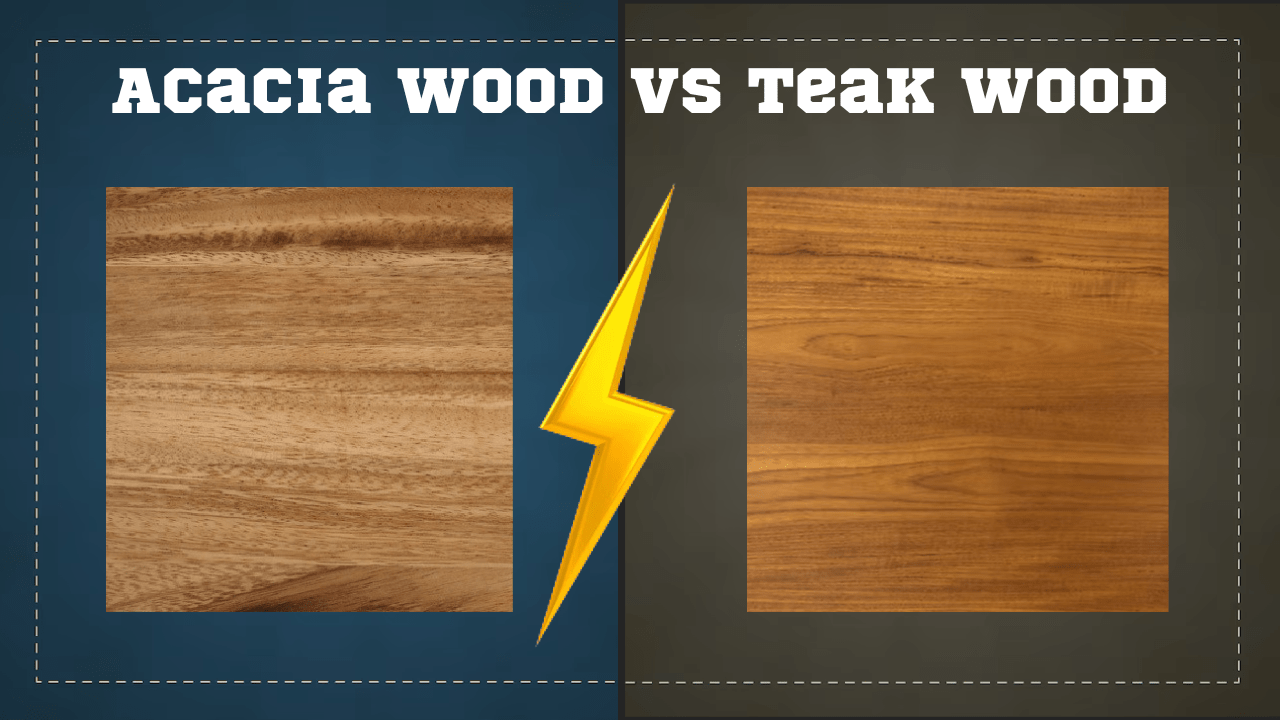
If you go shopping for outdoor furniture, flooring, or hardwood lumber, you will see these two names everywhere. Acacia and teak — they are in furniture stores, home improvement websites, and Instagram design pages. Both are sold as premium, durable, beautiful hardwoods.
But they are not the same wood. Not even close in some areas. If you pick the wrong one, you can lose real money and feel very frustrated.
This guide explains everything — hardness, durability, cost, appearance, outdoor performance, and how easy they are to work with — so you can make the right choice before spending any money.
What Is Acacia Wood?
Acacia is not just one type of tree. It is a big family of trees — more than 1,000 species — that grow in Africa, Australia, South Asia, and South America. The acacia used most in furniture and flooring comes mainly from Southeast Asia, especially Indonesia, India, and Thailand.
The most common types used commercially are:
- Acacia mangium — widely farmed in Southeast Asia for furniture and flooring
- Acacia koa — the premium Hawaiian type, rare and expensive
- Acacia melanoxylon (Blackwood) — popular in Australia
- Acacia catechu — used in South Asian woodworking
Because acacia grows fast and is widely farmed, it is one of the more eco-friendly hardwood options you can buy. Plantation acacia is ready to cut in just 5–8 years, while teak needs decades.
What Is Teak Wood?
Teak (Tectona grandis) is one single species — a large tropical hardwood tree that originally came from South and Southeast Asia, especially Myanmar, Thailand, India, and Laos. People have used teak for hundreds of years in shipbuilding, outdoor furniture, and high-end construction because of one very special quality: it has a lot of natural oil inside the wood.
That oil is what makes teak truly weatherproof. It pushes water away naturally, stops rot from forming, and keeps the wood from drying and cracking even when it is left outside in rain, sun, and humidity all year.
Wild teak from Myanmar — the most famous and valued source — is now heavily controlled by law and almost impossible to buy. Most teak sold today comes from plantation trees in Indonesia, Costa Rica, and West Africa. Plantation teak is good quality, but the oil content can vary more than in old-growth teak.
Acacia vs Teak: Appearance and Grain
Acacia Appearance

Acacia can look very different from piece to piece, even from the same tree. In general:
- Color goes from light golden yellow to dark reddish-brown, sometimes with dramatic streaks
- The grain is usually wavy or twisted, giving each board a unique look
- The texture is medium to coarse
- Boards often show natural character — knots, color variation, and mineral streaks
This variation is part of what people love. Acacia furniture looks natural and handmade. No two pieces are exactly the same, which works great for rustic and live-edge styles.
Teak Appearance

Teak looks more consistent and uniform:
- Color starts as golden brown to amber when freshly cut, but slowly turns silver-grey outdoors if left unfinished
- The grain is straight to slightly wavy, uniform, and predictable
- Texture is coarse and oily — you can actually feel the natural oils when you touch it
- The look is classic and refined, not dramatic
Teak looks timeless and polished. Acacia has more visual energy. Both are beautiful — just in different ways.
Acacia vs Teak: Hardness and Durability
| Property | Acacia | Teak |
| Janka Hardness | 1,700–2,300 lbf (varies by species) | 1,070 lbf |
| Density | 40–55 lbs/cubic ft | ~37 lbs/cubic ft |
| Natural Oil Content | Low to moderate | Very high |
| Rot Resistance | Good | Excellent |
| Insect Resistance | Good | Excellent |
| Outdoor Durability | Moderate to Good | Excellent |
Hardness
Here is something that surprises most people: acacia is actually harder than teak, by quite a lot. Many acacia species score between 1,700 and 2,300 on the Janka hardness scale. Teak sits at 1,070. For flooring or table surfaces that need to resist dents and scratches, acacia wins on raw hardness.
Outdoor Durability
This is where teak takes the lead — and it is not even close. Teak’s very high natural oil content makes it very resistant to:
- Rain and moisture absorption
- Rot and fungal growth
- Insects including termites
- Warping and cracking from heat and cold changes
Acacia has decent natural durability, but it does not have teak’s oil. Unsealed acacia left out in full weather will break down much faster than unsealed teak. For outdoor furniture that lives in rain, sun, and humidity without regular care, teak is the better choice by far.
Quick Answer Box: Acacia vs Teak — Most Common Questions
Which is better — acacia or teak?
It depends on where you use it. For indoor furniture and flooring, acacia is an excellent choice at a much lower price. For outdoor furniture left in rain and sun all year, teak is clearly better because of its natural oils.
Which wood is harder — acacia or teak?
Acacia is harder. Most acacia species score 1,700–2,300 on the Janka hardness scale. Teak scores 1,070. For scratch and dent resistance on floors and tabletops, acacia wins.
Is acacia good for outdoor use?
Acacia works outdoors in covered or semi-sheltered areas if you oil and maintain it regularly. For fully exposed outdoor furniture that sits in rain and sun year-round, teak is much better.
Why is teak so expensive?
Teak takes 20–25 years to grow to usable size. It has also been over-harvested in the past. Its long reputation as the best outdoor hardwood keeps the price high. Acacia grows in 5–8 years, so it is much cheaper.
Can acacia be used as a substitute for teak?
Yes, indoors. Acacia is a very good indoor substitute for teak — it is harder, just as beautiful, and much more affordable. Outdoors, acacia can substitute for teak only if you are willing to do regular maintenance (oiling every 3–6 months).
What lasts longer outdoors — acacia or teak?
Teak lasts longer outdoors. Its natural oil protects it from rot, moisture, and insects with minimal maintenance. Acacia can last many years outdoors too, but only with regular oiling and protection from harsh weather.
Is teak worth the price?
For outdoor furniture you want to last 20–30 years with minimal care, yes — teak is worth the price. For indoor furniture, no — the price difference is hard to justify when acacia is just as beautiful and even harder.
Acacia vs Teak: Side-by-Side Comparison
| Feature | Acacia | Teak |
| Janka Hardness | 1,700–2,300 lbf | 1,070 lbf |
| Color | Golden to dark reddish-brown | Golden brown to silver-grey |
| Grain | Wavy, irregular, dramatic | Straight, consistent |
| Natural Oil Content | Low–moderate | Very high |
| Outdoor Durability | Moderate–Good | Excellent |
| Rot Resistance | Good | Excellent |
| Workability | Moderate | Moderate (silica content) |
| Sustainability | Excellent (fast-growing) | Good (plantation grown) |
| Maintenance Required | Moderate–High (outdoors) | Low (outdoors) |
| Best Use | Indoor furniture, flooring | Outdoor furniture, boats, decking |
Acacia vs Teak for Outdoor Furniture
This is the most common reason people search these two woods together — they want to buy a garden table, a deck bench, or patio chairs and want to know which one to get.
Teak for Outdoor Furniture
Teak is widely considered the gold standard for outdoor furniture, and for good reason. You can leave a good teak bench outside in rain and sun for years with almost no maintenance. The natural oils protect it.
It will not rot quickly. It will not split badly. If you want to keep the golden color, apply teak oil once or twice a year. If you do not bother, it slowly turns a silver-grey that many people actually love.
The downside is the cost. Quality teak outdoor furniture is expensive — often two to four times the price of similar acacia pieces.
Acacia for Outdoor Furniture
Acacia outdoor furniture is widely sold and genuinely attractive. It is harder than teak on the Janka scale, and with proper finishing and regular maintenance, it works reasonably well outdoors.
The important phrase is regular maintenance. Without annual oiling or sealing, acacia outdoors will:
- Dry out and crack in hot, dry climates
- Absorb moisture and swell in wet climates
- Turn grey and develop surface checking faster than teak
If you are willing to oil your outdoor furniture once or twice a year and cover or bring it inside during harsh weather, acacia gives very good value. If you want to put it outside and mostly forget about it, teak handles that better.
Acacia vs Teak for Flooring
Acacia Flooring
Acacia flooring has become very popular over the last ten years for good reasons:
- The high hardness resists dents and scratches well
- The dramatic color variation and grain give floors a rich, custom look
- It costs significantly less than teak flooring
- Plantation-grown acacia is a sustainable option
The grain variation that makes acacia flooring beautiful also means color and pattern differences across boards. Some people love this natural look. Others find it too busy for a whole floor. It is worth seeing a full floor installation in person before you decide.
Teak Flooring
Teak flooring looks more uniform, classic, and very durable. It is used in high-end homes, yacht interiors, and commercial spaces where longevity is the priority. The natural oil content makes it more forgiving in rooms where humidity changes.
The big downside is price — teak flooring costs considerably more than acacia and most other hardwoods.
Acacia vs Teak: Price Comparison
| Wood | Rough Lumber | Flooring | Outdoor Furniture (Table) |
| Acacia | $4–$10/board ft | $3–$8/sq ft | $200–$600 |
| Teak | $20–$40+/board ft | $12–$25/sq ft | $600–$2,500+ |
Acacia is dramatically more affordable than teak at almost every point. For buyers who want a hardwood with good durability and beautiful appearance on a budget, acacia gives genuine value. Teak’s price reflects its outdoor performance, historical reputation, and the decades it takes for old-growth trees to mature.
Acacia vs Teak: How Easy Are They to Work With?
Both woods have some challenges, but for different reasons.
Working With Acacia
- Irregular, twisted grain causes tearout during planing and routing
- The hardness dulls blades faster than softer domestic hardwoods
- Glues and finishes well once surfaces are properly prepared
- Sands smoothly if you work through grits one step at a time
- Takes stain unevenly because of grain variation — oil finishes work better
Working With Teak
- High silica content is hard on cutting edges — you need carbide tooling
- Natural oils can stop glue from sticking — wipe surfaces with acetone before gluing
- Straight grain makes it generally easier to plane and machine than acacia
- The oily surface can resist some finishes — teak-specific oil products work best
- Produces fine dust that irritates skin and lungs — good dust collection is very important
Sustainability: Acacia vs Teak
This matters more now than it used to.
Acacia wins clearly on sustainability. Fast-growing plantation acacia reaches harvest in 5–8 years. It is widely farmed across Southeast Asia with relatively low environmental impact. FSC-certified acacia is easy to find.
Teak has a more complicated history. Wild teak from Myanmar was cut unsustainably for many decades and is now heavily restricted. Plantation teak — which is most of what is sold today — is a responsible option, though it still takes 20–25 years to grow. Look for FSC-certified plantation teak when you buy.
Which Is Better for Indoor Furniture?
For indoor furniture — dining tables, coffee tables, sideboards, shelving — acacia is usually the better value.
The hardness handles daily use extremely well. The dramatic grain gives pieces a distinctive, high-end look. And the cost is much lower than teak, which matters a lot when you are buying solid wood furniture.
Teak’s exceptional outdoor durability is mostly irrelevant indoors where it is protected from weather. You would be paying for a capability you do not need in your living room.
Maintenance: Acacia vs Teak
Acacia Maintenance
Indoors:
- Dust regularly with a soft cloth
- Apply furniture oil or paste wax every 6–12 months
- Wipe spills immediately
- Keep indoor humidity between 40–55%
Outdoors:
- Apply teak oil or outdoor wood oil every 3–6 months
- Clean with mild soap and water before recoating
- Sand lightly between coats for better sticking
- Cover or store during severe weather if possible
Teak Maintenance
Indoors:
- Very minimal — occasional dusting and light oiling once a year
Outdoors:
- Apply teak oil once or twice a year to keep the golden color
- If you prefer the silver-grey weathered look, just clean it once a year
- Sand lightly and recoat if the surface becomes rough or dirty
- Teak needs far less maintenance outdoors than acacia
Frequently Asked Questions
Is acacia wood as good as teak?
For indoor furniture and flooring, acacia is an excellent alternative to teak at a much lower price. For outdoor use in exposed weather, teak’s natural oil content gives it a clear durability advantage that acacia cannot fully match without regular maintenance.
Which is harder — acacia or teak?
Acacia is harder. Most acacia species score 1,700–2,300 on the Janka hardness scale. Teak sits at 1,070. For scratch and dent resistance on floors and table surfaces, acacia has the edge.
Is acacia wood good for outdoor use?
Acacia works outdoors in covered or semi-sheltered settings with regular oiling and maintenance. For fully exposed outdoor furniture left in rain and sun year-round, teak performs significantly better because of its high natural oil content.
Why is teak so expensive compared to acacia?
Teak takes decades to grow to usable size, has been over-harvested historically, and carries a long reputation as the best outdoor hardwood. Acacia is fast-growing, widely farmed, and much more available — which keeps prices much lower.
Does acacia wood last outdoors?
With proper finishing and annual maintenance, acacia furniture can last many years outdoors. Without maintenance, it deteriorates faster than teak — drying out, cracking, and weathering more aggressively. Hot dry climates are harder on acacia than moderate climates.
Which wood is better for a dining table — acacia or teak?
For an indoor dining table, acacia is usually the better value. It is harder, visually striking, and significantly less expensive. Teak’s main advantage is outdoor weathering, which does not matter for an indoor dining table.
Is teak worth the extra cost?
For outdoor furniture that you want to last decades with minimal maintenance, yes — teak is genuinely worth the premium. For indoor use, the price gap rarely makes sense when acacia delivers comparable beauty and superior hardness at a fraction of the price.
What is the best finish for acacia wood outdoors?
Penetrating outdoor oils work best on acacia — teak oil, linseed oil blends, or purpose-made hardwood outdoor oils. Avoid heavy film-building finishes that can peel as the wood moves with the seasons.
Final Verdict: Acacia or Teak?
The answer depends completely on what you are building and where it will live.
Choose acacia if:
- The piece is going indoors
- You want the most hardness for your money
- Budget is a significant factor
- You prefer dramatic, variable grain over uniform appearance
- You are buying flooring and want value without sacrificing quality
Choose teak if:
- The piece is going fully outdoors in exposed weather
- You want minimal long-term maintenance
- You are building boat components, decking, or outdoor dining furniture that stays outside all year
- Budget is less of a concern and longevity is the priority
- You want the classic, timeless look teak is known for
Both are genuinely good hardwoods. Neither is objectively better in every situation. Acacia gives you more hardness, more visual drama, and much better value indoors. Teak gives you unmatched outdoor durability and low-maintenance outdoor performance that no other commonly available hardwood can match.
Know where your project is going. Make the decision from there.