
Last Updated on November 12, 2026 by Sam Wood Worker
Quick answer: OSB is cheaper and works well for dry, covered jobs like wall sheathing, roof sheathing, and subfloors. Plywood costs more but handles moisture better, holds fasteners well, and looks better when exposed. If the panel may get wet or stay wet, plywood is usually the safer pick. If it stays covered and dry, OSB is often the better value.
Key Takeaways
- OSB is made from wood strands pressed into layers. Plywood is made from thin wood sheets (veneers) glued together.
- OSB usually costs less. Prices change by region and season, so check current quotes.
- Plywood generally handles moisture better. OSB edges can swell when soaked and may not fully return to their original size.
- Both can be used for sheathing and subfloors when they have the right rating.
- Plywood is the better choice for furniture, cabinets, and any surface people will see.
- Always check the panel’s stamp for its span rating and exposure rating.
What Is OSB?
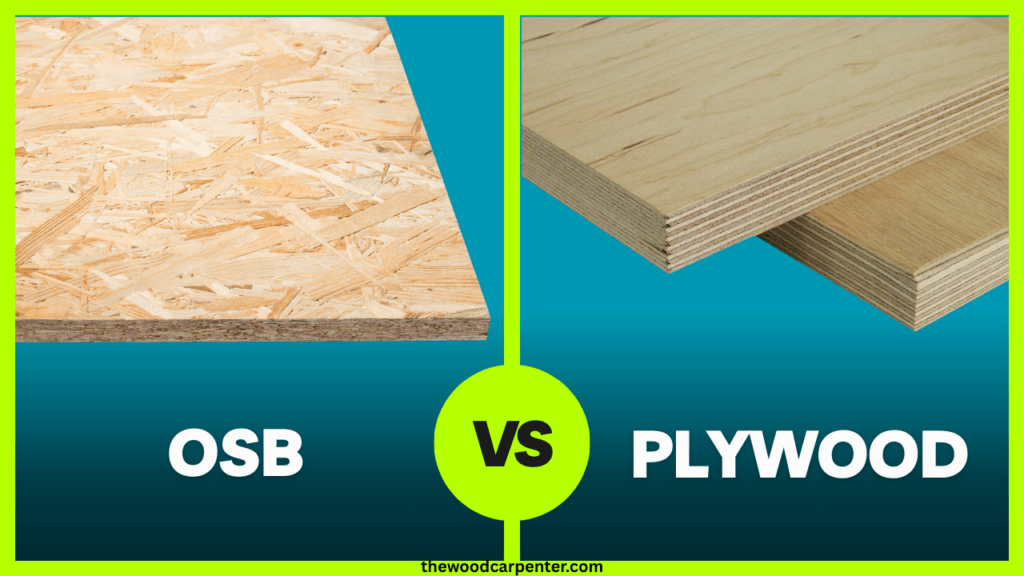
OSB stands for oriented strand board. It is made from small wood strands. The strands are laid in layers, with each layer turned in a different direction. Wax and resin adhesives bind them under heat and pressure.
You can spot OSB by its look. The surface shows large, flat wood chips in a rough, patchy pattern. For a full breakdown, see what is oriented strand board.
What Is Plywood?
Plywood is made from thin sheets of wood called veneers or plies. They are glued together with the grain of each layer running at right angles to the one below. Most plywood has an odd number of layers. This cross-grain build gives it strength and helps limit warping.
You can spot plywood by its edges. You will see thin layers stacked like a sandwich. For more, read plywood: everything you want to know.
OSB vs Plywood at a Glance
| Factor | OSB | Plywood |
|---|---|---|
| Made from | Wood strands, glued in layers | Thin wood veneers, glued in layers |
| Look | Rough, chip pattern | Visible wood grain on the face |
| Cost | Usually lower | Usually higher |
| Moisture | Edges can swell if soaked | Generally handles wetting and drying better |
| Weight | Often heavier | Often lighter, depending on thickness and wood |
| Surface | Rough, not made for finishing | Smoother, easier to paint or finish |
| Fastener holding | Good in the face, weaker near edges | Generally holds well, including near edges |
| Voids | None in the core | Can occur in lower grades |
| Common uses | Wall, roof, and floor sheathing | Sheathing, cabinets, furniture, exposed work |
These are general comparisons. Individual products vary, so check the data sheet for the panel you plan to buy.
Key Differences in Detail
1. Cost
OSB is usually the cheaper panel. On a big job like a whole roof or subfloor, the savings can add up. Prices move with the market, so compare local quotes for the same thickness and rating.
2. Moisture resistance
This is the biggest difference for many buyers.
Plywood tends to handle getting wet better. It also tends to dry faster. OSB can take on water at the edges and swell. Once edges swell, they may not fully return to their original size.
Some OSB and plywood panels are rated “Exposure 1.” This means the glue can handle moisture during normal construction delays. It does not mean the panel can stay wet for long periods or be left uncovered for good. Always keep panels covered and dry as soon as you can. For ways to protect wood from water, see how to waterproof wood.
3. Strength and stiffness
Both OSB and plywood are made as structural panels, and both can meet the same span ratings. Rated panels of either type are approved for the same job when they carry the same stamp.
Beyond that, they behave differently. Plywood often feels stiffer for its thickness. OSB is often reported to resist shear well. Rather than guess, rely on the span rating printed on the panel and the building code for your area.
4. Weight
OSB panels are often heavier than plywood panels of the same thickness. That matters if you are lifting sheets onto a roof or carrying them upstairs. Weight varies by product, so check the label or data sheet.
5. Fastener holding
Plywood is often said to hold screws and nails well, including near the edges. OSB holds fasteners well in the face. Near the edges, it can be weaker and may crumble if you fasten too close.
Follow the fastener spacing and edge distance in the manufacturer’s instructions and your local code.
6. Surface and appearance
Plywood has a real wood face. Better grades can be sanded, stained, and painted. OSB has a rough surface that is not made for fine finishing. If the panel will be seen, plywood is usually the better choice.
7. Edge swelling and sealing
Edges are the weak point for both panels, especially OSB. When you cut OSB or plywood, the cut edge is open to moisture. Seal cut edges if the maker recommends it, and keep panels dry.
8. Voids
OSB has no core voids because it is made from pressed strands. Plywood can have gaps in the inner layers, mostly in lower grades. Voids can weaken the panel and can make edges look rough. Higher grades have fewer voids.
9. Consistency
OSB is made from uniform strands, so panels are consistent in strength and thickness. Plywood quality varies more with grade and the wood used.
10. Environmental angle
OSB is made from small, fast-growing trees and uses more of each log. Plywood often uses larger logs. Both use adhesives. If this matters to you, look for panels with a sustainability certification and check the adhesive details from the maker. Don’t assume one is better without checking the specific product.
Best Uses for OSB
OSB works well when the panel stays covered and dry:
- Wall sheathing: under siding and house wrap
- Roof sheathing: under shingles and underlayment
- Subfloors: under flooring, when rated for floors
- Utility jobs: shelving in a garage, workshop storage, or temporary work
It is a good budget choice when cost matters and moisture exposure is low.
Best Uses for Plywood
Plywood is a stronger pick when moisture, looks, or detail matter:
- Roofs and subfloors in wetter climates: where leaks or long delays could soak the panel
- Cabinets and furniture: where you want a smooth, workable face
- Visible surfaces: shelves, built-ins, and wall panels
- Projects needing clean edges: where edge quality matters
- Areas with higher moisture risk: such as under tile in damp rooms, if the product is rated for it
For outdoor use, use panels made for it, such as exterior-rated plywood, and follow the maker’s instructions. Never assume standard sheathing is safe for permanent outdoor exposure.
Which Is Better for Subfloors?
Both can work. Many builders use tongue-and-groove OSB or plywood rated for floors. Plywood often gets chosen where moisture is a worry. OSB is common where cost matters and the floor stays dry.
Whichever you choose, check the span rating, follow the spacing for joists, leave expansion gaps if the maker requires them, and protect the panels from rain before the roof is on.
Which Is Better for Roof Sheathing?
Again, both are widely used. Plywood tends to handle wetting during construction better. OSB is often cheaper. Make sure the panel’s rating matches your rafter or truss spacing and your local code.
Which Is Better for Walls?
Both are approved for wall sheathing when they carry the right rating. OSB is common and cost-effective. Plywood is another standard option. Check your local building rules and the maker’s guidance.
Which Is Better for DIY Projects?
For furniture, cabinets, and anything people will see, plywood is easier to work with. OSB is fine for shop storage, jigs, and rough work. See how to cut plywood sheets with a circular saw for cutting tips. Use a sharp blade, support the sheet, and wear eye and dust protection.
How to Read the Panel Stamp
Structural panels carry a grade stamp. It shows details like the span rating, the exposure rating, and the thickness. This is the most reliable way to compare panels.
Look for:
- Span rating: the maximum support spacing for roofs and floors
- Exposure rating: how well the glue holds up to moisture
- Thickness: the actual rated thickness
- Mill or brand: useful if you need to check a data sheet
Don’t rely on looks alone.
Related Panels and Comparisons
- If you are weighing sheathing grades, see CDX vs OSB.
- For engineered lumber, see LVL vs plywood.
- For a bigger picture, read manufactured wood vs solid wood.
Common Mistakes to Avoid
- Leaving panels uncovered. Even rated panels should not sit in rain.
- Ignoring the span rating. The wrong rating for your joist spacing can cause a bouncy floor or sagging roof.
- Fastening too close to the edge. This can cause splitting or crumbling, especially in OSB.
- Skipping the expansion gap. Panels move with moisture. Follow the maker’s spacing.
- Using sheathing for a finished surface. Pick a grade made for the job.
- Assuming all panels are the same. Check the stamp and data sheet for each product.
Frequently Asked Questions
Is OSB as strong as plywood?
For structural jobs, both can meet the same span ratings. Rated panels of either type are approved for the same use when they carry the same stamp. They behave differently in moisture and fastening, so choose based on the job.
Is OSB cheaper than plywood?
Usually, yes. Prices change with the market and your area, so compare quotes.
Which handles water better, OSB or plywood?
Plywood generally handles wetting better. OSB edges can swell and may not fully recover. Keep both covered and dry.
Can I use OSB outside?
Standard OSB sheathing is not made for permanent outdoor exposure. Use products rated for the purpose and follow the manufacturer’s instructions.
Can I paint OSB?
You can prime and paint it, but the rough surface will still show through. Plywood gives a smoother result.
Is OSB or plywood better for subfloors?
Both work if they are rated for floors. Plywood is often chosen where moisture is a concern. OSB is common where cost matters.
Is OSB heavier than plywood?
Often, yes, at the same thickness. Weight varies by product.
Which is better for furniture?
Plywood. It has a smoother face and cleaner edges, and it is easier to finish.
Do OSB and plywood contain formaldehyde?
Both use adhesives. Emission levels depend on the product. Check the manufacturer’s data sheet if this is a concern.
Final Verdict
OSB wins on price and works well for covered, dry structural jobs. Plywood wins on moisture handling, edge quality, fastener holding, and looks. Neither is “better” for every job.
Choose OSB when you want good value and the panel will stay covered and dry. Choose plywood when moisture exposure, finish quality, or visible surfaces matter. Check the stamp, follow the maker’s instructions, and confirm your local building requirements before you buy.
Research Sources
- APA – The Engineered Wood Association: technical guidance on structural panels
Note: This evaluation is based on manufacturer documentation, technical data sheets, verified user feedback, and direct comparisons with competing products. We have not personally tested these products. Always check the manufacturer’s instructions and your local building requirements before starting your project.