
Last Updated on May 27, 2026 by Sam Wood Worker
Black Walnut Wood
I still remember the first time I touched black walnut wood. I was in my uncle’s workshop and he was building a small table. I picked up a piece of the wood and thought — why is this wood so dark and so smooth? My uncle laughed and said — this is black walnut. The best wood in America. I did not fully understand then. But now I do. And today I want to share everything I have learned about this remarkable wood.
What Is Black Walnut Wood?
Black walnut wood comes from the black walnut tree. The scientific name is Juglans nigra. This tree grows mainly in the middle and eastern parts of the United States — states like Ohio, Indiana, Missouri, and Kansas.
Black walnut is one of the most famous and most loved woods in all of America. Furniture makers love it. Floor installers love it. Gun makers love it. Even food lovers appreciate it — because the same tree produces walnut nuts that people eat.
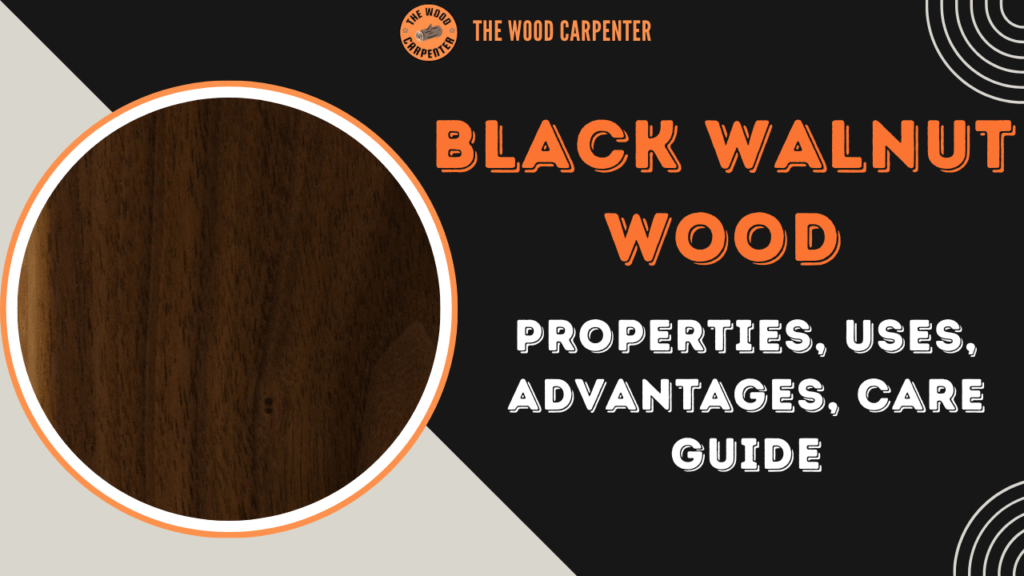
What makes black walnut different from other woods is the color. It has a deep chocolate brown tone — sometimes with purple lines running through it. Sometimes grey lines. Sometimes dark black streaks. Every single piece looks a little different from the next.
When you walk into a room with black walnut floors or black walnut furniture — you notice it immediately. It has a warmth and richness that no other wood quite matches.
Quick Facts About Black Walnut Wood
| Property | Detail |
|---|---|
| Scientific name | Juglans nigra |
| Where it grows | Eastern United States |
| Color | Chocolate brown to dark purple-brown |
| Janka hardness | 1010 |
| Weight | Medium heavy |
| How long it lasts | Many decades |
| Cost | $8 – $20 per board foot |
| Best uses | Furniture, floors, cabinets, gun stocks |
| Smell | Mild pleasant smell when cutting |
Fun Facts About Black Walnut
The black walnut tree is one of the most valuable trees growing in America. A single large old black walnut tree can be worth several thousand dollars for its lumber alone.
Black walnut roots release a chemical called juglone into the surrounding soil. This chemical prevents many other plants from growing near the walnut tree. The tree essentially protects its own space. Some gardeners find this frustrating. But it is a fascinating survival strategy.
The walnut nuts that grow on the tree are edible and have a very strong distinctive flavor — much more intense than the English walnut you find in grocery stores. Many people in the Midwest collect them every autumn.
Thomas Jefferson grew black walnut trees at Monticello — his famous home in Virginia. Abraham Lincoln’s family home had black walnut trees on the property. This wood is deeply woven into American history.
During World War One and World War Two the US government purchased large quantities of black walnut specifically for making gunstocks for military rifles — a testament to how seriously the military valued this wood.
The most expensive single piece of black walnut ever sold was a live edge slab from a very old tree in Missouri that sold at auction for over $50,000.
Why People Love Black Walnut So Much
Over the years I have asked many woodworkers — why do you love black walnut? Every single person gives me a similar answer.
The color is special. No other common American wood has this deep chocolate brown color naturally. No stain is needed. No paint required. The tree produces this color on its own.
It gets more beautiful with time. This surprised me when I first learned it. New black walnut is beautiful. But walnut that is 10 years old — 20 years old — looks even richer and deeper. The color develops and improves like a good wine.
It is not too hard and not too soft. Black walnut has a hardness of 1010 on the Janka scale. This is a perfect middle ground. Hard enough to last a long time. But not so hard that it becomes difficult to cut and shape.
Every piece is different. The grain patterns in walnut — the lines and swirls running through the wood — are never exactly the same twice. This means your walnut furniture or floor is completely unique in the world.
Real life example: My friend Maria is not a woodworker — she is just someone who appreciates a nice home. She bought a black walnut dining table three years ago and paid more than she originally planned. But she tells me that every single day when she sits down for dinner she feels genuinely happy looking at that table. She says it makes the whole room feel warm and expensive even though the rest of the room is quite simple. That is the power of black walnut.
What Does Black Walnut Wood Look Like?
Let me describe this properly because color is the most important characteristic of walnut.
The main part of walnut wood — what woodworkers call heartwood — is a deep chocolate brown. But within this brown there are also:
- Purple-brown tones in some areas
- Grey-brown tones in others
- Dark brown and near-black streaks running through
- Sometimes creamy white streaks from the outer part of the tree
The grain — the lines running through the wood — can be straight and simple. Or it can be wavy and curly. Wavy grain walnut is called figured walnut and it is rarer and more expensive.
When you sand walnut smooth and apply oil — the colors deepen immediately. It is like the wood comes alive. The chocolate brown deepens. The purple tones become more visible. It looks almost wet even though it is completely dry.
The outer part of the walnut tree — called sapwood — is completely different. It is pale cream or white. Some furniture makers include both heartwood and sapwood in the same piece — dark brown alongside white edges — for an interesting natural contrast. Others use only the dark heartwood.
Where Does Black Walnut Come From?
Black walnut is genuinely an American wood. It grows naturally across the eastern half of the United States.
The finest walnut comes from these states:
Missouri and Kansas — The heart of walnut country. Many woodworkers consider Missouri walnut to be the finest quality available. The soil and climate in this region produce walnut with very rich dark color and beautiful grain.
Ohio and Indiana — Large quantities of good quality walnut come from these states.
Pennsylvania and West Virginia — Appalachian walnut is well known for consistent quality.
Iowa and Illinois — Good sources throughout the Midwest.
The black walnut tree grows to a very large size — sometimes reaching 100 feet tall. But it grows slowly. A walnut tree needs 40 to 60 years before it reaches a good size for lumber. This slow growth is part of why walnut costs more than fast-growing woods like pine.
How Hard Is Black Walnut?
Black walnut has a Janka hardness rating of 1010.
Here is how it compares to other common woods:
Black walnut is harder than pine and slightly softer than oak. This hardness level is excellent for furniture and cabinets. For flooring it is perfectly acceptable but a walnut floor will show dents and scratches more readily than an oak floor.
The interesting thing about walnut is that even though it is not the hardest wood available — it feels very substantial and premium when you hold a piece. The weight and density give it a quality feel that many harder woods simply do not have.
What Is Black Walnut Wood Used For?
Black walnut is one of the most versatile premium woods in America. People use it across a wide range of applications.
1. Furniture — The Most Famous Use
When you look at high-quality American furniture — beds, dining tables, coffee tables, bookshelves, dressers — a very large percentage is made from black walnut.
The combination of beautiful color, ease of working, and exceptional longevity make walnut perfect for furniture that families keep for generations.
Real life example: A grandmother in Tennessee has black walnut bedroom furniture that her husband bought in 1962. This furniture is now more than 60 years old. Her granddaughter sleeps in that same room with the same furniture today. It still looks beautiful. That is what quality walnut furniture means — it passes from one generation to the next.
2. Hardwood Flooring
Black walnut flooring is one of the most beautiful floor options available for any home.
The deep chocolate brown color works with many different interior styles — modern, traditional, farmhouse, industrial. It makes rooms feel warm and sophisticated in a way that few other flooring options can match.
Walnut flooring is slightly softer than oak so it shows dents and scratches a little more easily. But many homeowners actually appreciate the character marks that develop over years of living. The floor tells a story.
Cost for walnut flooring: $8 to $18 per square foot for the material. $12 to $25 per square foot installed.
3. Kitchen Cabinets
Black walnut kitchen cabinets are absolutely stunning. The rich dark color against white walls or light countertops creates a beautiful contrast that feels both modern and timeless.
Many high-end kitchen designers choose walnut because it is warm where oak can feel cold and it is distinctive where maple can feel ordinary.
Walnut cabinets hold up very well in a kitchen environment. They resist moisture better than many lighter woods and the dark color hides small scratches and marks better than lighter-colored alternatives.
4. Gun Stocks — An American Tradition
This is a very famous use of black walnut in America that many people outside the country are unaware of.
For hundreds of years American gunmakers have used black walnut for rifle and shotgun stocks. The reasons are entirely practical:
The hardness resists impact and rough handling. The natural oils provide some moisture resistance. The density gives the firearm good weight and balance. And the beautiful color makes a fine rifle look like a genuine heirloom.
Winchester rifles, Remington shotguns, and many other famous American firearms have traditionally used black walnut stocks. A gun with an original walnut stock is considered more valuable than the same model with a synthetic stock.
5. Turning and Small Wood Objects
Woodworkers who use a lathe — a machine that spins wood so you can shape it into round forms — love black walnut.
Bowls, vases, pens, bottle stoppers, and decorative objects turned from walnut are genuinely stunning. The colors that appear when you cut into fresh walnut during turning are remarkable — the rich chocolate brown against the cream sapwood creates natural contrast that looks almost designed.
6. Musical Instruments
Black walnut is used for guitar bodies, ukulele backs and sides, and drum shells by many instrument makers around the world.
The tonal quality — the way sound travels through the wood — is warm and balanced. Not too bright. Not too dark. Many musicians describe walnut instruments as having a very natural and musical sound that sits pleasingly in the mix.
7. Cutting Boards and Kitchen Items
Walnut cutting boards are enormously popular for several good reasons:
The hardness resists knife marks better than softer woods. The dark color hides stains better than light maple or pine. The natural oils provide some water resistance. And it looks absolutely beautiful sitting on a kitchen counter.
A walnut cutting board has become one of the most popular gifts for people who enjoy cooking.
8. Jewelry Boxes and Small Luxury Items
The combination of beautiful color, excellent workability, and premium feel makes walnut perfect for small jewelry boxes, watch boxes, and decorative storage items.
A handmade walnut jewelry box with hand-cut dovetail joints is a gift that genuinely lasts forever.
Different Types of Black Walnut Cuts and Grades
When you go to buy walnut lumber you will encounter different terms. Here is a simple explanation of each.
Cuts of Walnut
Flat sawn — The most common cut. You see broad grain patterns with cathedral arch shapes. Good appearance and the most affordable option.
Quarter sawn — Cut at a different angle. Shows straight lines in the grain. More stable. Costs a little more than flat sawn.
Rift sawn — Similar to quarter sawn. Very straight grain. The most stable cut. The most expensive option.
Grades of Walnut
FAS (Firsts and Seconds) — The best grade. Long clear boards with minimal defects. Best for furniture tops and large flat surfaces.
Select — One side is FAS quality. A good choice for most furniture projects.
Common — More character marks, knots, and natural variation. Many people love this natural look. More affordable.
Figured walnut — A special category for boards with wavy, curly, or highly unusual grain patterns. The most beautiful and most expensive grade available.
How Much Does Black Walnut Wood Cost?
Here are honest prices you can expect to pay in 2025:
| Product | Typical Price |
|---|---|
| Rough lumber per board foot | $8 – $15 |
| Surfaced lumber per board foot | $12 – $20 |
| Figured walnut per board foot | $20 – $50+ |
| Walnut flooring per square foot | $8 – $18 |
| Walnut turning blank small | $5 – $20 |
| Walnut pen blank | $3 – $8 |
| Walnut live edge slab per sq ft | $25 – $80 |
| Walnut cutting board finished | $50 – $200 |
| Walnut dining table finished | $1,500 – $8,000 |
Black walnut costs more than pine or poplar but less than exotic woods like cocobolo or rosewood. For an American hardwood it sits on the expensive side — but the beauty and durability consistently justify the price.
How To Work With Black Walnut Wood
The good news is that black walnut is one of the most pleasant woods to work with. Even people who are new to woodworking find it genuinely enjoyable.
Cutting Walnut
Walnut cuts cleanly with sharp blades. Use good quality carbide-tipped saw blades for the best results. Regular steel blades work but dull faster with this wood.
The wood cuts smoothly in both directions of grain — woodworkers call this good workability. You do not need to worry too much about grain direction when cutting walnut the way you do with some more difficult woods.
Sanding Walnut
Walnut sands beautifully. Start with 80 or 100-grit sandpaper for rough shaping. Work through 120, 150, 180, and finish with 220-grit for a smooth surface ready for finishing.
One small thing to be aware of — walnut dust is dark brown and gets everywhere. Wear a dust mask and protect your work area. The dust can also stain nearby light-colored woods so keep walnut separated from maple or pine during sanding sessions.
Planing and Jointing Walnut
Walnut responds very well to hand planes and power jointers. It produces long clean shavings and leaves a very smooth surface. Many woodworkers say that planing walnut feels satisfying in a way that few other woods match.
Be careful with figured walnut — the wavy grain can tear out if you plane in the wrong direction. Always plane with the grain on figured pieces and take lighter passes.
Gluing Walnut
Standard PVA wood glue works perfectly with walnut. No special preparation is needed. Unlike naturally oily woods like cocobolo or teak — walnut glues without any issues.
Make sure surfaces are clean and flat before gluing. Clamp firmly for at least one hour. Let dry overnight before putting any stress on the joint.
Nailing and Screwing Walnut
Walnut holds nails and screws very well. Pre-drilling is recommended for screws placed close to the edge of a board to prevent splitting — but walnut is much more forgiving than very hard woods like ipe.
Use good quality wood screws. Stainless steel or coated screws prevent any rust staining on the dark wood surface.
How To Finish Black Walnut Wood
Finishing is what takes walnut from nice to stunning. The right finish brings out the colors and protects the wood for many years.
Oil Finishes — The Best Choice for Walnut
Oil finishes penetrate into the wood rather than sitting on top of it. They enhance the natural colors beautifully and give walnut a warm natural appearance.
Danish oil — Easy to apply and gives a beautiful result. Apply with a cloth, let it soak in for 15 minutes, then wipe off the excess. Two to three coats is sufficient. A very popular choice among furniture makers.
Tung oil — Slightly more durable than Danish oil with a similar application process. Gives a very natural look that many woodworkers prefer.
Linseed oil — A traditional finish that works well but dries slowly. Raw linseed oil takes a very long time to dry — boiled linseed oil dries considerably faster.
How to apply an oil finish:
- Sand smooth to 220-grit
- Wipe away all dust with a clean cloth
- Apply a thin coat of oil with a clean cloth
- Let it soak in for 15 to 20 minutes
- Wipe off all excess oil — do not leave any puddles
- Let dry completely — usually overnight
- Lightly sand with 320-grit
- Apply a second coat the same way
- Repeat for a third coat if you want more depth
Hardwax Oil — Best for Floors and Tables
For walnut floors and dining tables that receive heavy daily use — hardwax oil is an excellent choice.
Brands like Rubio Monocoat and Osmo Polyx-Oil are very popular among professionals. They penetrate like regular oil but harden as they cure giving better protection against water and daily wear.
Rubio Monocoat is a one-coat product — it is expensive but a single application is sufficient and the result is genuinely beautiful.
Polyurethane — The Most Durable Option
Polyurethane sits on top of the wood like a protective plastic film. It provides the most durable surface available — excellent for floors that receive heavy traffic.
The downside is that it can make walnut look slightly plastic or artificial compared to an oil finish. Water-based polyurethane yellows less than oil-based versions. For high-traffic floors many people accept this trade-off for the extra protection.
Wax Finish — Traditional and Beautiful
A pure wax finish gives walnut a beautiful soft sheen. Not as protective as polyurethane but many furniture makers love it for the natural look and feel it produces.
Apply with fine steel wool or a soft cloth. Buff to a gentle shine. Reapply once or twice per year to maintain the finish.
Caring For Black Walnut Wood
The good news is that black walnut is not difficult to maintain. Basic care keeps it looking beautiful for many years.
Daily Care
Wipe with a soft dry cloth to remove dust. Clean spills immediately — walnut is not waterproof and water sitting on the surface can cause marks in the finish.
Use coasters under drinks. Use placemats under plates on a walnut dining table.
Regular Maintenance
For oil-finished walnut — apply a fresh coat of oil once or twice per year. This feeds the wood and keeps the color rich and deep.
For waxed walnut — apply fresh wax once or twice per year and buff to a gentle shine.
For polyurethane-finished walnut — clean with a lightly damp cloth. Reapply polyurethane every 5 to 10 years when the finish starts to look dull or worn.
Protect From Sunlight
This is an important point that many people do not know — walnut actually gets lighter with too much direct sunlight over many years. Most other dark woods get darker with age. Walnut is the opposite.
Position walnut furniture and floors away from direct sunlight or use window treatments that filter UV rays. This preserves the rich chocolate brown color for much longer.
Fix Scratches in Walnut
Small scratches in an oil finish — rub a small amount of fresh oil into the scratch with your finger. It usually blends in and becomes almost invisible.
Small dents in walnut — place a damp cloth over the dent and press briefly with a warm iron. The moisture and heat cause the compressed wood cells to swell back up and the dent lifts out. This old trick works surprisingly well on small fresh dents.
Black Walnut vs. Other Popular Woods
People frequently compare walnut to other dark or premium woods. Here is an honest comparison:
| Wood | Color | Hardness | Cost | Workability | Best For |
|---|---|---|---|---|---|
| Black Walnut | Chocolate brown | 1010 | Medium-High | Very easy | Furniture, floors, cabinets |
| White Oak | Light brown | 1360 | Medium | Easy | Floors, furniture, barrels |
| Cherry | Reddish brown | 950 | Medium | Very easy | Furniture, cabinets |
| Mahogany | Reddish brown | 900 | Medium | Easy | Fine furniture, boats |
| Teak | Golden brown | 1155 | High | Moderate | Outdoor furniture |
| Wenge | Dark brown/black | 1630 | High | Hard | Floors, modern furniture |
| Maple | Cream/white | 1450 | Medium | Easy | Floors, butcher blocks |
Walnut wins on the combination of beauty and workability. No other common American wood has this color naturally. And it is so pleasant to cut and shape that even beginners enjoy working with it — which is rare for a premium hardwood.
Is Black Walnut Wood Sustainable?
Yes — black walnut is a responsible choice when purchased from good sources.
Black walnut grows naturally across the eastern United States. It is not endangered. It is not on the CITES restricted list. It grows on farms and private land as well as in natural forests.
Many walnut trees are harvested when landowners clear land for farming or development. This timber is salvaged rather than wasted — a genuinely sustainable practice that prevents good wood from simply being burned or chipped.
Look for walnut certified by:
- FSC (Forest Stewardship Council) — The most reliable certification available
- NHLA graded — National Hardwood Lumber Association grading confirms properly harvested and processed wood
Walnut also grows in many community tree programs across the Midwest. Buying from local sawyers who source from local landowners supports both the local economy and responsible forestry practices at the same time.
Where To Buy Black Walnut Wood
Black walnut is more widely available than exotic woods but is still not found at every hardware store.
Specialty wood dealers — Best selection of grades and cuts. Staff know the material well and can advise on choosing the right piece for your project.
Local sawyers and mills — Often the best value and you can sometimes learn exactly where the wood came from. Search for local sawyers in your area — many sell direct to the public.
Local lumber yards — Some carry walnut especially in Midwest states where the tree is common.
Craigslist and Facebook Marketplace — People who cut down walnut trees on their property sometimes sell the logs or rough-cut boards at excellent prices. These boards will need kiln drying or extended air drying before they can be used in a project.
Frequently Asked Questions
Q: What is black walnut wood? Black walnut wood comes from the black walnut tree — Juglans nigra — which grows naturally in the eastern United States. It is one of the most beautiful and most loved American hardwoods. It has a deep chocolate brown color with purple and grey undertones. Its Janka hardness is 1010. It is used for furniture, flooring, kitchen cabinets, gun stocks, and many other applications.
Q: Why is black walnut so expensive? Black walnut trees grow slowly — they need 40 to 60 years to reach a good lumber size. Demand from furniture makers, floor installers, and gun makers is consistently high. Supply is limited compared to fast-growing woods like pine. The beauty and quality of the wood justify the higher price. Good walnut lumber costs $8 to $20 per board foot.
Q: Is black walnut good for flooring? Yes — black walnut makes a beautiful floor. The rich chocolate brown color looks stunning in any home. Its Janka hardness of 1010 is good but slightly softer than oak at 1360. This means a walnut floor may show small dents and scratches more readily than an oak floor. But many homeowners love the character and patina this develops over time.
Q: How do you finish black walnut wood? The best finishes for walnut are penetrating oil finishes like Danish oil or tung oil — they enhance the natural colors beautifully. Hardwax oils like Rubio Monocoat are excellent for floors and tables that receive heavy use. Polyurethane provides the most durable protection but looks slightly more artificial than an oil finish. Always sand to 220-grit before applying any finish.
Q: Does black walnut get lighter or darker with age? Black walnut behaves differently from most dark woods — it actually gets lighter with prolonged exposure to sunlight. Most dark woods deepen in color with age. Walnut lightens and moves toward a warm medium brown over many years. Fresh-cut walnut is a dark chocolate brown. Old walnut in a very bright room gradually becomes a lighter medium brown. Keep it away from direct sun to maintain the original dark color.
Q: Is black walnut hard to work with? No — black walnut is one of the most pleasant woods to work with. It cuts cleanly, sands beautifully, planes smoothly, and glues without any issues. Even people who are new to woodworking find walnut enjoyable to work with. This is one of the primary reasons furniture makers love it — it produces beautiful results without a difficult working process.
Q: What is figured walnut? Figured walnut is walnut wood that has unusual wavy, curly, or swirling grain patterns instead of straight grain. This occurs naturally in certain trees and produces wood that looks almost three-dimensional when finished properly. Figured walnut is rarer and more expensive than straight-grained walnut — sometimes costing $20 to $50 or more per board foot. It is reserved for the most special and decorative pieces.
Q: Can black walnut be used outdoors? Black walnut is not ideal for outdoor use without proper protection. It does not have the natural weather resistance of teak or ipe. For outdoor projects made from walnut — apply a good quality exterior oil or finish and reapply it regularly. For outdoor furniture that stays outside in all weather year-round — teak or ipe are significantly better choices.
Final Word
There is a reason woodworkers across America have been reaching for black walnut for hundreds of years.
It is not just the color — though the color is extraordinary. It is not just the workability — though it is one of the most pleasant woods to cut and shape. It is not just the longevity — though a well-made walnut piece will outlast everyone who owns it.
It is all of these things together. The whole package.
Black walnut is wood that rewards you. It rewards the craftsman who works it. It rewards the homeowner who lives with it every day. It rewards patience — because it takes 50 years to grow and then another 50 years in your home to develop its full character and patina.
In a world full of disposable things — a piece of genuine black walnut furniture or flooring is something permanent. Something real. Something that gets better the longer it exists.
Buy it once. Look after it. Pass it on.
That is the story of black walnut wood.