
Last Updated on May 29, 2026 by Sam Wood Worker
Poplar Wood
If you walk into any woodworking shop and ask what wood beginners should start with, poplar comes up in almost every conversation. It is affordable, easy to find, simple to work with, and takes paint beautifully. Professional furniture makers use it for hidden structural parts. Cabinet shops use it for drawer boxes and interior frames. DIY enthusiasts use it for everything from shelving to kids’ toys.
Poplar does not get as much attention as oak or walnut. It does not have the dramatic grain or rich color that makes those woods famous. But it earns its place in almost every woodworking shop because it is practical, consistent, and genuinely good value for money.
This guide covers everything you need to know about poplar wood — what it is, how hard it is, what it looks like, what it is best used for, and how to work with it.
What Is Poplar Wood?
Poplar is a hardwood that comes from trees in the Populus genus. Despite being technically classified as a hardwood, it is one of the softest hardwoods available — which is actually one of the reasons it is so easy to work with.
The most commonly used species in North American woodworking is Tulip Poplar (Liriodendron tulipifera), also called yellow poplar or tulipwood. Despite the name, tulip poplar is not actually a true poplar species — it belongs to the magnolia family — but it is sold and used commercially under the poplar name universally.
Other species include:
- Eastern Cottonwood (Populus deltoides) — used for paper pulp and light construction
- Bigtooth Aspen (Populus grandidentata) — common in the northern United States and Canada
- Black Poplar (Populus nigra) — common in Europe and parts of Asia
- White Poplar (Populus alba) — found across Europe, Asia, and North Africa
For woodworking purposes, tulip poplar is the one most people mean when they say poplar. It is what you will find at lumber yards and home improvement stores across North America.
What Does Poplar Wood Look Like?
Color
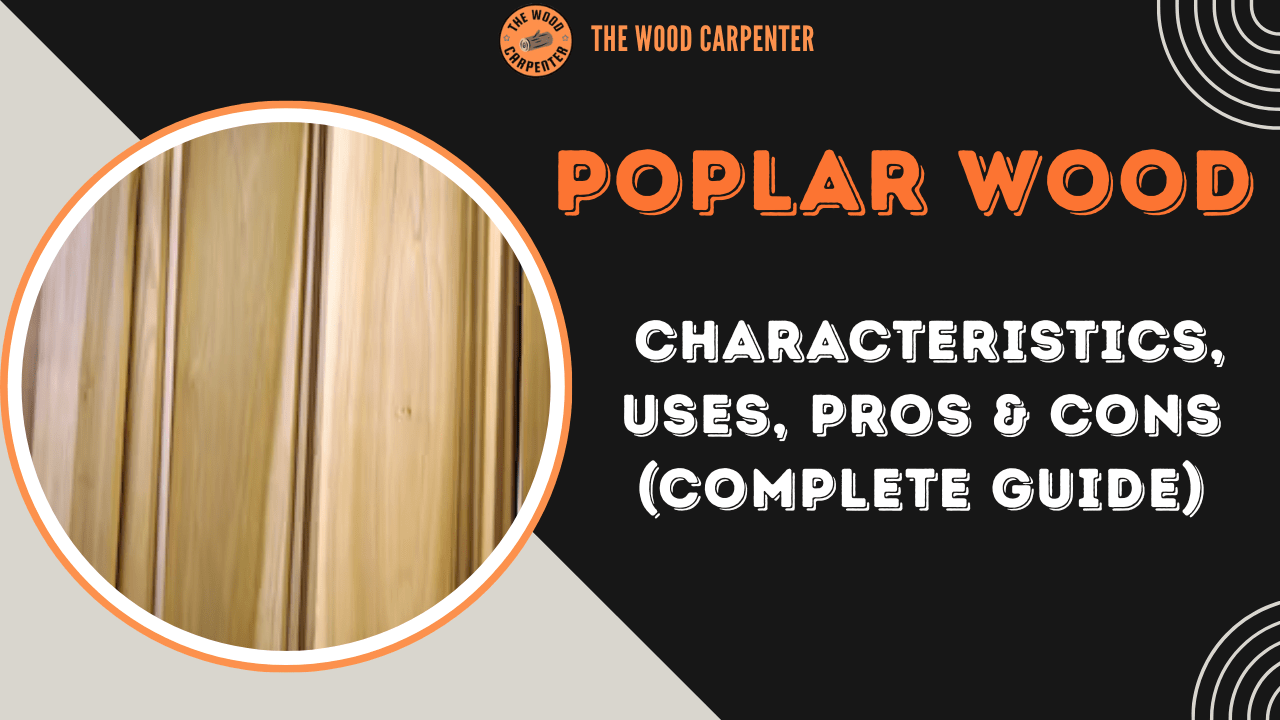
Poplar has one of the most variable color profiles of any common hardwood. The sapwood is creamy white to pale yellow. The heartwood ranges from light greenish-brown to darker streaks of grey, green, purple, and sometimes even black.
This color variation — sometimes called “rainbow poplar” when the streaking is dramatic — is visually interesting but it also means poplar does not stain evenly. The different colored sections absorb stain at different rates, which is why most woodworkers paint poplar rather than stain it.
Grain and Texture
Poplar has a straight, uniform grain with a fine, consistent texture. The grain is not dramatic or figured like oak or walnut — it is clean and simple. This makes it ideal for painted work where a smooth, even surface is the goal.
The surface sands easily and smoothly. There are no wild grain changes or difficult interlocked fibers to deal with.
Poplar Wood Properties
| Property | Detail |
|---|---|
| Janka Hardness | 540 lbf |
| Density | Around 28 lbs per cubic foot |
| Durability | Low — poor rot and insect resistance |
| Stability | Good — relatively stable with humidity changes |
| Workability | Excellent — one of the easiest hardwoods to work |
How Hard Is Poplar Wood?
At 540 lbf on the Janka hardness scale, poplar is one of the softest hardwoods available. For comparison:
| Wood | Janka Hardness |
|---|---|
| Poplar | 540 lbf |
| Pine (Yellow) | 870 lbf |
| Red Oak | 1,290 lbf |
| Hard Maple | 1,450 lbf |
| Teak | 1,070 lbf |
The softness means poplar dents and scratches more easily than harder species. This is why it is not the best choice for tabletops and flooring that see heavy daily use. But that same softness is exactly what makes it so easy and forgiving to work with hand tools and power tools alike.
Poplar Wood Pros and Cons
| Pros | Cons |
|---|---|
| Very affordable — one of the cheapest hardwoods | Soft — dents and scratches easily |
| Easy to cut, plane, sand, and shape | Poor natural durability outdoors |
| Takes paint exceptionally well | Does not stain evenly — color variation causes blotching |
| Widely available at most lumber yards | Not suitable for high-traffic surfaces |
| Stable — does not move much with humidity | Heartwood color variation can be unattractive |
| Lightweight and easy to handle | Not as strong as denser hardwoods |
| Glues and fastens very well | Can look plain and uninteresting without paint |
| Great for beginners | Poor rot resistance — not for outdoor use |
Common Uses of Poplar Wood
Painted Furniture
Poplar is one of the best woods available for painted furniture. The fine, straight grain creates a smooth surface that accepts primer and paint evenly. It does not have the wild grain pattern of oak that can telegraph through paint. High-quality painted cabinets, bedroom furniture, and children’s furniture are regularly made from poplar because the painted finish hides the color variation and the result looks clean and professional.
Cabinet Interiors and Drawer Boxes
Inside kitchen cabinets and wardrobes, poplar is used extensively for drawer boxes, face frames, interior shelving, and structural components. It is strong enough for these applications, easy to work, and significantly cheaper than using hardwoods like oak or maple for parts that will never be seen.
Trim and Moulding
Poplar is one of the most common woods used for interior trim, baseboards, door casings, and decorative moulding. It machines cleanly, holds detail well, and takes paint smoothly. For painted interior trim work, poplar is often the professional’s first choice because it is easy, consistent, and cost-effective.
Shelving
Poplar shelving is a practical choice for painted or primed shelves in closets, laundry rooms, garages, and workshops. It is strong enough for most household loads and much more affordable than hardwood alternatives.
Toys and Children’s Items
Poplar is a popular choice for wooden toys, children’s furniture, and play equipment. The wood is light, easy to shape, sands to a smooth finish, and is considered safe for contact applications. The softness that makes it less suitable for heavy-use furniture actually works in its favor for children’s items — it is gentle and easy to work into rounded, smooth shapes.
Carving
Poplar carves reasonably well because of its soft, consistent texture. It is not as fine-grained as basswood — the traditional beginner carving wood — but it works well for decorative carving, signs, and relief work. The softness means carving tools move through it with less effort.
Plywood Core
Poplar is widely used as the core material in high-quality plywood. Poplar core plywood is lighter and stronger than some alternatives and is used in furniture manufacturing, cabinet making, and construction.
Is Poplar Good for Furniture?
Yes — with realistic expectations about where and how it is used.
For painted indoor furniture, poplar is genuinely excellent. The smooth grain and good dimensional stability make it ideal for pieces that will be primed and painted. Bedroom furniture, painted dining chairs, children’s furniture, and cabinet frames all work beautifully in poplar.
For stained or natural finish furniture, poplar is more challenging. The color variation in the heartwood creates blotchy, uneven staining results. If you want a natural wood look, oak, maple, or cherry will give you much better results.
For high-use surfaces like dining tabletops, kitchen counters, or flooring, poplar is too soft. It will dent and scratch under daily use. Use a harder species for surfaces that take heavy wear.
How to Work With Poplar Wood
Cutting and Sawing
Poplar cuts very easily with both hand saws and power tools. Standard blades handle it without any trouble. The softness means less strain on tools and cleaner cuts with less effort than harder species.
Planing
Poplar planes beautifully. The straight grain means tearout is rarely a problem. Light passes with a sharp plane produce clean, smooth surfaces quickly.
Sanding
Poplar sands faster than most hardwoods because of its softness. Work through grits progressively — 80, 120, 150, 180 — and finish at 220 grit before painting or finishing. Be careful not to oversand in one spot — the softness means you can sand through a surface quickly if you are not paying attention.
Routing
Poplar routes cleanly and holds edge detail well. Sharp bits produce smooth profiles without tearout or burning. The softness actually makes routing easier — bits move through the wood with minimal resistance.
Gluing
Poplar glues exceptionally well with standard PVA woodworking glue. Joints are strong and reliable. No special surface preparation is required before gluing.
Nailing and Screwing
Pre-drill pilot holes before driving screws near edges to prevent splitting. Poplar holds nails and screws well for its density. Standard woodworking fasteners work without any special considerations.
Painting
This is where poplar truly performs. Apply a quality wood primer first — this seals the grain and evens out the absorbency between the cream sapwood and the greenish heartwood. Sand lightly after the primer dries and apply your topcoat. The result is a smooth, clean painted surface that competes with any other hardwood at a fraction of the cost.
Staining
If you want to stain poplar, use a pre-conditioner before applying stain. This reduces blotching by evening out absorbency across the surface. Use gel stain rather than liquid stain for best results. Always test on scrap first — poplar staining is unpredictable and results vary significantly.
Poplar vs Other Common Woods
| Feature | Poplar | Pine | Oak | Maple |
|---|---|---|---|---|
| Janka Hardness | 540 lbf | 870 lbf | 1,290 lbf | 1,450 lbf |
| Price | Very low | Very low | Moderate | Moderate |
| Workability | Excellent | Good | Good | Good |
| Paint Finish | Excellent | Good | Fair | Good |
| Stain Finish | Poor | Fair | Excellent | Good |
| Outdoor Use | Poor | Fair | Good | Poor |
| Best For | Painted furniture, trim | Construction, furniture | Furniture, flooring | Flooring, cabinets |
Poplar Wood Maintenance
For indoor painted poplar furniture and trim:
- Wipe with a slightly damp cloth for regular cleaning
- Avoid harsh chemical cleaners that damage paint
- Touch up chips and scratches with matching paint as needed
- Keep away from prolonged moisture — poplar has poor rot resistance
For natural or clear-finished poplar:
- Apply furniture wax or oil once or twice a year
- Keep out of direct sunlight to slow the color shift in the heartwood
- Wipe spills immediately — the softness means the surface absorbs liquid quickly
Frequently Asked Questions
Is poplar a good wood for beginners?
Yes — poplar is one of the best woods for beginners. It is affordable, widely available, easy to cut and shape, and very forgiving with hand tools and power tools. The smooth grain means fewer surprises during machining. It is a great wood to learn techniques on before moving to more expensive hardwoods.
Is poplar stronger than pine?
Pine is actually harder than poplar on the Janka scale — yellow pine scores around 870 lbf compared to poplar at 540 lbf. However poplar is more dimensionally stable than pine and takes paint more smoothly, which is why it is preferred for painted furniture and interior trim work.
Can poplar wood be used outdoors?
Poplar is not recommended for outdoor use. It has poor natural rot resistance and will deteriorate quickly when exposed to moisture and weather. For outdoor projects, choose teak, white oak, cedar, or ipe instead.
Why does poplar have green streaks?
The green, grey, and purple streaks in poplar heartwood come from mineral deposits in the wood — a natural characteristic of the species. These streaks do not affect the strength or workability of the wood. They do make staining uneven, which is why painting is almost always the better finish choice for poplar.
Is Poplar Wood Good for Burning?
Yes, poplar wood can be burned, but it is not considered one of the best firewood choices. It burns quickly, produces moderate heat, and may create more smoke compared to dense hardwoods like oak or hickory. Poplar works best for mild weather fires, campfires, or when mixed with hotter-burning hardwoods. Always use properly seasoned poplar wood for cleaner and safer burning.
Is poplar good for shelving?
Poplar is a practical and affordable choice for painted shelving in closets, utility rooms, and workshops. It is strong enough for most household loads and much cheaper than hardwood alternatives. For shelves that will hold very heavy items, add a centre support to prevent sagging over time.
Does poplar warp easily?
Poplar is relatively stable compared to some other species and does not warp excessively when properly dried and stored. Always store poplar flat with stickers between boards for airflow. Let it acclimate to your shop environment for a few days before milling or building.
Final Thoughts
Poplar is not the most glamorous wood in the lumber yard. It will not turn heads the way walnut or figured maple does. It does not have the rich color or dramatic grain that makes those species so desirable for natural finish furniture.
But poplar does something those woods cannot do at the same price point — it gives you a reliable, consistent, easy-to-work hardwood that takes paint beautifully and performs well in the applications it is designed for.
For painted furniture, cabinet interiors, interior trim, drawer boxes, children’s toys, and beginner woodworking projects, poplar is close to ideal. It is forgiving, affordable, and consistent. Your tools stay sharper longer. Your joints come together cleanly. Your painted finish looks smooth and professional.
If you are new to woodworking, start with poplar. Learn your techniques. Make your mistakes on an affordable wood. Then move to the expensive stuff once you know what you are doing.
And if you are an experienced woodworker building painted cabinetry or interior trim — you already know. Poplar just works.